• Crnogorski

CORRIGENDUM: Tender: Market System Analysis in the Western Balkan region (Albania, Bosnia and Hercegovina, Kosovo, Montenegro, North Macedonia, Serbia)

Podgorica, 01.09.2023

Corrigendum to the Tender no P-SOE-11-23-23-01 Market System Analysis in the Western Balkan region (Albania, Bosnia and Hercegovina, Kosovo, Montenegro, North Macedonia, Serbia)

  1. Article Deliverables and Schedule of the Annex II – ToR MSA regional changes and reads:

Deadline for submission of offer is 07.09.2023, 2:00 PM

Deadline for starting the assignment is 14.09.2023

The service will be expected to complete the assignment within eight weeks of the start date.

Deadline for submitting the draft final report is 20.11.2023. The final MSA report is due on 30.11.2023. The reports will be submitted in English language.

2. All other terms remain unchanged.

Link for the Tender is here

Tender: Market System Analysis in the Western Balkan region (Albania, Bosnia and Hercegovina, Kosovo, Montenegro, North Macedonia, Serbia)

Tender Notice

Market System Analysis in the Western Balkan region (Albania, Bosnia and Hercegovina, Kosovo, Montenegro, North Macedonia, Serbia)

Tender Reference No: P-SOE-11-23-23-01

Help – Hilfe zur Selbsthilfe (Help) is a humanitarian, non-governmental, non­profit organization founded in 1981 that works in around 20 countries throughout the world, including in Albania, Bosnia and Hercegovina, Kosovo, Montenegro, North Macedonia, Serbia.

Help, for its project RECONOMY funded by the Swedish International Development Cooperation Agency (Sida) and is implemented jointly by HELVETAS Swiss Intercooperation (Helvetas) together with Help – Hilfe zur Selbsthilfe, invites all qualified and specialized contractors to participate in the tender for a Service for Market System Analysis in the Western Balkan region (Albania, Bosnia and Hercegovina, Kosovo, Montenegro, North Macedonia, Serbia).

RECONOMY is an inclusive and green economic development program of the Swedish International Development Cooperation Agency (Sida), implemented by HELVETAS Swiss Intercooperation in partnership with Help – Hilfe zur Selbsthilfe and others in the Eastern Partnership and the Western Balkan countries.

The tender documents can be obtained by registering at https://help-montenegro.me/tenders/.

Award Notice – MSA in the Eastern Partnership Region

Award Notice

Market System Analysis in the Eastern Partnership region, specifically in Moldova, Georgia, and Armenia, with the possibility of including Ukraine

Contracting Authority:Help – Hilfe zur Selbsthilfe, Montengro Country Office
Reference:P-SOE-12-23-23-01
Publication date of the Tender Notice:21.06.2023.
Contract value:EUR 13.200,00
Date of award of the Contract:02.08.2023.
Number of offers received:1 offer
Name and country of successful contractor:BSC Business Support Center LLC, Armenia

Job position: Consultant for Market Analysis

Job description:

Market System Analysis in the Western Balkan region (North Macedonia)

In the scope of RECONOMY programme, Help – Hilfe zur Selbsthilfe (in further text referred to as Help) is starting the implementation of the project ““Digitalization of sectors with growth potential for better economic opportunities” in North Macedonia, with the objective to enable women and youth up to 30 years of age, including the most disadvantaged and excluded groups, to benefit from economic opportunities by increasing their income and taking up decent/green employment/self-employment. The Programme is funded by the Swedish International Development Cooperation Agency (Sida) and is implemented jointly by HELVETAS Swiss Intercooperation (Helvetas) together with Help – Hilfe zur Selbsthilfe.

Part of the project strategic process is private sector engagement that focuses on a joint endeavor by the RECONOMY Programme and the private sector for greater scale, sustainability, and effectiveness of development outcomes. The project is built on three main pillars: skills and intermediation service development, business services development, and advocacy.

Background and Rationale 

To understand how the digitalization of sectors with growth potential (ICT, BPO and additional sectors, such as agriculture, tourism and manufacturing) for better economic opportunities in the West Balkan region operate and how it affects the project target group, Help decided to conduct a Market system analysis.  Market system analysis is a diagnostic process to uncover the root causes and not just the symptoms of why markets underperform for the target group – youth, women and the most disadvantaged.

The term “market system” refers to the network of actors involved in the production, distribution, and consumption of digitalized sectors’ products and services. This includes the supporting markets that provide inputs and services, as well as the rules and norms that govern the sector. Understanding the digitalized market system as a whole is crucial, including how market actors are interconnected and how they interact with each other to move products and services from suppliers to end-users. The focus of the project is digitalization of sectors with growth potential for better economic opportunities (ICT/ BPO, agriculture, tourism, manufacturing). Digitalization refers to the integration of digital technologies into various sectors and aspects of economic activities. In the context of this project, digitalization is not a standalone market system but rather a transformative force that impacts existing market systems across various sectors. It encompasses the use of digital tools, platforms, and processes to transform traditional systems and enable new ways of conducting business.

RECONOMY is a regional program that aims to address common problems and respond to opportunities that share similarities across countries. The program’s rationale for regional value addition is to identify similarities in the nature of the problem across countries. Therefore, while this analysis is focused on the North Macedonian economy the Market System Analysis should have a regional perspective and identify common challenges and issues across all countries in the region. This will provide the basis for identifying common solutions and responding to shared opportunities.  

The analysis will cover North Macedonia. Other countries covered by the RECONOMY program are Albania, Bosnia and Herzegovina, Serbia, Montenegro and North Macedonia.


Market System Analysis Purpose

The purpose of Market System Analysis is to identify the key constraints and opportunities through digitalization in sectors with growth potential for better economic opportunities in the WB region, here especially in North Macedonia. The goal is to develop a strategy that will promote systemic changes to benefit disadvantaged groups, particularly youth and women. The Market system analysis has four objectives:

  1. To validate that there is a growth potential of the sectors such as ICT, BPO, agriculture, tourism and manufacturing, in WB region (here focus on North Macedonia) which can generate employment opportunities for youth and women, including the most disadvantaged groups.
  2. To analyze prevalent practices of technology utilization by ICT, BPO, and
    additional sectors and if digitalization of their activities/products/services can be addressed to make the sectors more accessible to women and young job seekers in an inclusive and environmentally sustainable manner.
  3. To map the structure of the market system and gain an understanding of its dynamics and performance.
  4. To identify and comprehend the root causes of why the digitalization of economic sectors in the WB region is not performing better in creating employment opportunities especially for youth and women including the most disadvantaged. Additionally, the analysis will explore ways to stimulate green jobs through SME development.

Our organization is looking for a service provider to conduct a Market system analysis within RECONOMY programme for the targeted region (here North Macedonia). The service provider will conduct field research, interviews with relevant stakeholders (including focus group discussions if necessary), and online questionnaires for different groups, including vulnerable populations.

Intended users of the Market System Analysis

  • Help RECONOMY implementation team
  • Helvetas Program Facilitation Unit
  • Sida

Expected Outcome of the Service

The service provider will be expected to deliver the following:

1) Summary on the relevance of digitalization of economic sectors with growth potential to the target group (youth and women, including the most disadvantaged). – In this section, the service provider will explain how the digitalization of economic sectors is relevant to creating income, employment, or other relevant benefits for disadvantaged groups in the region, with a particular focus on women (one page)

2) Map of ICT sector value chain, including core market and key market functions and rules. In this section, the service provider will analyse the digitalisation of economic sectors and related markets to identify how they work and what challenges they face. The service provider will use a value chain analysis tool and consider gender and social inclusion. The report will cover four sections:

  1. Structure of core market system – How the digitalization of economic sectors with growth potential works, using value chain mapping as a useful tool (one page)


  1. Key market functions and rules – The service provider will describe and analyse the key functions and rules of the market system, including formal and informal factors that exclude women and the most disadvantaged groups using a “donut diagram” to visualize how the market works, with the particular focus on digitalization and adoption and utilization of technology,  (no more than three pages)
  1. Dynamics and performance of core market system – The service provider will examine the main constraints to the market system, describing which 4-6 of the functions and rules don’t work or cause problems for the market’s performance, including the constrains related to digitalization and adoption and utilization of technology The service provider will also consider gender or GESI in their analysis by answering 2-3 questions from the appropriate section of WEE. This section should be no more than three pages.
  2. Main interconnected markets – The service provider will analyse the most important interconnected market systems, using the same approach as in section 2.2 and 2.3 but in less detail. The service provider will also consider gender or GESI in their analysis by answering 2-3 questions from the appropriate section of WEE. This section should be no more than five pages.

3) List of the interviewed stakeholders with contact details and summary from interviews with the key informants.

4) Stakeholders and their interest. In this section, the service provider will identify and analyse key players and stakeholders in the market system, focusing on their roles and interests in improving the system. They will create a table with information about each stakeholder, including their type, function in the market, interests related to governance, and how they involve women and disadvantaged groups. This section should be no more than three pages.

5) Analysis from the focus group discussion, statistical analysis of the survey among different groups, including the vulnerable group.

6) Current and future situation – This section brings together the analysis done in sections 2 and 3 to describe the current situation and the desired situation in the future. The service provider will use a market sustainability matrix to describe how the market system is now and how it will be after the intervention.

Scope of the Market System Analysis

General questions guiding the analysis are:

The system structure:

1) What is the current performance and position of the target group, youth and women including the most disadvantaged in the market system?

2) What precise job problems do the target group face (e.g. skills, access to technology and information, biases at the workplace, access to mentorship and support, etc.)?

Sector performances:

3) What are the policy and legal frameworks – to enable private sector participation and job creation in the digitalisation of the economy?

4) What are the ‘supporting functions’ and ‘rules of the game’ which shape the core functioning of the  digitalised economy?

5) Who are the key players in the system, and what are their current incentive/capacity levels?


System-level constraints:

6) What are the most important functions and rules which are under-performing?

7) In turn, what are the underlying constraints that shape the performance of these supporting markets (root causes)?

Feasibility:
8) What is the opportunity for change, based on the incentives and capacities of the players in the system?

9) What are the most important constraints (placing emphasis on those that are likely to unlock ‘more’ jobs, and, ideally, those that can also lead to ‘better’ jobs for the most disadvantaged), that might be feasible to change?

10) What are the main issues for the digitalization of the economy in the region (here North Macedonia) to take into account if it wants to facilitate sustainable change?


Women Economic Empowerment:

Overall questions guiding the WEE analysis are:

  1. How does digitalization of the economies in the WB region promote gender equality and encourage girls’ interest in ICT-related fields?
  2. What are the specific training needs for women to benefit from digitalization of the economy in the region (here North Macedonia)? Are there any barriers for disadvantaged groups and how can the training program be designed to be more inclusive for women? Are there networking opportunities and connections in the digitalized economy for women? Should any ongoing support be provided after the completion of the training program? How can women be encouraged to stay connected and engaged in the ICT related field post-training?
  3. Are there any mentorship programs support women’s professional development in the digitalization of the economies in the region, including women’s entrepreneurship and leadership in digitalized sectors?
  4. How do companies in WB region ensure gender equality in recruitment and hiring practices? How does digitalization of economic sectors in the region address issues of gender-based discrimination and harassment in the workplace?
  5. How can women be encouraged to stay connected and engaged in ICT related fields post-training?

Twin Green & Digital Transformation:

  • What are the key opportunities for integrating digital solutions in the selected sectors which may improve resource efficiency of the production, reduce its impact on natural ecosystems and climate change and / or improve compliance of the company with market demands related to green transition (e.g., consumers’ preferences towards environmentally sustainable products and services; product traceability for green labelling, etc.)?
  • Are the suppliers of digital solutions (ICT companies) aware of such opportunities / have experience in offering them? Where may they obtain information on market demand/ know-how for such solutions? If they have this experience, do they see additional space for such products in domestic and foreign markets?


  • Are SMEs on the demand side aware of such digital solutions / have experience in applying them? If yes, what are the opportunities for scaling up such experience? If not, what are the reasons (information, access to finance, etc.)?
  • How innovation ecosystem for emerging green and digital solutions (cleantech) look like? Are there any sustainable practices for pre-acceleration and acceleration of startup present in the country? Is there strong involvement of institutional players (like impact investors, banks, state institutions, large IT companies)? If not, what are the reasons?

The service provider is to prepare a detailed draft questionnaire for review and approval by Help and HELVETAS Swiss Intercooperation.

Geographical Scope

The Market System Analysis must be carried out in:

  • North Macedonia. The analysis should cover not only the capital and large cities but also remote regions.

The service provider therefore must have a presence in North Macedonia or extensive experience working there.

Approach and Methodology

Part I: Preparatory Work

  1. Conduct a literature review (including, but not limited to available most recent statistical gender-disaggregated data, case studies, relevant researches from the field, companies websites, etc)
  2. Develop and administer a survey with a significant sample size and low margin of error. The questionnaire should be reviewed and approved by Help responsible staff before administering.
  3. Perform statistical analysis of the survey.
  4. Create a detailed work plan, including methodology, data collection tools, stakeholders, and timelines.
  5. Consult with Help responsible staff to discuss expectations and review the work plan.
  6. Conduct initial secondary research to understand the value chain and identify supporting markets.

Part II: Field research

  1. Conduct field research, including interviews and questionnaires with key informants and focus group discussions.
  2. Conduct additional secondary research if needed.
  3. Analyze findings and document in a draft summary reports.
  4. Organize and conduct a validation workshop with Help and Helvetas representatives to present and validate findings, prioritize constraints, and discuss intervention strategies.

Stakeholders to involve in the Service

The service provider will maintain close communication and coordination with Help to ensure effective research. This includes involving Help in all research steps, such as developing the analysis questionnaire for interviews and online surveys. The service provider should establish and maintain close contact as well as invite a representative from Helvetas in North Macedonia to participate in interviews with market actors. Additionally, the service provider will schedule a weekly coordination meeting with Help staff responsible for the project


The target informants of the research comprise:

  1. Private sector organizations and companies from digitalised sectors of the economy or that are in the process of digitalisation
  2. Education and training institutions, formal and non-formal
  3. Providers of industry-specific business support services, with the focus on SMEs
  4. SMEs with potential engagement in the green economy
  5. Business membership organisations, clusters and association in digitalised sectors of the economy or that are in the process of digitalisation
  6. Public institutions responsible for enhancing industry-specific policy, legal, and regulatory frameworks.

Deliverables and Schedule

Deadline for submission of offer is 23.08.2023., 12:00 PM

Deadline for starting the assignment is 05.09.2023.

The service will be expected to complete the assignment within four weeks of the start date.

Deadline for submitting the draft final report is 09.10.2023. The final MSA report is due on 16.10.2023  and will be submitted in English language.

Additional References or Resources

All resources particularly relevant to the project in question as well as any further information can be provided upon request.

Required documents

  • An updated CV
  • Portfolio of completed researches
  • Methodology for this project including brake-down of activities, timetable and the lump sum fee
  • Proposal Submission Form Annex 2 – duly completed and signed and stamped by the Candidate
  • Duly signed and stamped Annex 3 – Help General Terms and Conditions for Service Contracts
  • Duly signed and stamped Annex 4 – Help Code of Conduct for Contractors
  • Duly signed and stamped Annex 5 – Help Declaration for Tenderers, Candidates and Suppliers


Qualification requirements for the lead consultant

The ideal candidate for this consultancy will have the following qualifications:

  • At least three years of experience in conducting surveys, research and statistical analysis.
  • Experience with carrying out qualitative interviews
  • Experience working in the ICT sector.
  • Familiarity with value chain analysis or similar tools
  • Familiarity with Gender equality and social inclusion (GESI), Women economy empowerment (WEE) or similar strategies will be an asset
  • Excellent analytical and report writing skills.
  • Strong communication and presentation skills


  • Fluent in written and spoken English
  • Fluency in North Macedonian languages is expected

The original offer has to be submitted/delivered  in hard copy to

Help – Hilfe zur Selbsthilfe

Cetinjski put 13/15

Entrance II, Flat 14

81000 Podgorica

RECONOMY had commissioned an analysis of the human resources potential and needs in the ICT sector in Montenegro

21.07.2023

As technology continues to advance at an exponential rate, the global Information and Communication Technologies (ICT) sector stands as the fastest-growing industry in the world. The pervasiveness of ICT not only makes it a stand-alone sector but also an indispensable transversal element in every other field. However, this remarkable growth comes with a pressing concern – the widening ICT skills gap. The ever-increasing demand for diverse IT skills outpaces the supply of adequately trained professionals.

To gain a deeper understanding of this issue, the analysis focused on the human resource potential and needs in the Montenegrin ICT sector. The findings shed light on the education and training offered in the sector and how we can facilitate and encourage access to this sector for vulnerable population groups. The research revealed a stark reality: there is a substantial gap between the supply and demand of skills in the ICT sector in Montenegro. Even more concerning is the fact that there are no targeted initiatives in place to address the needs of vulnerable groups, such as individuals with disabilities.

This situation highlights the urgent need for tailored training programs that can bridge the skills gap and provide opportunities for individuals from all backgrounds. Moreover, flexible working arrangements should be implemented to accommodate the needs of different populations. By improving cooperation between the private sector and educational institutions, we can enhance the quality of the workforce in the ICT sector and promote the inclusion of vulnerable groups.

Key Considerations to Bridge the Skills Gap in Montenegro’s ICT Sector

To create a skilled and diverse ICT workforce for the future, it requires a collaborative effort between ICT companies and the education sector. Here are the main conclusions and recommendations derived from the analysis:

Foster Cooperation: Encourage ICT companies and educational institutions to collaborate closely, facilitating the exchange of learning formats and resources.

Licensing of Training Providers: Empower further licensing of training providers to enhance the availability of licensed IT training opportunities.

Involvement in Primary and Secondary Education: Increase the involvement of ICT companies in primary and secondary education to support practical classes and uplift the IT skills of teachers.

Mandatory Coding/Programming: Make coding and programming an obligatory subject in primary education to introduce students to these essential skills at an early age.

Emphasize Soft Skills Development: Incorporate soft skills development into all education and training processes to ensure well-rounded professionals.

Support for Vulnerable Groups: Implement specific measures and quotas to support vulnerable groups in IT training and employment, fostering inclusivity.

Enrolment of Students with Disabilities: Introduce affirmative policies to enrol students with disabilities in tertiary education, providing equal opportunities.

Engage Ukrainian IT Companies: Emphasize the involvement of Ukrainian IT companies in the ICT community to facilitate the exchange of ICT skills.

Tailored Training Programs: Offer training programs that address the skills required by the job market, strengthening collaboration between education and the private sector.

Incentives for a Better Working Environment: Provide incentives for both vulnerable groups and companies to create a more inclusive and supportive working environment.

Early Development of ICT Skills: Encourage the development of ICT skills from an early age through primary and secondary education, focusing on soft skill development through project work.

Internships and Apprenticeships: Facilitate more internships and apprenticeships to provide practical experience and bridge the gap between education and employment.

Promoting Diversity: Promote diversity in the ICT workforce to bring in a wider range of skills and perspectives, fostering innovation.

By implementing these comprehensive strategies, the ICT sector in Montenegro can be strengthened, bridging the skills gap, and ensuring a highly skilled, diverse, and inclusive workforce that will thrive in the dynamic technological landscape of the future.

RECONOMY is an inclusive and green economic development program of the Swedish International Development Cooperation Agency (Sida), implemented by HELVETAS Swiss Intercooperation in partnership with Help—Hilfe zur Selbsthilfe and others in the Eastern Partnership and the Western Balkan countries.

ICT Cortex Analysis: IT sector in Montenegro is one of the fastest-growing industry

The Analysis of the Montenegrin IT sector for the needs of ICT Cortex was conducted by CEED Consulting in the frame of RECONOMY. RECONOMY is a program of is a regional inclusive and green economic development program of the Swedish International Development Cooperation Agency (Sida), implemented by HELVETAS Swiss Intercooperation in partnership with Help and others in the Eastern Partnership and the Western Balkans

The aim of the analysis was to provide a deeper understanding of the current state of the IT sector in Montenegro, its contribution to the GDP, key barriers to its faster development, and the potential of IT as a promising sector for the country’s economy.

The findings revealed that the ICT sector in Montenegro is one of the fastest-growing, with a significant increase in the number of companies, financial revenues, and community interest. The analysis covered 1,049 companies in the sector for the year 2022, with a comprehensive consideration of the period from 2019 to 2022.

The total revenue of the Montenegrin ICT sector in 2022 amounted to 602 million Euros, a 23% increase compared to the previous year. The telecommunications sector generated the highest revenue, followed by IT services and products and the trade of IT equipment. Net earnings also saw significant growth, increasing by 102% compared to 2019. Notable companies contributing to this growth included M-tel, Crnogorski Telekom, One, Kodio, Comtrade, and Coinis.

The analysis focused on 725 IT companies operating in local and international markets, with the majority engaged in computer programming and IT consulting. There has been a remarkable increase in the number of companies, with a 46% increase compared to 2021 and a staggering 109% increase compared to 2019. The IT services and products sector showed the most progress in terms of revenue, net results, and employee numbers.

Total revenues in the IT services and products sector increased by 45% compared to 2021, while net results increased by 87%, and both figures increased by 450% compared to 2019. The number of employees in the sector also followed the growth in revenue, with a 61% increase compared to the previous year and a 161% increase compared to four years ago.

The ICT sector’s share of Montenegro’s economy has grown significantly over the years. In 2012, the total revenue of the sector accounted for nearly 4% of the GDP, while in 2022, it reached 10% of the total GDP. The ICT industry is one of the most promising economic sectors in Montenegro and has the potential to become a strategic branch for the country’s development.

The research analysis highlighted positive trends in the ICT sector, including the constant growth in the number of companies, revenues, and employment, particularly in the IT services and products segment. The presence of foreign companies in Montenegro indicates favourable conditions for the sector’s development. The study emphasized the importance of creating a business environment that encourages foreign companies to stay and supports domestic and emerging IT companies. The ICT industry has witnessed significant progress in the past four years, making Montenegro an attractive destination for IT investments and digital nomads.

The analysis also pointed out the large number of newly established companies that will likely play a significant role in the future of the Montenegrin ICT sector. Given the obtained results, the information and communication technology sector is expected to continue growing and become a strategic component in the country’s economic development.

The study can be downloaded here.

The content of this analysis is the sole responsibility of the authors and does not reflect the views of ICT Cortex or RECONOMY.

RECONOMY is a regional inclusive and green economic development program of the Swedish International Development Cooperation Agency (Sida) implemented by Helvetas  in partnership with Help in the Eastern Partnership and Western #Balkan countries.

All rights reserved. Short excerpts from this publication may be reproduced unchanged without the author’s permission, provided that the source is acknowledged.

The content of this analysis is the sole responsibility of the authors and does not reflect the views of ICT Cortex or RECONOMY.

RECONOMY is a regional inclusive and green economic development program of the Swedish International Development Cooperation Agency (Sida) implemented by Helvetas  in partnership with Help in the Eastern Partnership and Western #Balkan countries.

All rights reserved. Short excerpts from this publication may be reproduced unchanged without the author’s permission, provided that the source is acknowledged.

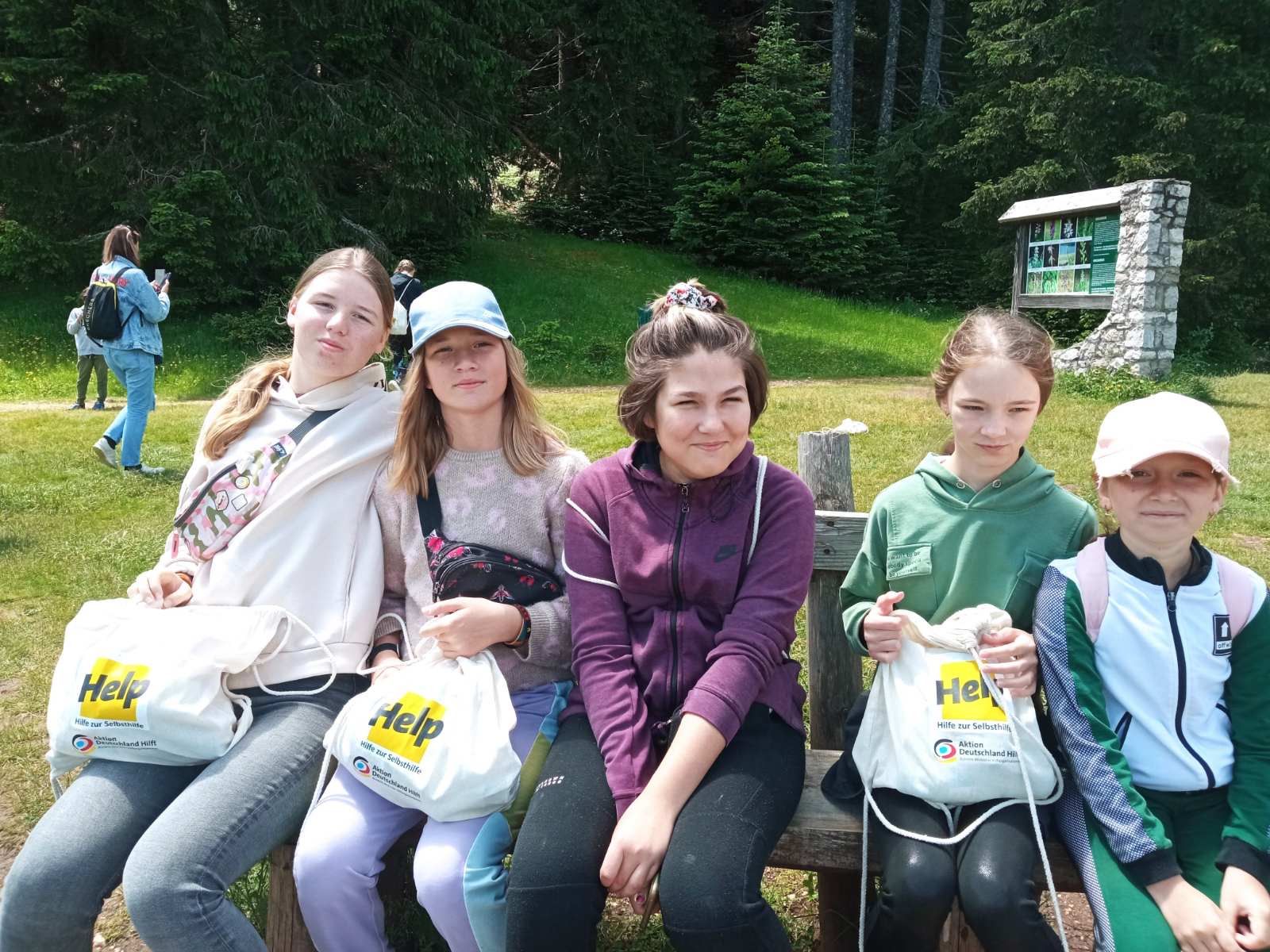
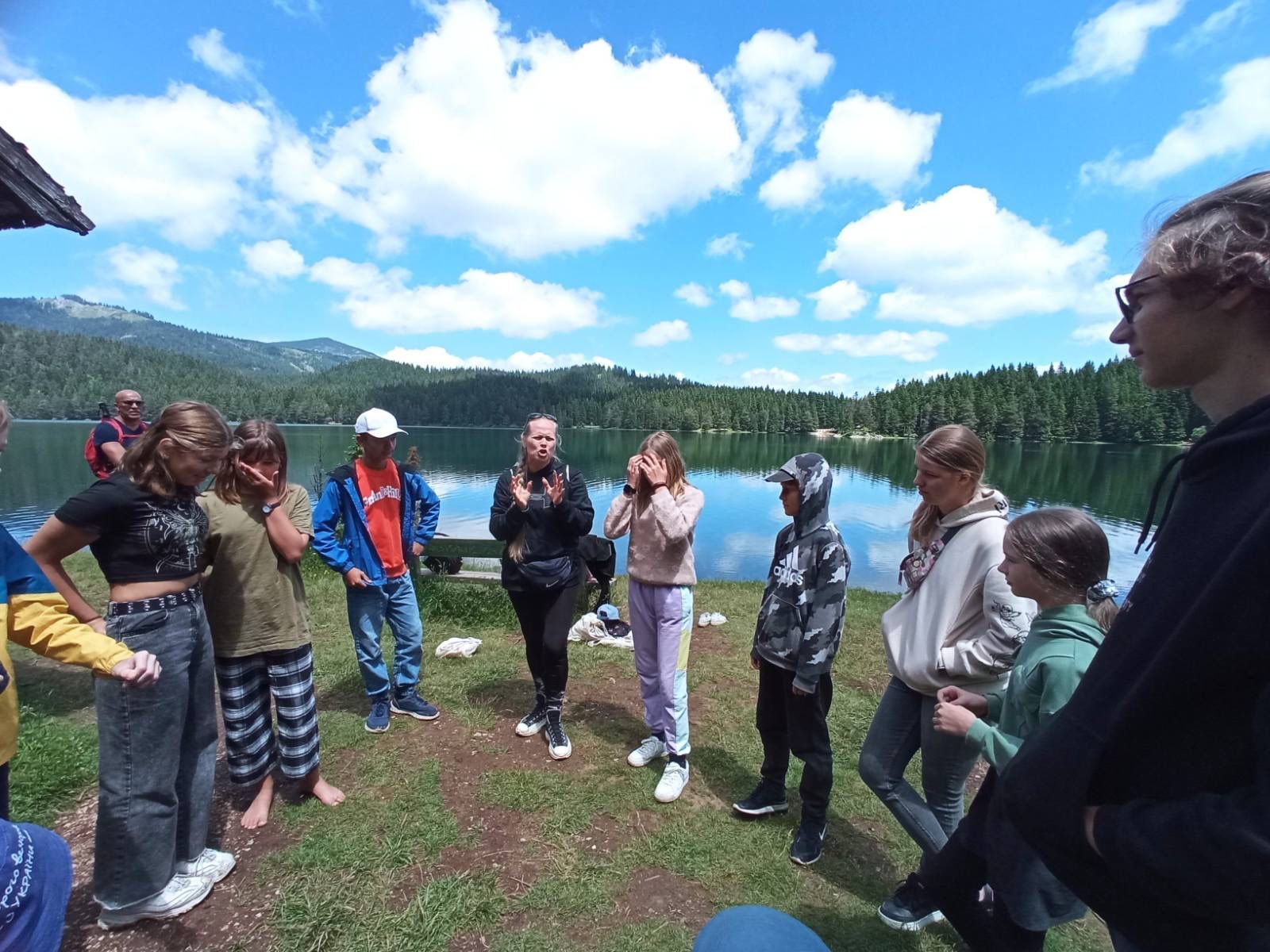
Ukrainian children enjoyed the beauty of the north of Montenegro and socializing

3.07.2023

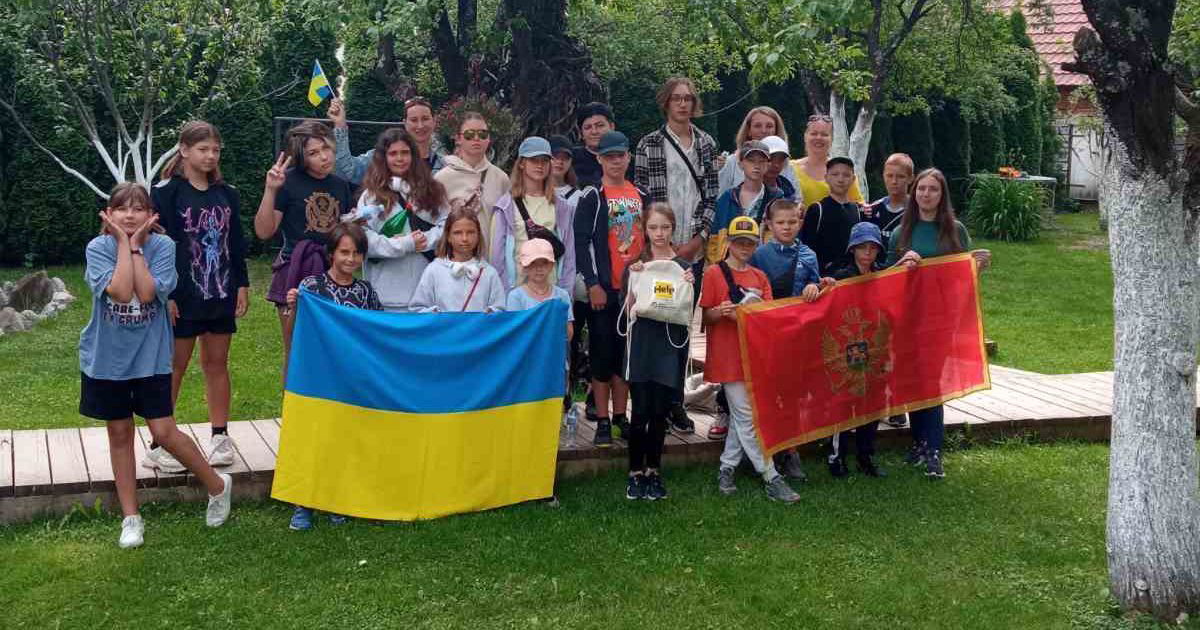
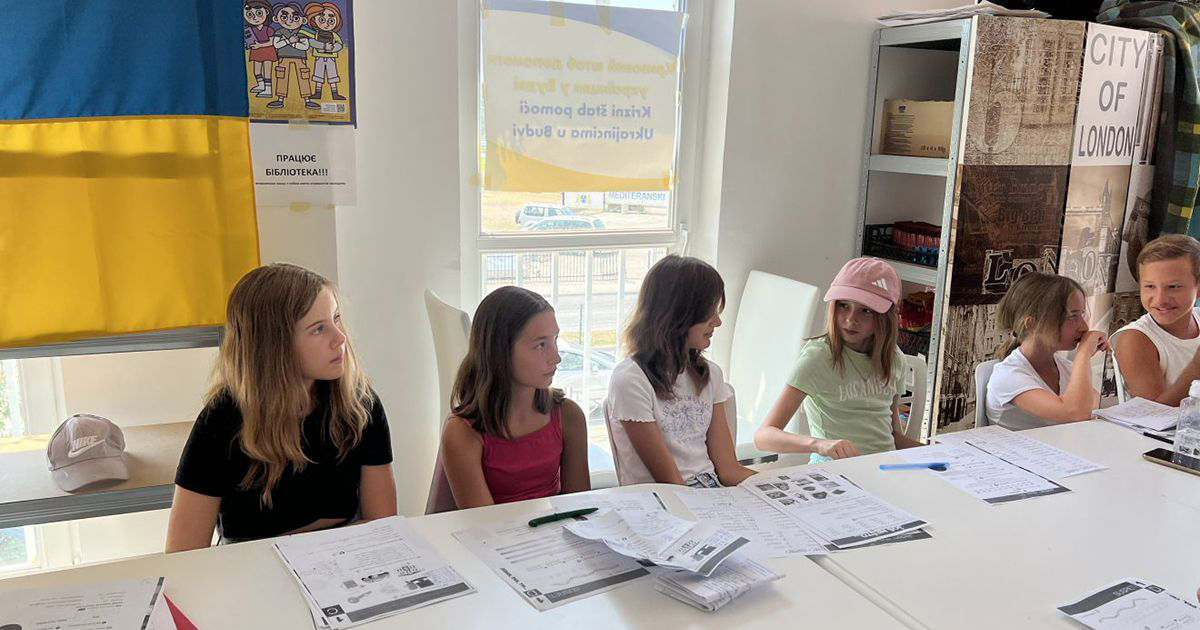
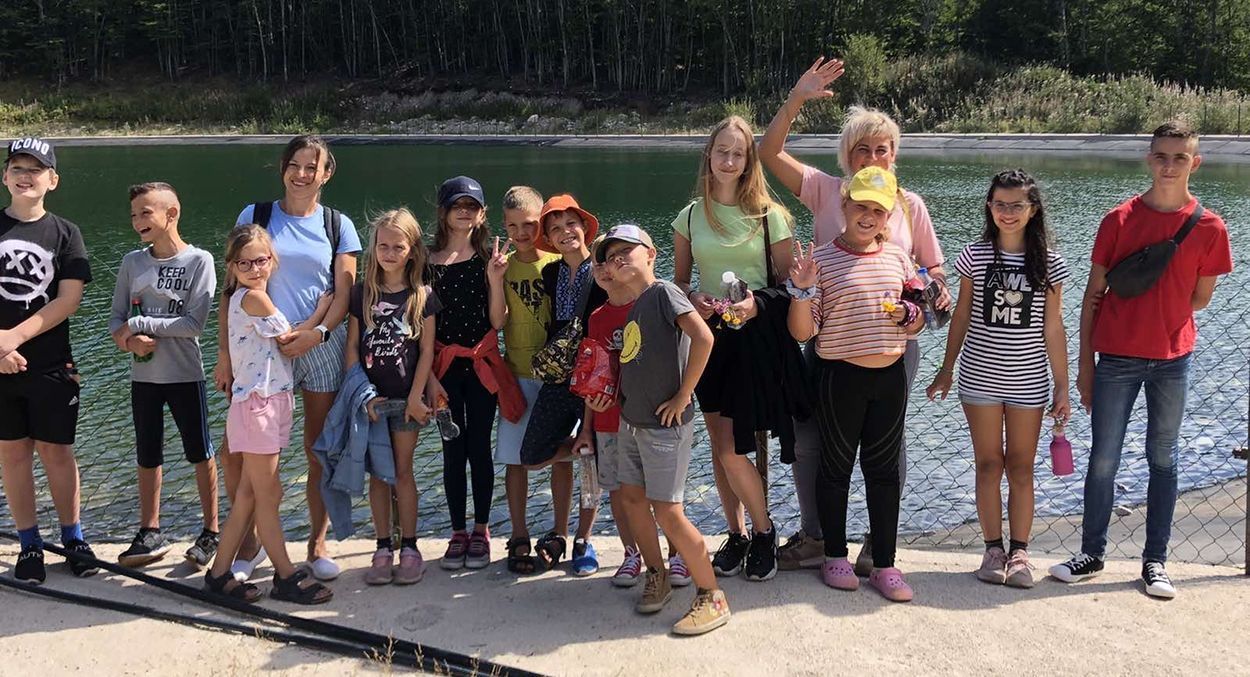
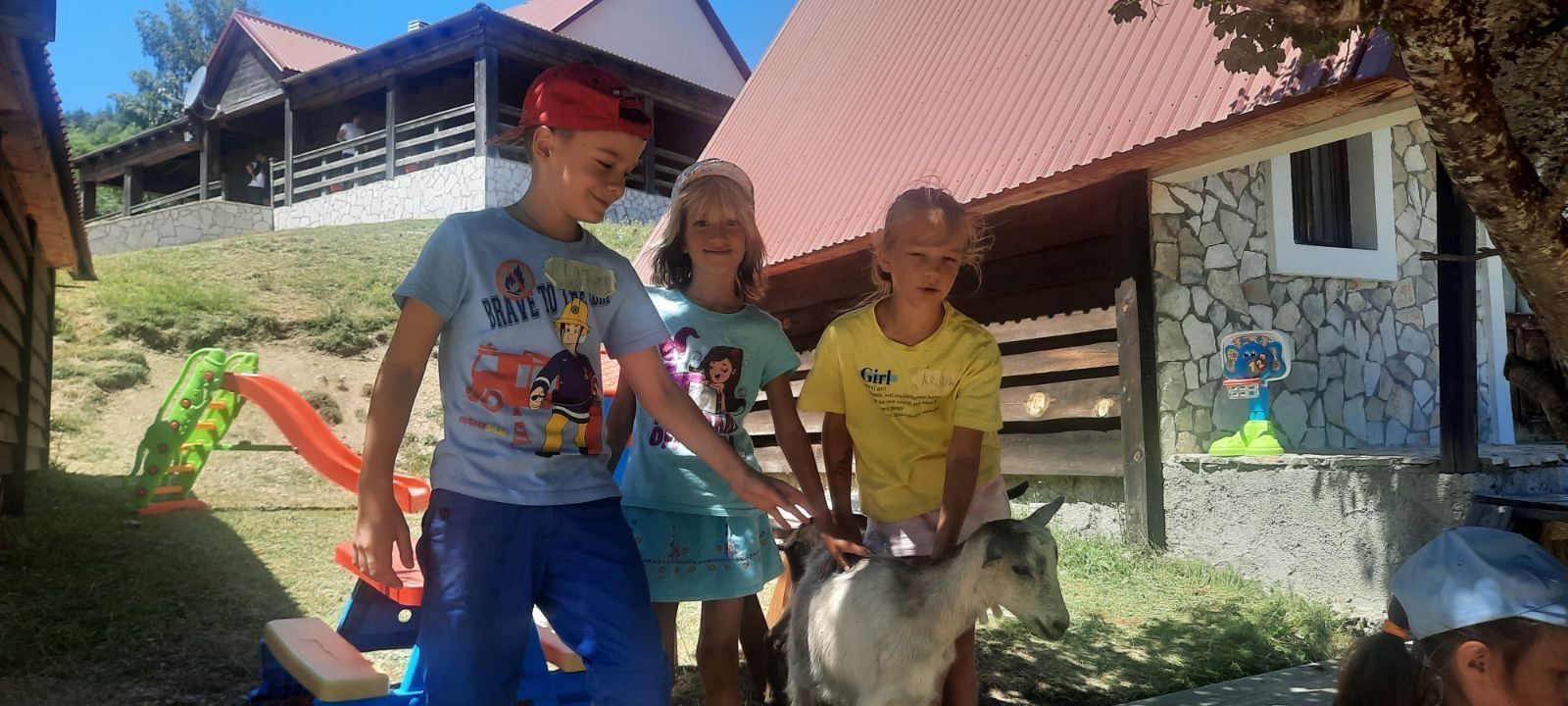
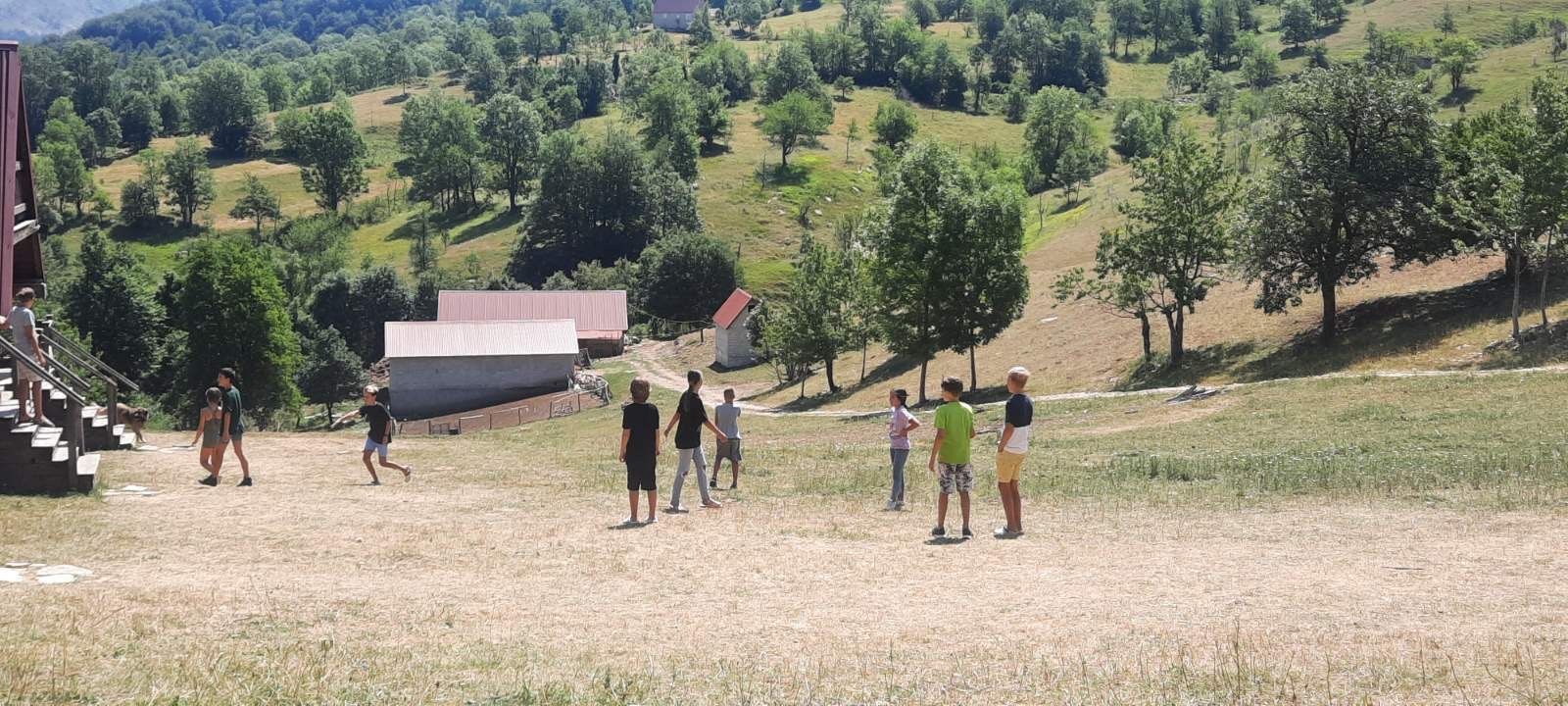
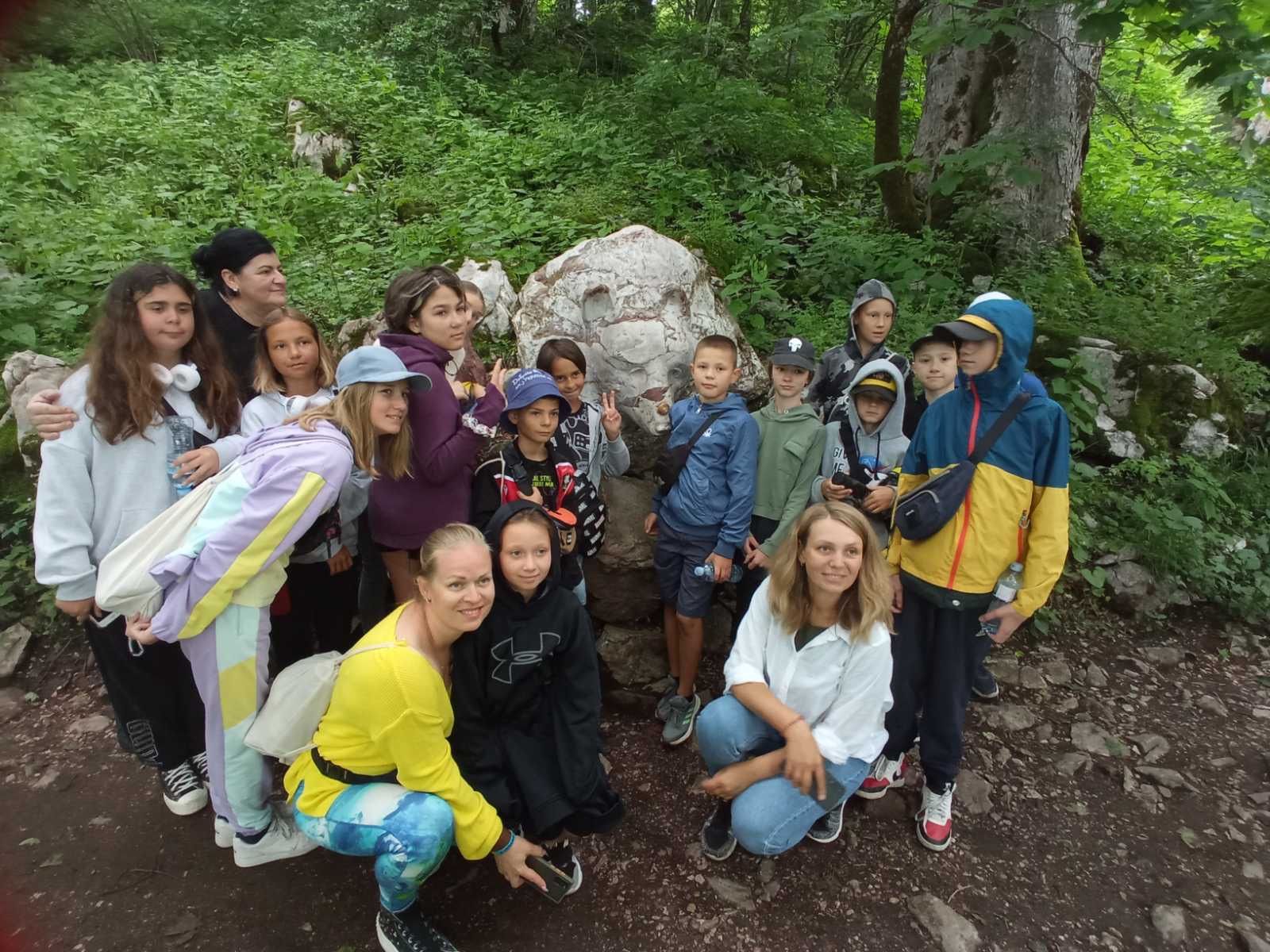
Ukrainian children, refugees who found safety from the war in Montenegro, visited Bjelasica, the Durmitor Ring, and Biogradska Gora last week, during a three-day trip.

Jovana Đuričković, the tour leader from Help, said that the children enjoyed socializing and being in nature.

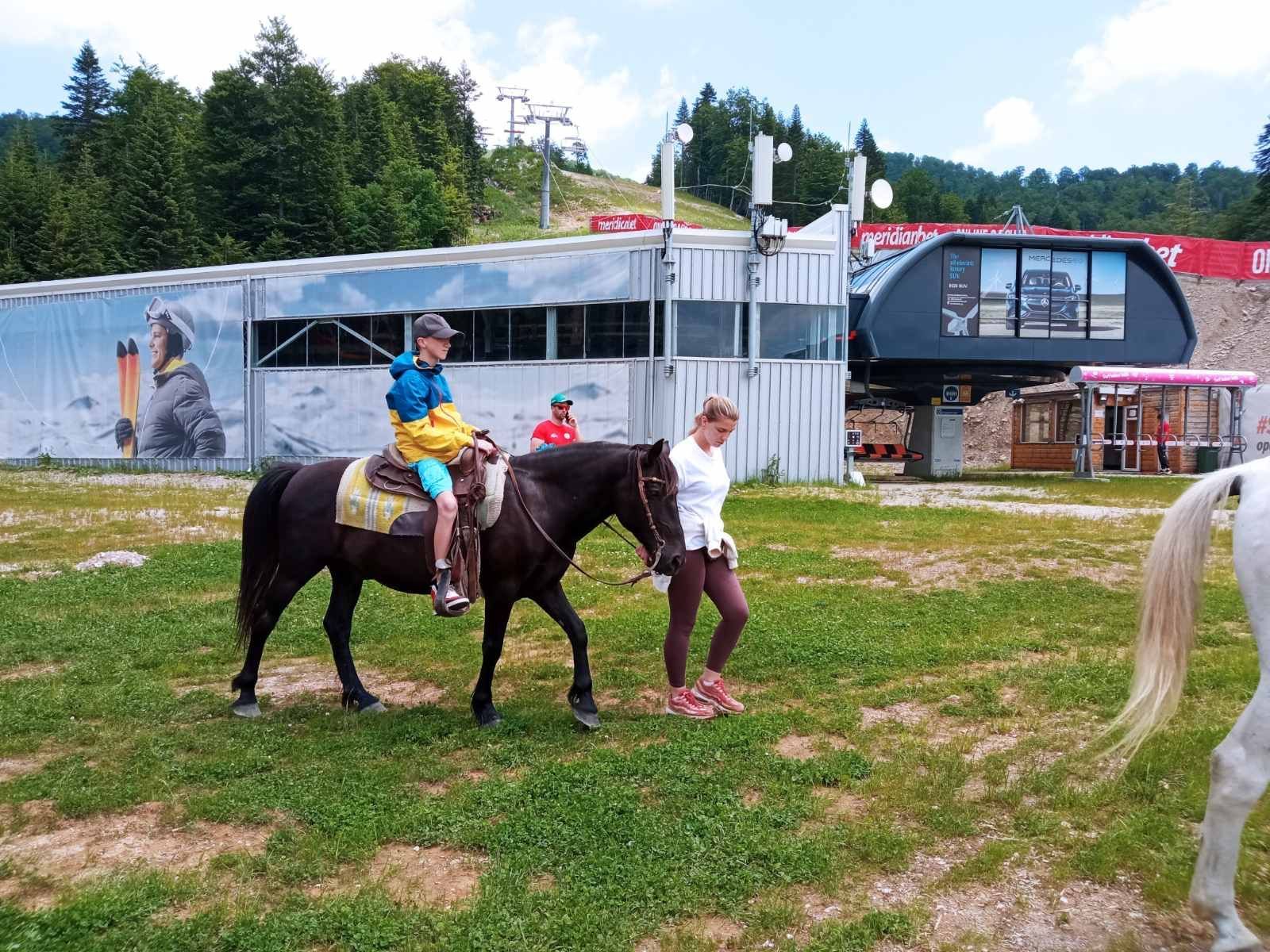
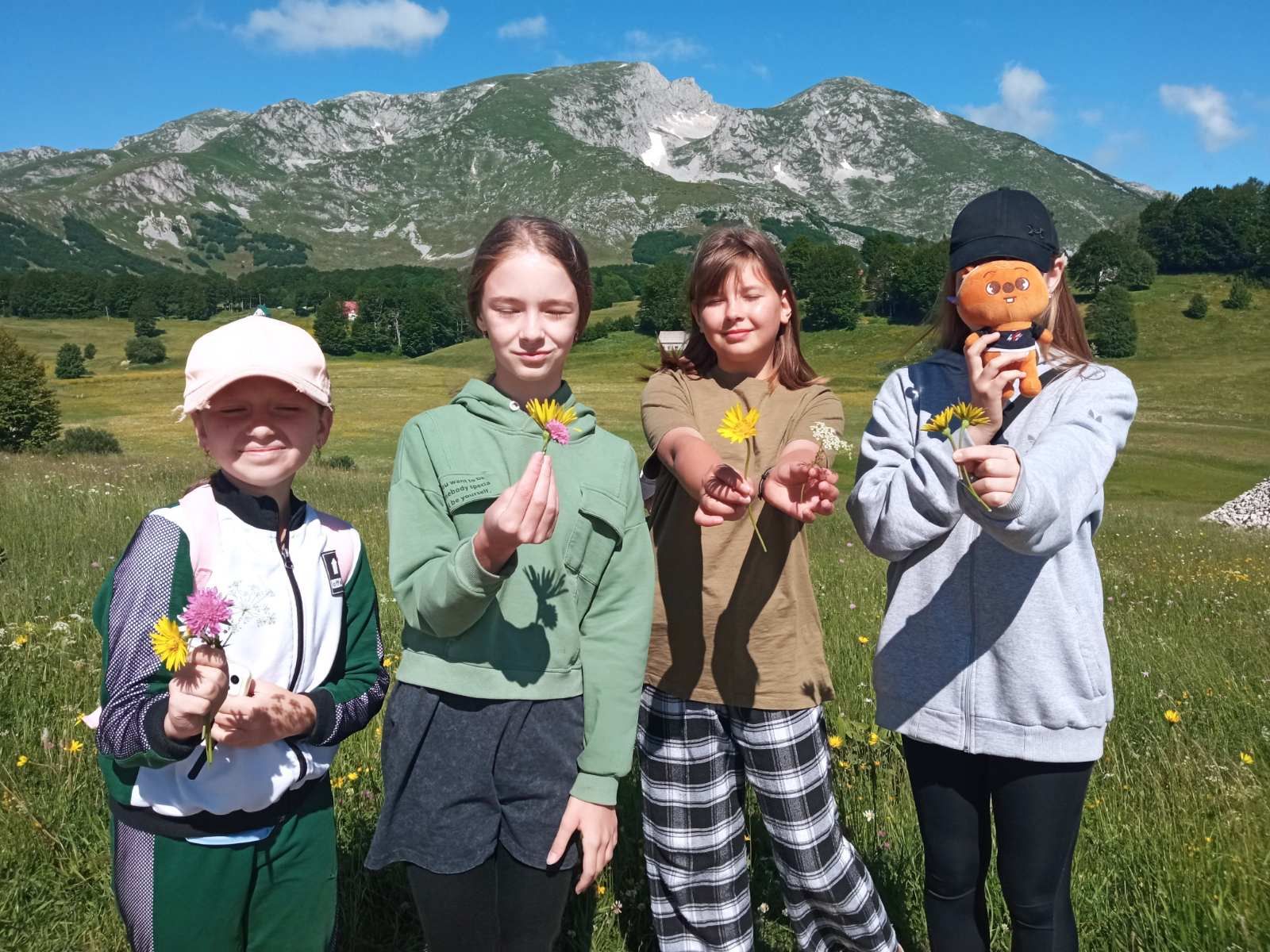
On the first day, we went to the 1600 ski resort, where we rode horses, took the cable car to the top, and enjoyed the silence. The children found it very interesting to ride the tubing track at the ski resort. On the second day, we visited the Biogradska Gora National Park and walked through the primeval forest around the lake. It was interesting that it started raining, but because of the dense forest, ‘not a drop reached us.’ On the third day, we visited the Durmitor National Park. We visited the visitor center, where the children could see all the animals that live in the park. After that, we took a walk to the Black Lake. The children used their free time at the lake to run, jump, and play pantomime. Laughter echoed. The girls took the opportunity at the ethno-village in Durmitor to pick bouquets of wildflowers from the meadow. They were very grateful to Help and its partners for organizing the excursion and said that they enjoyed the natural beauty of Montenegro and especially enjoyed socializing”

The mothers accompanying the children brought Ukrainian and Montenegrin flags on the trip.

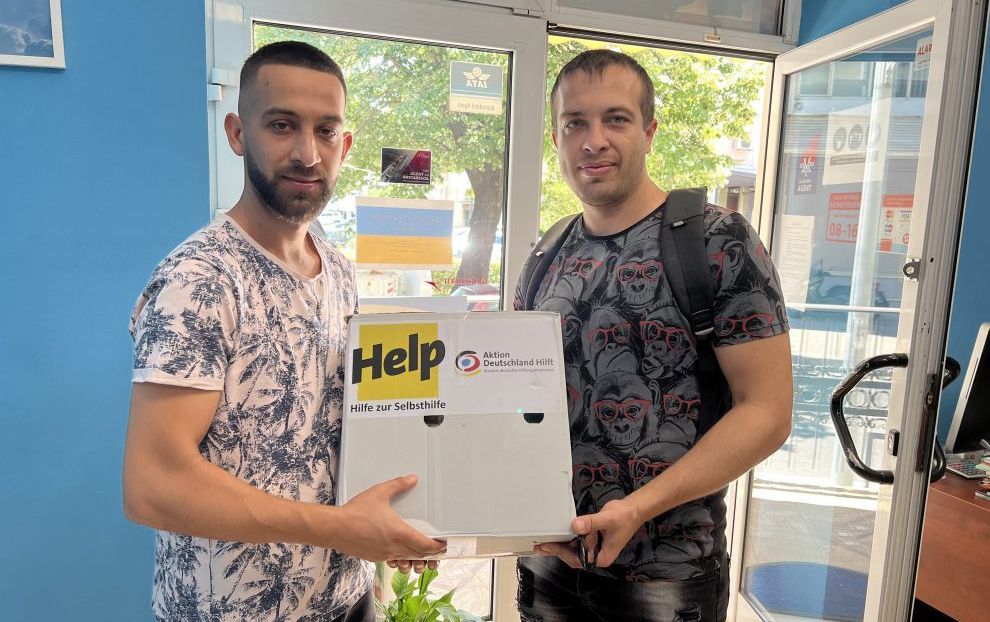
Help, in collaboration with the Ukrainian volunteer organization “Dobro djelo” and with the financial support of the network of German organizations for disaster relief, Aktion Deutschland Hilft, strives to facilitate the stay of Ukrainian refugees in Montenegro, especially children whose childhood was abruptly interrupted by the war over a year ago due to the Russian aggression in Ukraine.

#westandwithukraine #helpmontenegro #helpgermany #aktiondeutschlandhilft #dobrodjelo

Tender – Market System Analysis in the Eastern Partnership region

Tender Notice

Market System Analysis in the Eastern Partnership region, specifically in Moldova, Georgia, and Armenia, with the possibility of including Ukraine

Tender Reference No: P-SOE-12-23-23-01

Help – Hilfe zur Selbsthilfe (Help) is a humanitarian, non-governmental, non­profit organization founded in 1981 that works in around 20 countries throughout the world, including in Moldova, Georgia, Armenia and Ukraine.

Help, for its project “Inclusive jobs in ICT”, funded by Helvetas Swiss Intercooperation, invites all qualified and specialized contractors to participate in the tender for a Service Contract for Market System Analysis in the Eastern Partnership region, specifically in Moldova, Georgia, and Armenia, with the possibility of including Ukraine.

View more

With World Refugee Day – Help in the action of providing hope far from home

June 20, 2023

Every year, on June 20, the world celebrates the strength and courage of people who were forced to leave their home, to avoid conflict or persecution, and, according to UNHCR, this year’s theme of World Refugee Day,  is – “hope far from home”.

Many, as last week’s disaster on the shores of the Mediterranean brutality reminds us, when a vessel with 750 women, men and children sank near the Greek coast, never reach their dream and reach that hope for a better tomorrow – far from home.

However, Montenegro has once again (to many to count) times in the past more than three decades, opened its doors for those who are fleeing – this time for Ukrainian refugees from the war – and Help, as before, helps in its efforts to settled down and supporting these people.

In the past year and four months, Help, with the support of donors and in cooperation with the Ukrainian volunteer organization Good deeds (Dobro djelo), has been trying to give “hope far from home” to Ukrainian refugees who left their homes in the face of Russian aggression, which began on February 24 last year.

Having in mind the number of inhabitants, Montenegro is at the top of the European countries that have opened their doors to Ukrainian refugees in the past period, just as it was in 1999, at the time of the NATO intervention and the war in Kosovo, when it received more than 120,000 refugees and the displaced people.

It was exactly back then when Help started its humanitarian mission in Montenegro, helping those who, fleeing the horrors, left behind their homes, usually without anything.

We provided and continue to provide support to Ukrainian refugees- of whom about 10 thousand currently reside in Montenegro- in various ways: from aid packages to summer camps for children, language classes, sports activities, school equipment, clothes and other necessities.

In providing “hope far from home”, Help is assisted by the German Network of Humanitarian Organizations for Rapid Action – Aktion Deutschland Hilft (ADH), the Belgian King Baudouin Foundation and the Montenegrin Ministry of Labor and Social Welfare.

We are currently helping with Montenegrin language classes for easier adaptation, and we are also preparing a series of trips for Ukrainian children this summer:

We are here and will continue to stand by the Ukrainian refugees – Glory to Ukraine!

New program: Increasing socio-economic inclusion for vulnerable groups with tailored made assistance

24. 08. 2023

Over the next 12 months, Help will implement a new project to support children and families at risk of separation, funded by the EU through the Montenegro-EU Program for Employment, Education, and Social Welfare.

The enhancement of socio-economic inclusion for vulnerable groups will be carried out in accordance with an innovative method – individualized tailored made assistance.

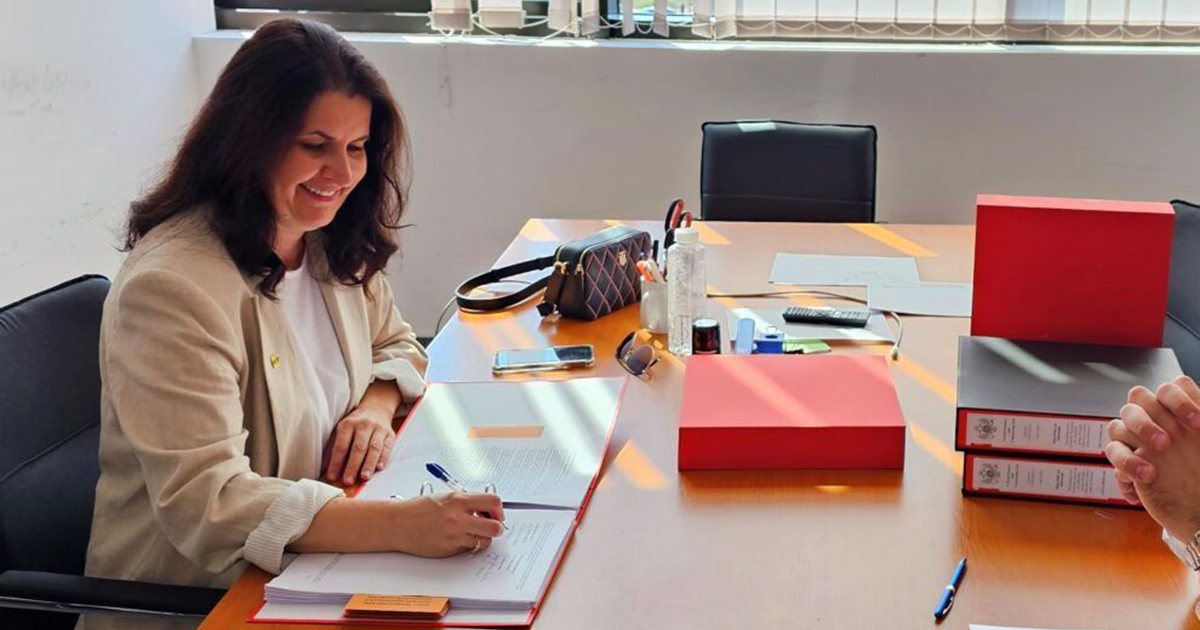
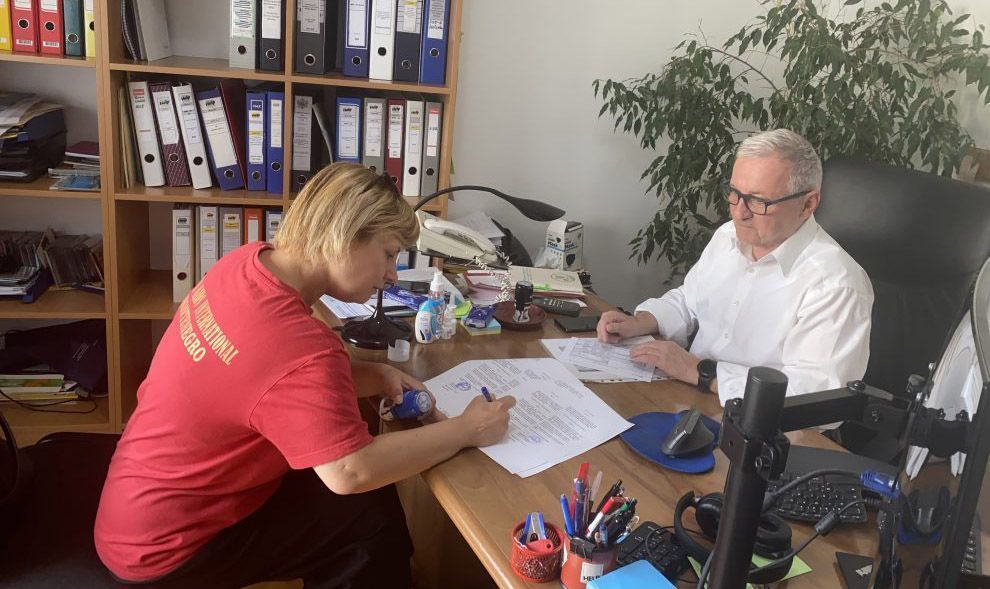
Dijana Anđelić, the Director of Help Montenegro, stated during the signing of the contract that this is another program that continues Help’s longstanding work with the most vulnerable communities and groups in Montenegro, with the aim of improving their socio-economic status and providing protection for the most sensitive groups.

According to Anđelić, this project will place special emphasis on supporting children at risk of separation from their families, which we have identified as a specific need in our previous work with vulnerable citizen groups.

The support for families and children at risk will be carried out in the municipalities of Berane, Bijelo Polje, Nikšić, and Podgorica over the next 12 months, in collaboration with social welfare centers, the Ministry of Labor and Social Welfare, as well as other relevant institutions.

Help’s partner in the project is the NGO Family Center Kotor.

During this period, support is planned to be provided for around 50 families at risk in the mentioned four municipalities.

MNE 173

NAME OF THE PROJECT: 

Increasing socio-economic inclusion of vulnerable groups through innovative, tailor-made assistance

DONOR: European Union through program EU and Montenegro Government for employment, education and social welfare

IMPLEMENTING: Montenegro, Municipalities of Berane, Bijelo Polje, Nikčić and Podgorica
BUDGET:  129.456,00 EURO

DURATION: 12 Month

Montenegrin language classes for refugees and RE population

14.06.2023

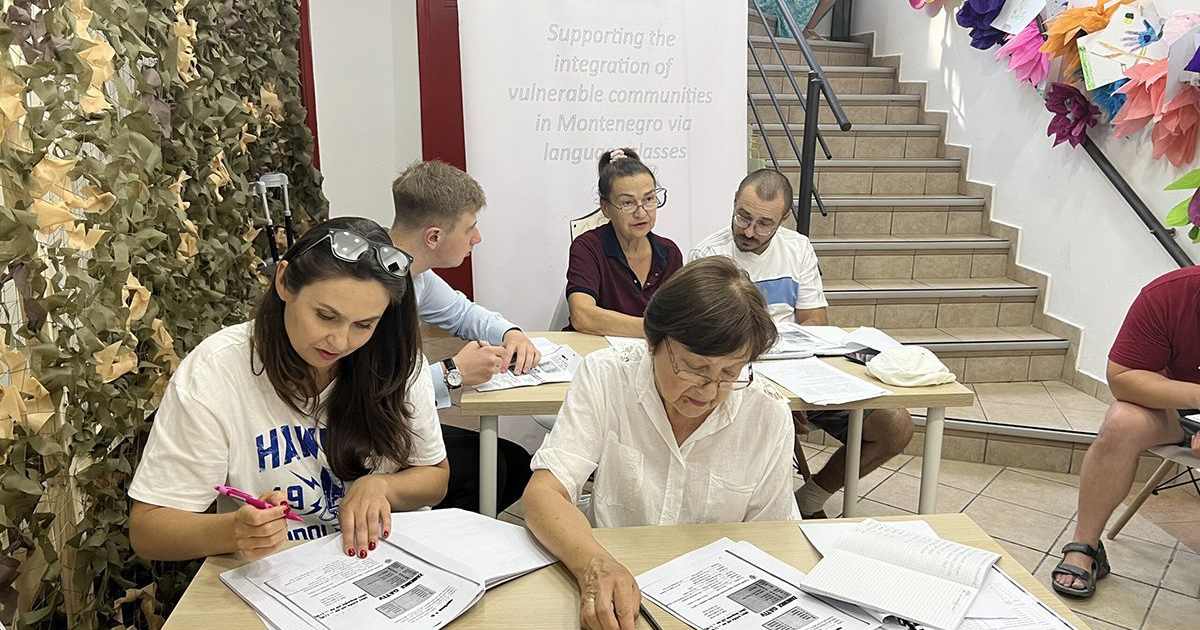
For Ukrainian refugees in Podgorica and Budva, as well as children and adults in Konik, learning the Montenegrin language has been made possible thanks to the project “Language as Support for the Inclusion of Vulnerable Communities in Montenegrin Society,” funded through the Belgian King Baudouin Foundation under the motto “Working Together for a Better Society.”

As part of the ongoing support provided by Help to Ukrainian refugees in Montenegro since the beginning of the Russian aggression in Ukraine, language classes are among the priority needs of these individuals who sought refuge from the war here. Currently, around 60 of them attend Montenegrin language classes in Budva and Podgorica, which will facilitate their adaptation to new circumstances.

Professor Dr. Marijana Terić, who teaches several groups of Ukrainian refugees in Podgorica, says she is satisfied with the progress they are making and the interaction she has with these people.

“Learning is a two-way process,” according to Professor Terić. “I teach them the basics of our language, and they teach me how to maintain spirit and cheerfulness in the most difficult situations and life circumstances, such as those unexpectedly faced by these people who found refuge from the war in Montenegro.”

Learning the language eases daily communication for these Ukrainians and enables many of them to assist their children, who had to enroll in local schools, which is not a small challenge.

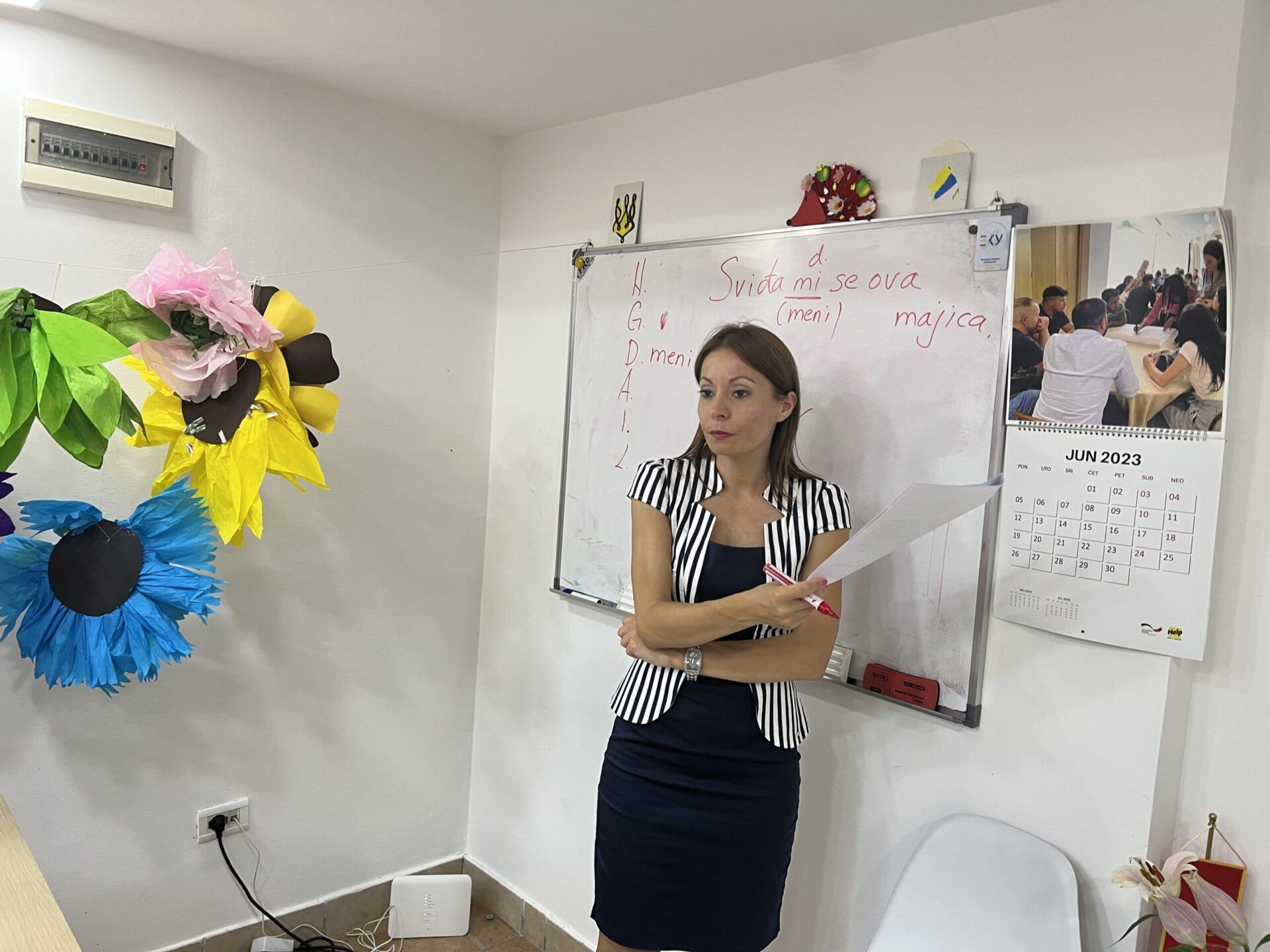
The second group supported by this project consists of children and adults from the Roma-Egyptian community in Konik who have difficulties with knowledge of the official language. Their teacher, Ivana Vujošević, has divided them into several groups and helps children of different ages, but certainly of school age, to catch up on missed education and better master the Montenegrin language twice a week for a period of six months. This will also make it easier and faster for them to grasp the rest of the school curriculum.

The adults, divided into two groups, are also catching up on missed education due to various reasons, most commonly due to poor financial status and the inability to receive education at the appropriate time. For many of them, this is also a stepping stone that will enable them to take the Montenegrin language exam to obtain citizenship.

Logate’s ChargeGate with mobile application

Montenegro capital – Podgorica, got its first two new innovative chargers for electric vehicles that work with the support of a mobile application.

For the development of this innovative technology, Montenegrin Institute for Information Technologies – Logate was supported by Help, through the RECONOMY program implemented by Switzerland Helvetas and Sweden Sida.

The new method is available through mobile applications and is presented as one of eight innovative solutions for the future from the Western Balkans.

RECONOMY is a regional inclusive and green economic development program of the Swedish International Development Cooperation Agency (Sida), implemented by HELVETAS Swiss Intercooperation in partnership with Help — Hilfe zur Selbsthilfe in Eastern Europe, the South Caucasus and the Western Balkans.

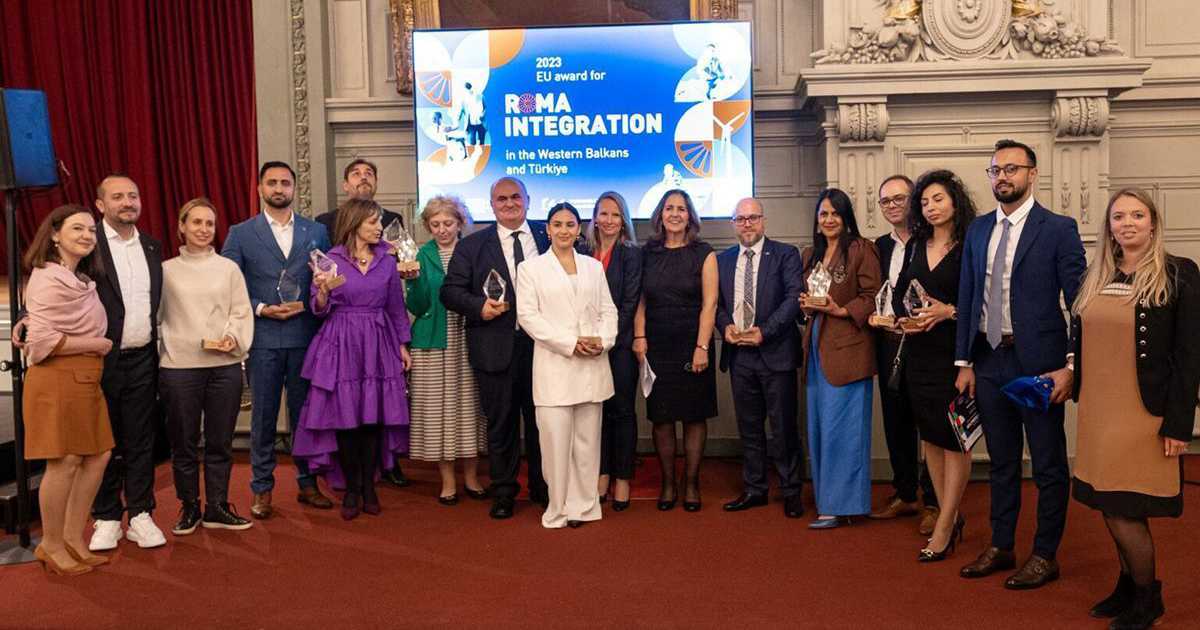
Help and Phiren Amenca won EU awards for Roma integration

3. 05. 2023

For the 5th time European Commission together with the Roma Active Albania has been organizer of the event #EU Award for Roma Integration in the #WesternBalkans and #Türkiye!

European Commission awarded outstanding projects and people dedicated to promoting Roma inclusion in the Digital and Green Economy as part of the #RomaWeek.

Among 14 winners from the region of Western Balkans and Turkiye for their effort in Roma inclusion on April 27 in Brussels was Roma youth organization Walk with us- Phiren Amenca and Help Montenegro.

The EU is working to improve the social integration of Roma into society and to provide tangible results on the ground. The European Union is also providing substantial funds for social integration measures through the Instrument for Pre-accession Assistance.

The IPA beneficiaries have adopted Strategies and related action plans on Roma integration that are being renewed to adapt to the new EU 2020-2030 Roma Strategic Framework. Important work is done through public authorities, national and local CSOs and individuals/activists.

Honouring these efforts, since 2014, the DG NEAR Award on Roma Integration in the Western Balkans and Turkey has been raising the visibility both of challenges facing Roma in the Western Balkans and Turkey, and of the important work of some dedicated players in support of Roma integration. The Award offers recognition, publicity and support to positive models showing tangible results in the area of Roma Integration.

Help won second prize for Montenegro

Biljana Jovićević PR and media officer,  represented Help Montenegro on the ceremony where Help won second prize. As she said in the video that has been produced by EU Delegation for the purpose of the award ceremony, having in mind Help’s constant and consistent support to Roma people (implemented 43 RE projects in 24 years) – we figured out that education and vocational trainings are the key for getting out from poverty.

„For that reason, Roma people, especially youth and women are included in all our program and projects which are now focused on sustainable development and green digital agenda – it doesn’t matter if the main targets are RE communities or not. Developing digital skills today is a must for everything, from finding appropriate job with decent living wage, to developing any kind of business strategies. Roma Youth with whom we are working are more than happy to be part of this projects because it usually leads to finding a good job for them. Through the projects for building capacity, monitoring and mentoring of Roma NGO organizations we provide support for all green agenda activities – recycling, waste management and other… Youth Roma organization that we are supporting are very aware of importance of this issue, and new opportunities that are opening for the communities”.

Often we manage to help people from Roma communities whose part time jobs for feeding their families is in recycling to advance their business in more productive and sustainable manner, said Jovićević.

“During our projects about RE mediators, all participants that are now working in state provided services on local level had acquired digital skills and conducted their job in digital, rather than hard copy manner: databases, research about community needs and other, basically everything had been digitalized.

Having appropriate education and acquiring skills that are required on the job market are base for  rising above the poverty line are the key, for all vulnerable categories including Roma communities. It is also necessary to change a narratives that Roma people are only able to work low paid jobs – we want and I believe we menage to prove that in many cases.“

The winner of the first prize for Montenegro is Roma youth organization Phiren Amenca – with whom we had successfully implemented one of the previous projects.

Apart of video about Help and others works EC as the organizer produced an publication about winners and the mission.

You can find a link here: file:///C:/Users/User/Downloads/Roma-Awards-Publication-2023%20(1).pdf

The EU Roma award is recognition of Help’s  hard work for decades- but also proof that we are in the right direction with developing strategies for supporting  inclusion of RE communities, and that we should continue in the same direction.

Other winners are: for Albania – Roma Gate for Integration and Roma Versitas Albania, for Bosnia and Herzegovina – College of Tourism and Management Konjic and Association “Euro Rom” Tuzla, for Kosovo – Office for Good Governance, Human Rights, Equal Opportunities and Anti-Discrimination, Office of the Prime Minister and Organization for Socio – Economic Stability, for North Macedonia REDI Recycling and Romalitico, for Serbia – Forum Roma Serbia and REDI Serbia, and for Turkiye – Hemra Nida Kose, Roma Youth Education Culture and Solidarity Associatio0n.

In addition to award, during the visit to Brussels, all winners – regional activist had participated in a few events organized by EC and Roma Active Albania in framework of Roma Week and title – New Solutions to Old Problem.

Especially interesting was an introductory panel about new grant schemes called – Socially Responsible Public Procurement, that EU and EBRD planning to implement in the future.

Support to UIKS, in reconstructions, self-sustainability and training for employees and prisoners

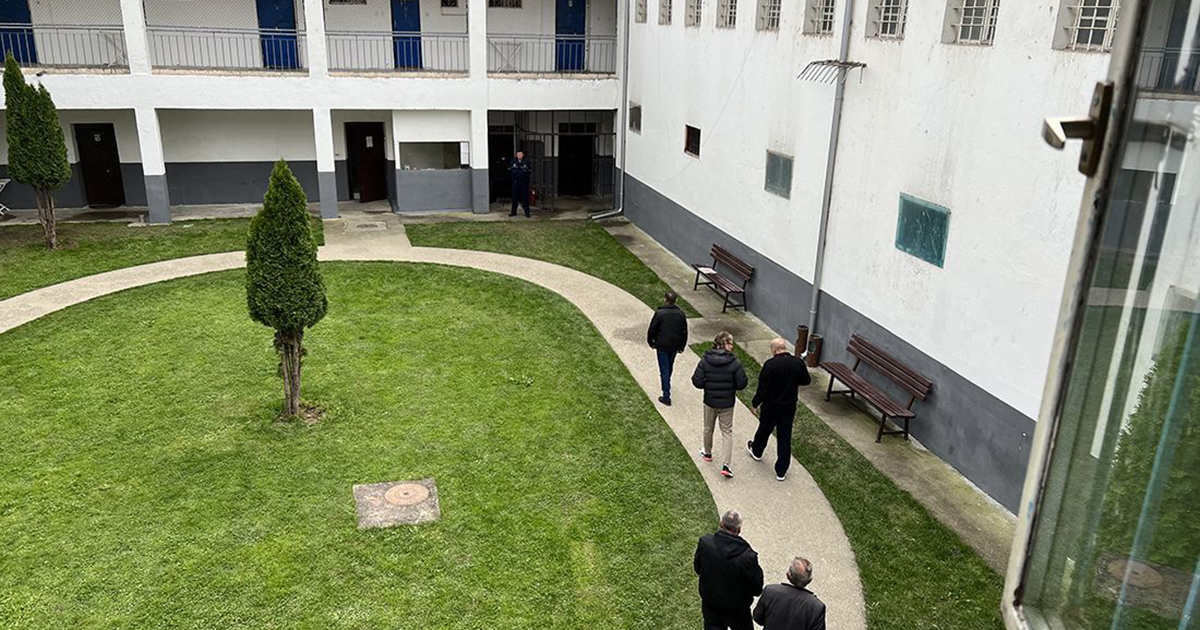
The pig farm in the prison in Spuž is one of several agricultural and food assets that help this institution to be partially self-sustaining. Help, thanks to the financial support of the German Government through the project “Socio-Economic Empowerment of the Western Balkans”, helped the reconstruction of the farm, within the framework of extensive and long-term cooperation with UKIS.

The project renovated the existing ruined barn of 400 m². The reconstruction of the pig farm was one of the most extensive jobs, with the total value of EUR 87,509.80, which began in August 2021 and was completed in early February 2022.

In addition to the reconstruction of the pig farm in UIKS, a machine was also purchased – a wrought iron knitting system worth 23,000 Euros; the roof of the mechanic’s workshop was reconstructed in the value of 5,975 Euros; and training was provided for 4 prisoners, who received a certificate for the profession of chef, 10 prisoners received is licensed training for the profession of welder, which opens up the opportunity for them to find a job more easily after leaving prison during the period of convalescence.

In addition to the prisoners, Help also organized a three-day training for 15 employees of the prison in Spuž within the framework of the project, with an expert in the field of psychology and communication, dr. Radoje Cerović, with whom the participants – the prison staff- were exceptionally satisfied, because they are facing different types of pressure and stress in their work every day.

When it comes to reconstructions, in addition to Spuž, another large-scale reconstruction was also carried out in the prison in Bijelo Polje, where the over 70-year-old roof was restored. The total value of the works on the reconstruction of the prison roof in Bijelo Polje was 36,180.00 Euros. In April 2021, a memorandum was signed between Help and UIKS, which specified that this institution, for its part, finances the total support to this institution with a 50 percent participation. All activities in the Western Balkans were implemented within the framework of a program worth 3.35 million euros, with the support of the German Government, entitled “Socio-economic empowerment of the Western Balkans”.

Vocational training with work and a path to employment

EDEX is one of the successful private companies from the poorer north of Montenegro that is constantly expanding. Help’s employment program with on-the-job training is welcome for the EDEX to find the necessary workforce. One of the users of this program is Amra Beganović.

Following the needs of the market in all areas, with program “Socio-Economic Empowerment of the Western Balkans” – project financed by the German Government through the “professional training of the unemployed” program implemented by Help, we are helping socially sensitive categories of the population, especially young people and women in the less developed north of Montenegro, to getting employment.

Help has been applying this model for years, which connects the unemployed and employers – and which includes a six-month on-the-job training with employers, during which Help also provides financial compensation to beneficiaries. Upon completion of the training, those employers who retain or employ trained workers for at least one more year also receive an incentive in valuable equipment.

The focus of this regional project of the German government was on activities in all countries of the Western Balkans, creating new jobs through the establishment of new businesses and providing support to existing ones affected by the COVID-19 pandemic. Support is provided to socially vulnerable groups: women, youth, persons with special needs, prisoners and local communities, through economic empowerment that includes building personal and professional skills.

Strengthening Civil Society to Support Sustainable Socio-Economic Development in Montenegro

MNE – 167 

TITLE –  Strengthening Civil Society to Support Sustainable Socio-Economic Development in Montenegro

DONOR – European Union

IMPLEMENTATION – January 2023 – June 2025

BUDGET– 608,503.60 Euro

The project description: 

The project  focuses on strengthening civil society’s roles in supporting the social & economic development of Montenegro by supporting local interventions that address a range of issues from youth employment & digital skills & informal education & vocational training of youth to local youth participation & dialogue as well as supporting small business development & cultural & tourism initiatives. Its specific priority will be to support local CSOs to contribute to local development by building their organisational & project development capacities through training programmes, individualised mentoring support & tailored technical assistance & by increasing civil society’s ability to be key players in local development through subgrants for local socio-economic initiatives & programmes.  The Action will build the effectiveness of civil society’s programmes through networking & engagement with relevant stakeholders.

This Action will focus on the northern region of Montenegro.  For decades the Montenegrin economy has been marked by large regional disparities that have negatively affected the socio-economic development of the north of the country.  Regional disparities have a deep impact on the socio-economic conditions of the local population as reflected in a range of indicators such as low growth rates & high rates of unemployment.  An unbalanced economy leads to the population in northern region having lower standards of living, there are fewer employment opportunities especially for women & youth.  This support to civil society will contribute the local development of the northern region building a stronger more inclusive economy which has more skilled employment for vulnerable groups & supports the growth of small rural businesses.

The Action will be in alignment & have synergy with the national strategies for sustainable development & tourism development which foresee a key role for civil society as well as strategies which focus on employment & skills & youth. The Action will be an exemplar of civil society in action advancing the socio-economic inclusion of vulnerable groups living in remote rural areas, particularly youth & women. It will also have synergy with other national & regional initiatives to improve socio-economic conditions in rural communities in Montenegro & Western Balkans which are being implemented by national & international NGOs with EU, UN, foreign government & other donor support.

The goal is to empower and support:

Civil society organizations, NGOs focused on local communities, vulnerable categories of citizens (young people and women), small associations of farmers and agricultural producers, local municipalities with a focus on the north, institutions for adult education, youth services, regional development agencies.

Grant schemes will be implemented in two cycles: Category 1: min 5000  max 10,000

Category 2: min 20,000 max 25,000

The following activities will be supported: promotion of female entrepreneurship, organization of events and promotion of eco and mountain tourism, business advice for the development of agriculture -tourism, training for women and young entrepreneurs, strengthening of the capacity of small farms through training on modern methods in agriculture and market placement, organizational training for market opening for traditional craft products (Made in Montenegro), support for village initiatives for recycling and organic compost schemes, mobile and internet career counseling services, career counseling in schools, career training in digital fields – freelance work, advisory service for professional training, services for psychological support for starting work, support for the development of creative skills, training and basic activities for women and young people, a program of on-the-job training.

The project is being implemented by Help in cooperation with Juventas, in the time frame from January 2023 to June 2025, i.e. 30 months.

It is financed by the EU within the European Aid – Support to Civil Society Organizations project and the European Instrument for Human Rights and Democracy (EIDHR) in the amount of 608,503.60 Euro

Help continues to support Ukrainian refugees with language classes

Help will continue its support for Ukrainian refugees in Montenegro, among other things, by providing  language classes in Budva and Podgorica in the next six months.
The project “Supporting the integration of vulnerable communities in Montenegro via language classes” will include also the Roma and Egyptian (RE) population. The funding for this project in the amount of Euro 18.900 was provided by the Belgian King Baudouin Foundation.

Already within its first project to support Ukrainian refugees  Help and the Ukrainian refugee organization „Good deed“ had  identified that the learning of the Montenegrin language is one of the important segments for easier coping and adaptation to the new environment.

Huge interest in language learning was expressed by children, many of whom continued their education in Montenegro, as well as adults, for whom knowledge of the language will alleviate everyday communication and eventual job search.

Knowing the local language used by the majority population is a crucial prerequisite for a successful integration. It helps with communication in everyday life and enables access to quality jobs. It is exactly for this reason that Ukrainian refugees in Montenegro have named Montenegrin language courses as one of the top 3 priority needs.

The Roma and Egyptian communities in Montenegro whose mother tongues is Romani or Albanian face similar problems. Roma and Egyptian children often drop-out from the education system or finish their education being functional analphabets and as grown-ups have limited chance for a proper employment. The provision of language courses will help these 2 groups to overcome the language barriers and more easily integrate into the Montenegrin society

According to the data of the Ministry of Internal Affairs (MUP), about 9,000 people, who fled from the Russian aggression against Ukraine, which began on February 24, are currently residing in Montenegro. Most of them are located on the Montenegrin coast and in Podgorica. Language classes will be organized in Budva and the capital Podgorica.

In addition to supporting Ukrainian refugees, this project also provides language classes for members of the RE population.

For 23 years since Help has been operating in Montenegro,  support for Roma and Egyptians has been constant, because they are one of the most threatened and discriminated community in Montenegro. We supported RE communities through different segments of assistance, with the goal is to get out of poverty, achieved economically and social empowerment and equal inclusion in social flows.

At the core of these efforts is education, as the key to improving the social and economic position of the RE population, especially young people and women, therefore, as part of this project, language classes will also be organized for the RE community for six months.

New Ukrainian Center opened in Budva with the support of Help

22. 11. 2022

Ambassador of Ukraine to Montenegro, Mr. Oleh Herasymenko, has opened another refugee Center, last night (21.11) in Budva, with the support of Help. Since the beginning of Russia’s aggression against Ukraine on February 24, about 9,000 Ukrainian refugees have arrived in Montenegro, and one of the largest communities is located in Budva.

Ambassador Herasymenko thanked the regional coordinator of Help, Klaus Mock, for the support that Help continuously provides to the Ukrainian people, who have sought refuge in Montenegro due to war.

He especially emphasized the support for the opening of Ukrainian centers in Herceg-Novi and Bar, as well as other types of support that Help, thanks to the network of German humanitarian organizations  – Aktion Deutschland Hilft, has provided in the past months.

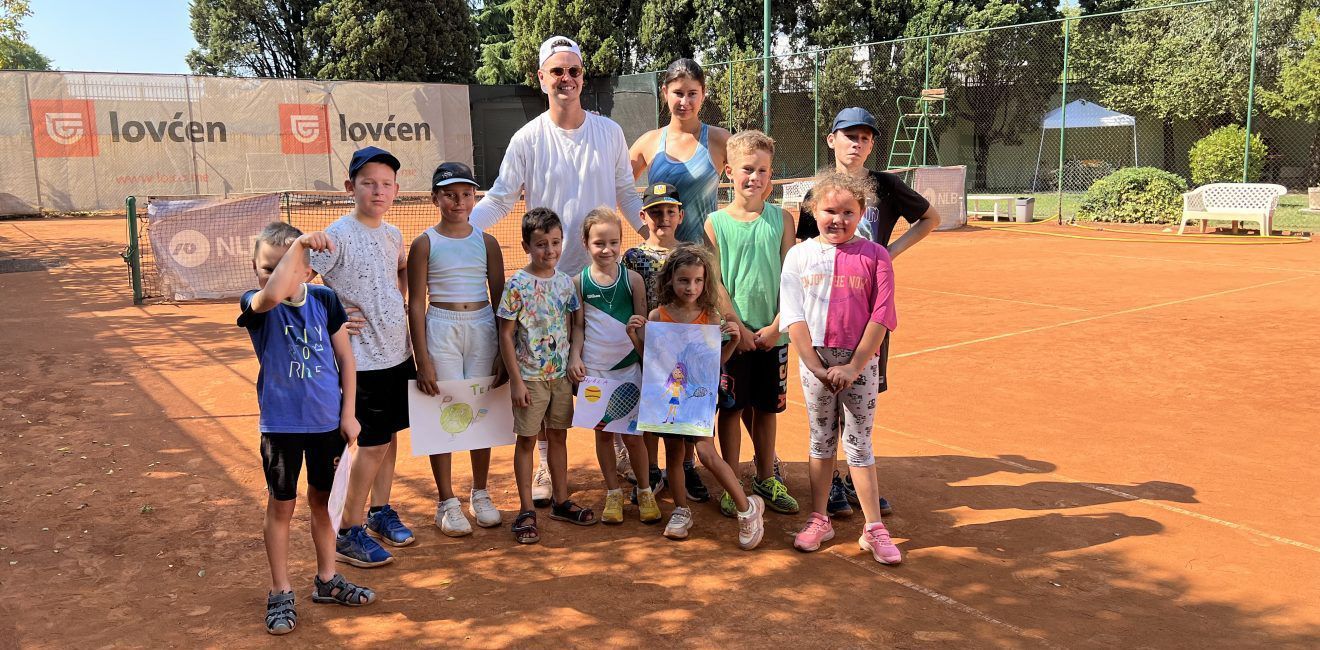
The largest number of Ukrainian refugees are located in Podgorica and cities on the Montenegrin coast, and Help, in coordination with the Ukrainian organization Good deed, provided different types of assistance for these people: food and hygiene packages, six summer camps for children, language classes for children and adults in Podgorica and Budva, tennis lessons for children in Podgorica and basketball in Budva, school supplies, sports equipment and children’s clothing.
As the ambassador said, the support of Help is of essential importance for the functioning of the Ukrainian refugee community in Montenegro, in this difficult conditions that forced these people to leave their homes. Mr. Herasymenko has expressed the hope that the cooperation will continue.

Help’s regional coordinator, Klaus Mock, emphasized that, in addition to Montenegro, Help provides assistance for Ukrainian refugees also   in other countries where the German humanitarian development organization operates, including Ukraine itself.

In the occasion of the opening the Center in Budva, visitors had the opportunity to view an exhibition of Ukrainian children’s pictures about their homeland.

#WeStandWithUkraine

Minister Lalošević met three young Roma judo players

A statement  of the Ministry of Sports and Youth of Montenegro:

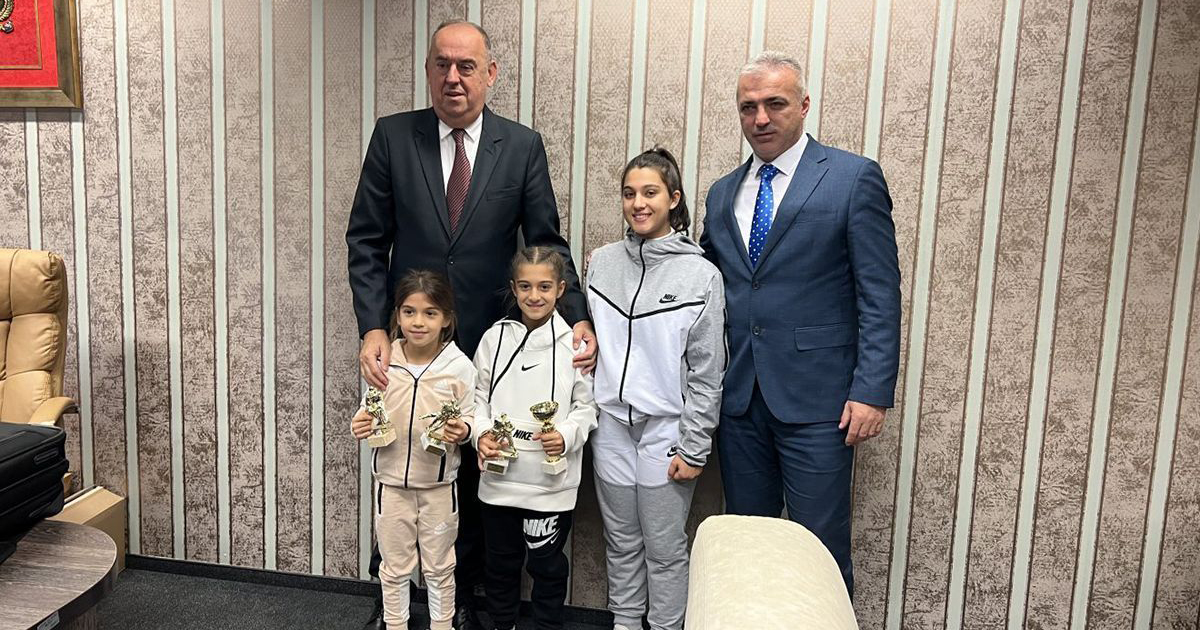
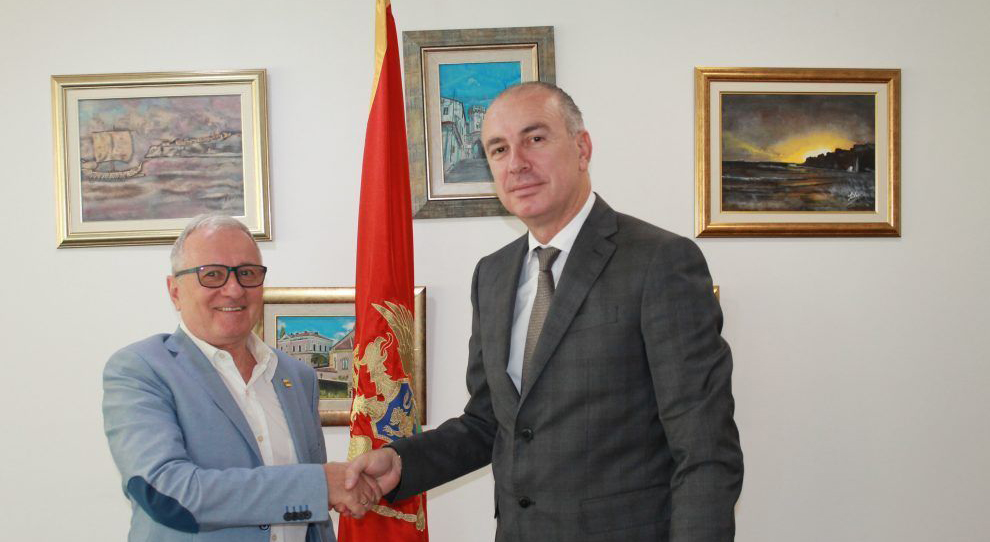
Minister of Sports and Youth, Vasilije Lalošević, and the director of the Sports Directorate, Zoran Jojić, hosted three young judo players, members of the Judo Club “Milenijum”, Sabina Ramadanović, Monika Ramadanović and Leontina Ramadanović, who together already have around 80 medals in the country and abroad.

The meeting was also attended by the representatives of Help, a German non-governmental organization that has been operating in Montenegro for 23 years and deals with the inclusion of the Roma population, Biljana Jovićević and Dijana Anđelić.

Representatives of Help informed Minister Lalošević about the successes of young judo players, and representatives of the Ministry of Sports and Youth announced cooperation with the Judo Association of Montenegro and the Ministry of Human and Minority Rights, all with the aim of helping the Ramadanović sisters.”

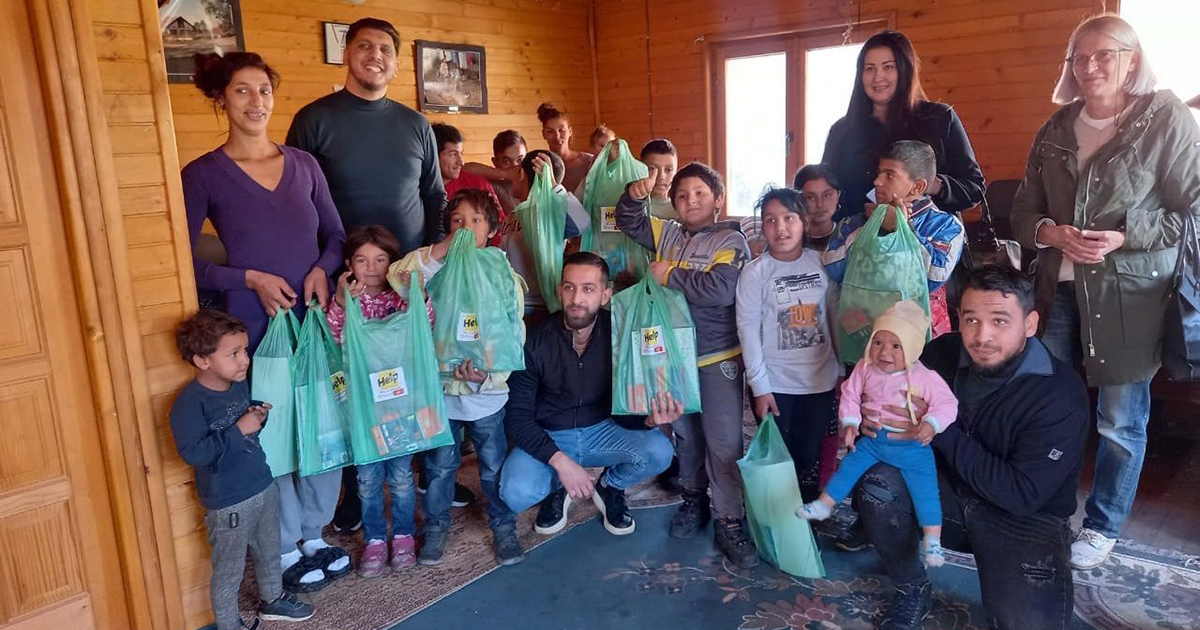
Roma and Egyptian children in Pljevlja have received schools supplies and toys for kindergarten

10. 11. 2022

On Wednesday, in Pljevlja, Help distributed packets of school supplies for Roma-Egyptian children in this town in the north of Montenegro, as well as materials and toys for preschool children who attend kindergarten.

Help’s mediators and the representative of the Secretariat of Social Activities in the Municipality of Pljevlja, Danijela Nenadić distributed support-

The assistance, provided by Help with the support of a network of German humanitarian organizations for quick action in disasters – Aktion Deutschland Hilft (ADH) is in line with our constant work to provide support to the RE community in Montenegro and improve the socio-economic status, education, health, and social protection – as most vulnerable category in Montenegrin society, which still face a great degree of discrimination.

Last month, Help in cooperation with the Red Cross, distributed 30 food packages to the most vulnerable members of the RE population in Pljevlja.

Montenegro introducing the first RE mediators in services at the local level

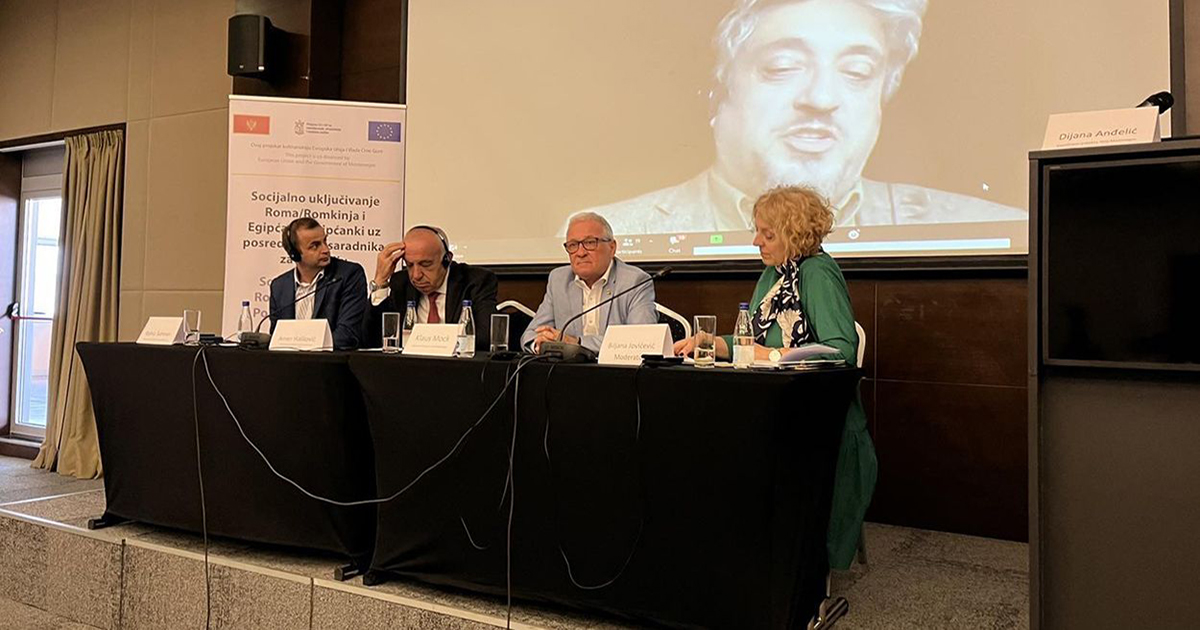
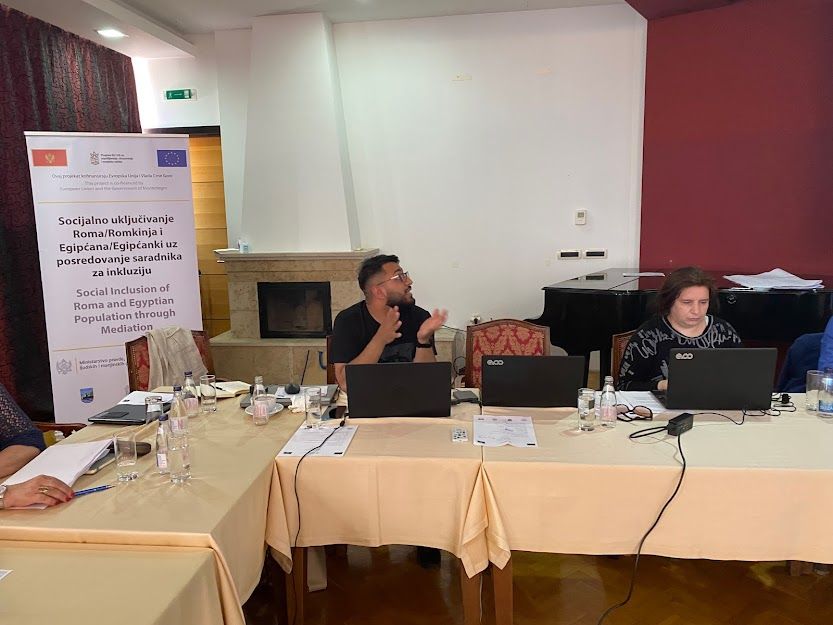
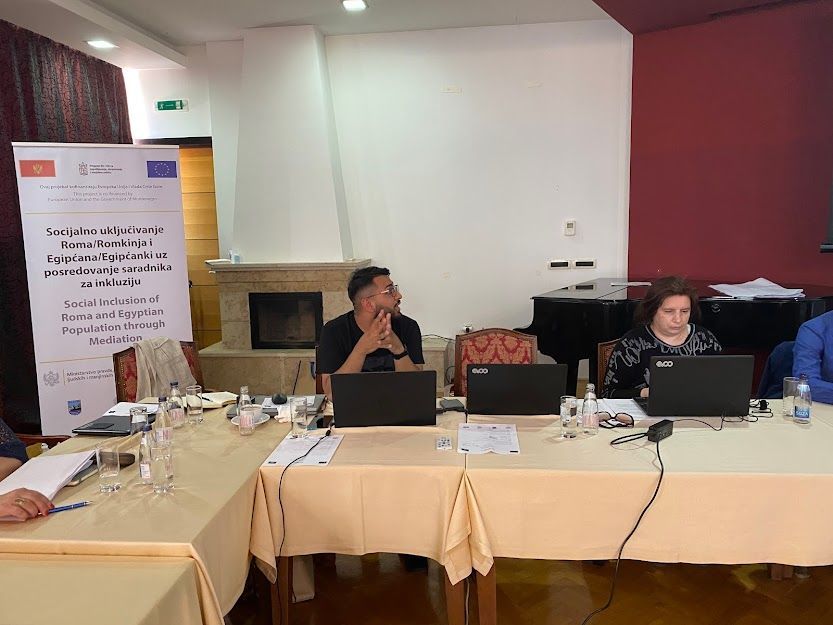
Institute of Roma-Egyptian (RE) mediators has proven to be one of the most successful models in the Western Balkans region, by enables RE community to have easier and faster access to basic rights at the local level, and now it is up to the  authorities of Montenegro to do their part, i.e. to systematize the position of mediator in local services – it was mainly conclusions at the two-day international conference organized by Help on the occasion of finishing of the project “Social inclusion of the RE population through associates in social inclusion – RE Mediators”.

From the officials of the state institutions of Montenegro we also received assurances that their work is under way – to introduce the position of RE mediators in services at the local level. As the representative of the Ministry of Labor and Social Welfare, Budimirka Đukanović, said, the systematization of the RE mediator position is being introduced in the three Montenegrin municipalities, Podgorica, Nikšić and Bijela Polje, and it is also planned for Ulcinj and Bar.

Đukanović emphasized that, based on many years of experience and cooperation with Help’s mediators, the importance of this model for improving the inclusion and position of the RE community in Montenegrin society is being recognized, but, she also recommended for the  future, that additional work needs to be done for improvement of  the level of quality in formal education of RE mediators.

A head of department for RE population at the Ministry for Human and Minority Rights, Ramiz Šahman, pointed out that the plan is that Montenegro systematize 20 positions for RE mediators by the end of 2023.

In the past year, with the project financed by the EU, through the EU and Montenegro program for employment, education and social protection, Help had deployed, trained and certified RE mediators in 11 Montenegrin municipalities in employment offices, centers for social work and health centers, which helped citizens from the Roma-Egyptian community to easier exercise their basic rights.

Meanwhile,  while waiting for the state to do its part, as announced, after the ending of the project, Help – with the support of German government, has decided to keep a number of mediators so that RE population, which recognized the importance of mediators, would not lose continuity and keep more easily access to local services provided by the state.

EU representatives have repeatedly emphasized that the RE mediators for social inclusion are one of the most successful projects that Brussels have financed in the Western Balkans, and it is a part of the recommendations for Montenegro,  stated in the last EU Progress Report for Montenegro.

RE mediators have been introduced in different forms into the system of local services in Serbia and North Macedonia, and although the process is not fully completed,  representatives of these countries shared their experiences, during the two-day conference, and presented advantages of RE mediators work, or as they calling them – coordinators for RE community, in the local services in the two countries.

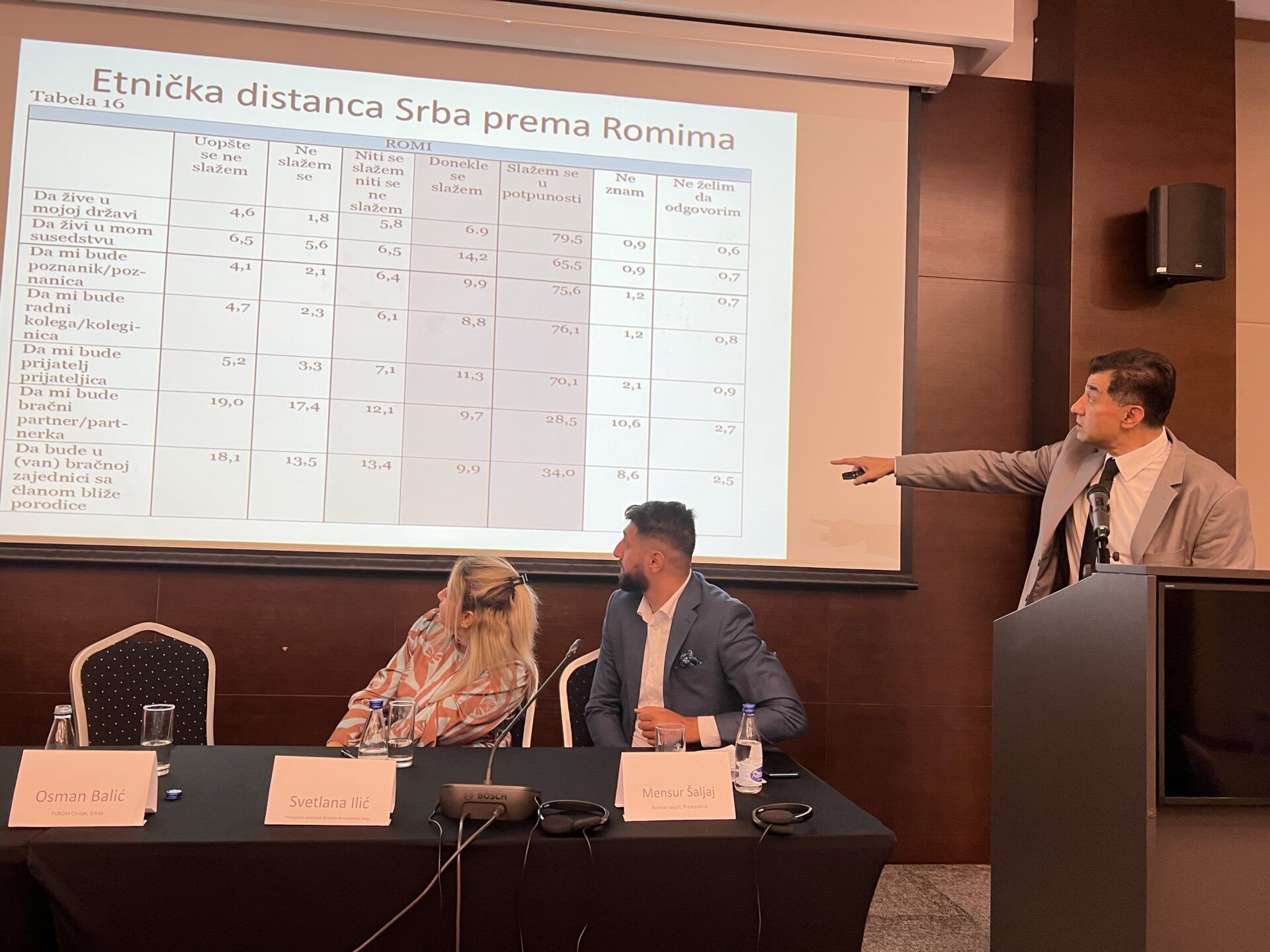
The representative of the Ministry of Health of Serbia, Dragan Đorđević, said that social mediators are the best implemented program in Serbia from the Program of Roma Decade. Although in that country the position of RE mediators is not systematized, ever since 2008 they have a budget line from which they are financed, especially RE female health mediators. Serbia has an Association of health mediators  and they are every day on the fields in the 70 of the 173 municipalities in Serbia.

As the president of Association, Svetlana Ilić, said, they gave priority to female mediators, because the goal was to improve the health situation first of all for RE women, so the female mediators gained the trust of the community more easily and quickly, and in a way they also became a model for Roma women.

Osman Balić from the YUROM Center pointed out that it is necessary to work on raising the level of professionalization of the position of mediators and suggested that this title should be harmonized with codification that exists for this profession in the International Labor Organization (ILO). He, as well as other panelists, especially representatives of local institutions where Help’s mediators worked, suggested that it is not necessary to link the profession of mediator only to the RE population, but also enable them to provide assistance for all vulnerable categories that need additional help.

Balić emphasized that it is very important to collect data and conduct analyzes during the mediator’s work, which can easily prove the benefit and profitability of mediator’s work, from the point of social and economic aspects, but also from the point of view of human rights.

Nadir Redžepi from the Initiative for social change – InSoC from North Macedonia, pointed out that at the beginning of the implementation of the mediators project in his country,  there was a lot of resistance, but with the help of international organizations and RIC (Roma Information Centers) RE mediators managed to achieve significant results in the field of education and raising level of health services among Roma in North Macedonia. However, as he pointed out, stable financing is still a significant challenge  and depends on the political will. As Redžepi stated, from 2016 to 2021, the act of the systematization of this profession was changed 18 times.

Help’s partners in implementation of the RE mediator project, financed by the EU and the Government of Montenegro, were the Capital City of Podgorica and the municipalities of Berane and Ulcinj. Jetmir Muja from the Municipality of Ulcinj, pointed out that the work of Help’s mediators over the passed year and the data they provided had a significant impact on the new local Action plan for Roma and Egyptians, as well as increase in the municipality’s budget plans for social benefits and inclusion.

Besides the importance of RE mediators, a day before the International day of the Romani language, the importance of Romani language for better inclusion of Roma in the majority population was discussed. Panelists pointed out that the enabling education of Roma children in their mother language, in line with the official language in use, would without doubts increase chance for better social inclusion.

They also reminded that Roma is the only community in Montenegro that does not have the opportunity to exercise their right to use their own language, guaranteed by the Constitution and international conventions. Rhetorically, emphasizes Elvis Beriša from the Youth organization “Walking together Phiren Amenca”, the state expresses will to enable citizens to enjoy that right, but for various formal reasons there is a delay in fulfilling this important means for promotion of education, culture and history of the fellow citizens of Roma nationality.

The special guest of the conference on the topic of Romani language was the poet Ruždija Sejdović, born in Montenegro, who lives and works in Germany, who is also a mediator for education and language in that country. He presented the German model by which Roma children as well as all others are provided with education in their mother tongue.

RE mediators – the right hand of the community as well as institutions

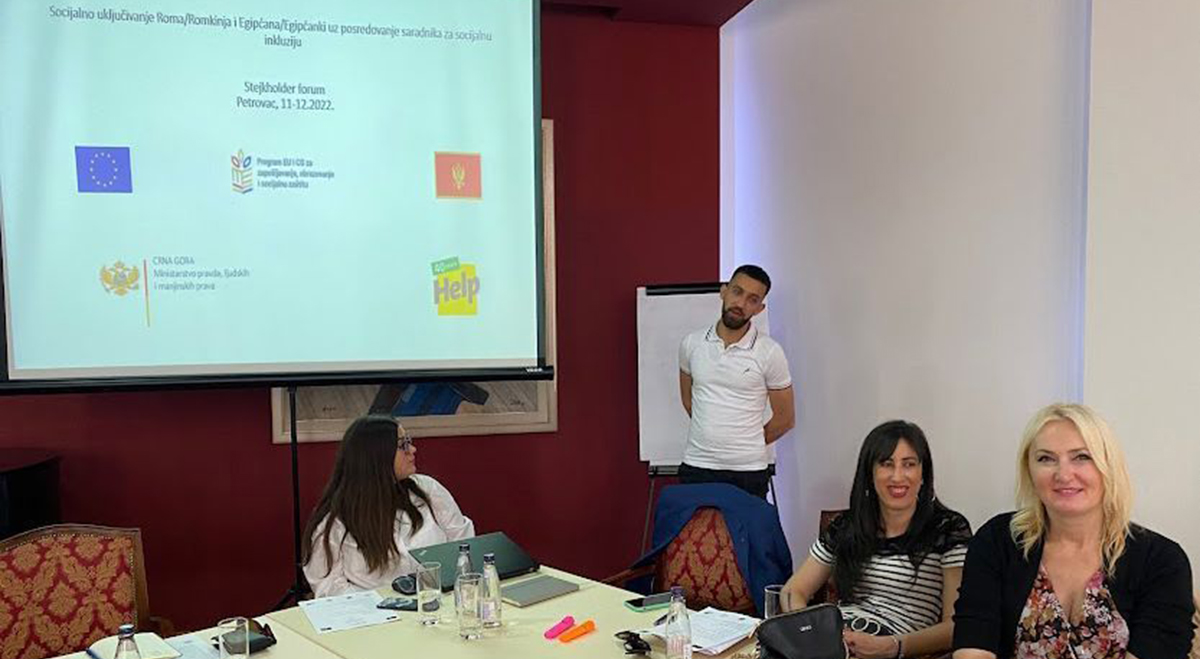
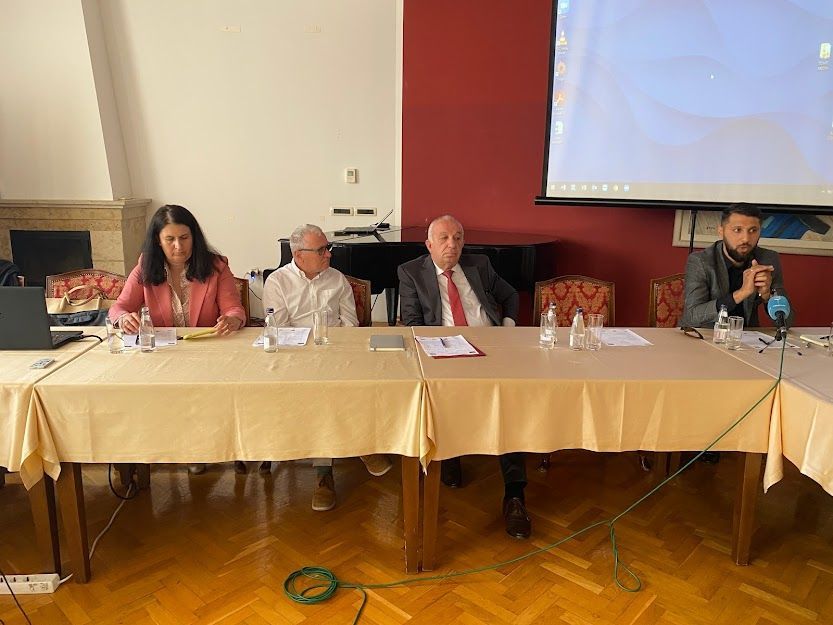
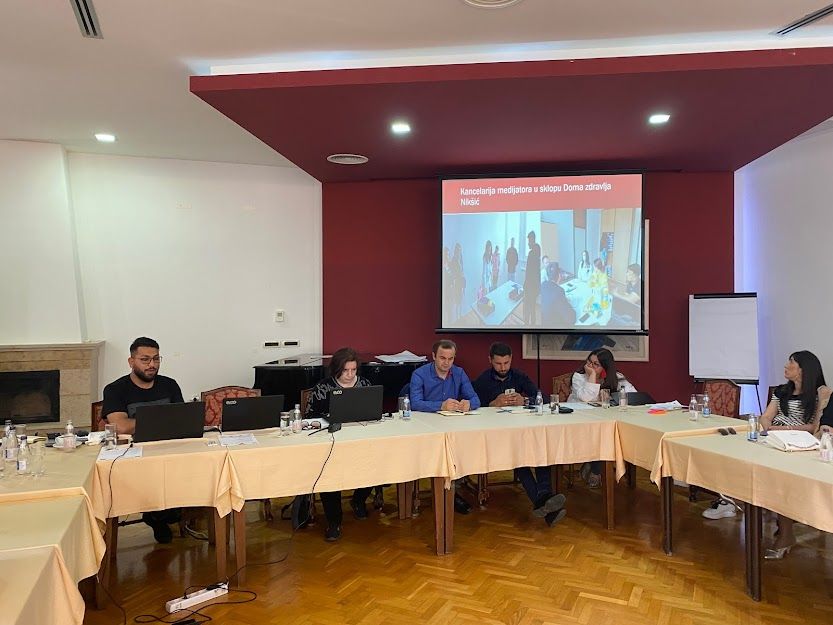
After a year of hard work it is up to the state of Montenegro and its institutions to valorize the knowledge and experience of Roma-Egyptian (RE) mediators through systematizing the position of mediators in healthcare, employment and social welfare, it was conclusion at the meeting of the National Network of Mediators held in Petrovac.

In the past year, after passing the trainings and get a professional certificates, Help’s mediators did their best to gain the trust of local institutions, where they worked as mediators, but also in the RE community itself, which recognized them as a bridge to local services – to easier and faster fulfill of their rights.

It was jointly conclusion that the mediators in 11 municipalities in the past period of time managed to become the right hand of institutions and the community as well.

After a two-day summary of the results of the work of Roma-Egyptian (RE) mediators over the past year, their Help’s mentor, Danijela Armuš, says that she is proud of these young people who have shown how ready they are to help their community in the institutions such as office for employment, health centers and centers for social work, but also what role models they have become for the RE community with their efforts, efforts and achievements.

RE mediators or mediators for the social inclusion of Roma and Egyptians are one of the most successful projects funded by the EU in the Western Balkans, and now it’s on Montenegro’s state turn to adopt the institute of RE mediators in order to facilitate the proper inclusion of the RE population within the framework of meeting European standards into social flows and more effective realization of the basic rights that the state offers to this socially and economically most venerable category of citizens. The systematization of the position of mediator in institutions/public services at the local level is also part of the Recommendations of the EC for Montenegro, as well as part of the State Strategy for the Social Inclusion of Roma until 2025.

Help, in cooperation with partners, the capital – Podgorica and the municipalities of Berane and Ulcinj, implements the project “Social inclusion of Roma and Egyptians with the mediation of inclusion associates”, through which 43 mediators were trained in social inclusion.
The beneficiary of the project is the Ministry of Human and Minority Rights, and a total of 34 Help mediators work from October 2021, for a period of 12 months until mid-October 2022, namely: 13 in the field of social protection, 11 in the field of employment and 10 in the field of health protection. The project is financed within the framework of the Program of the European Union and Montenegro for employment, education and social protection, and is implemented in 11 municipalities.

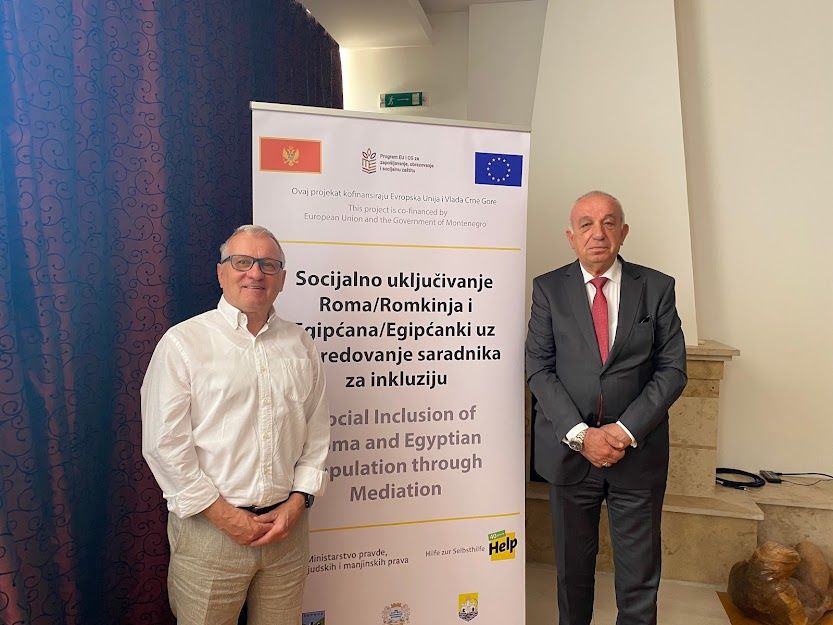
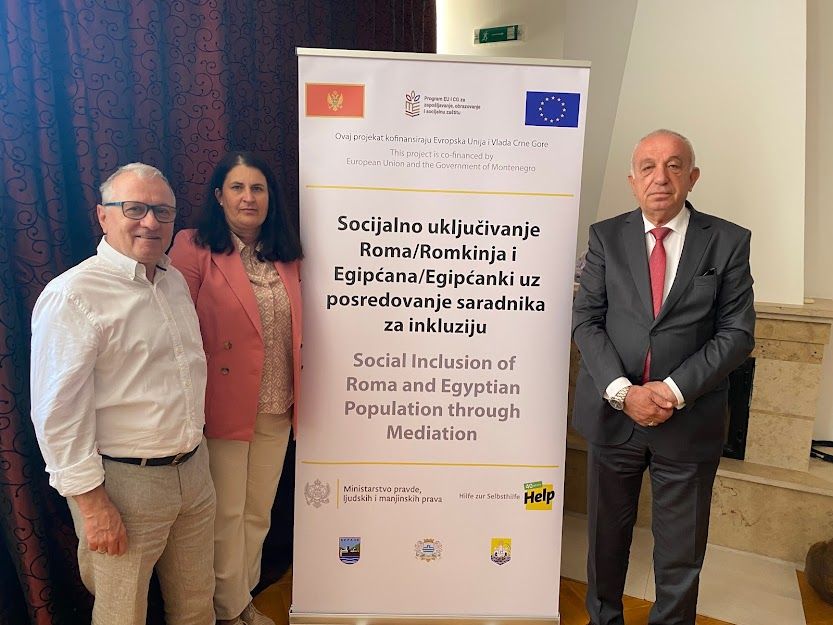
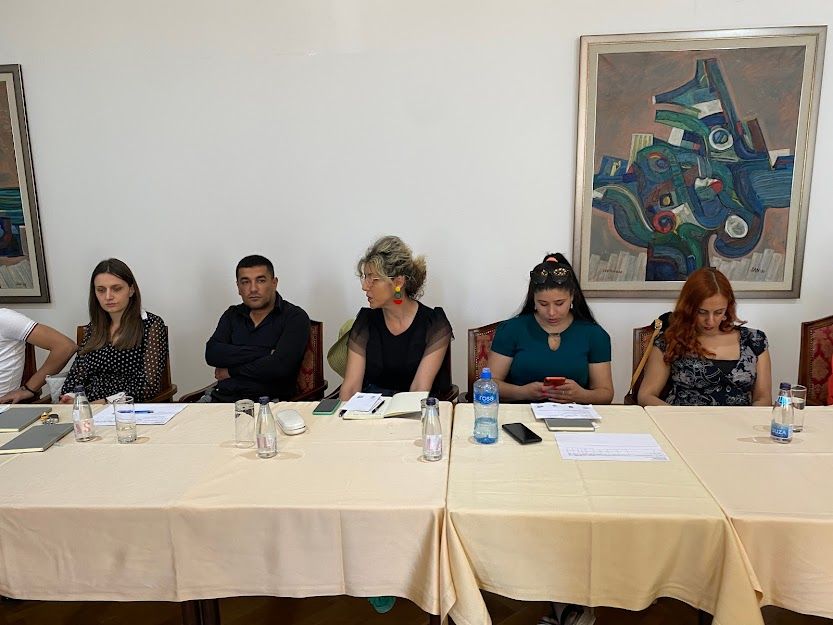
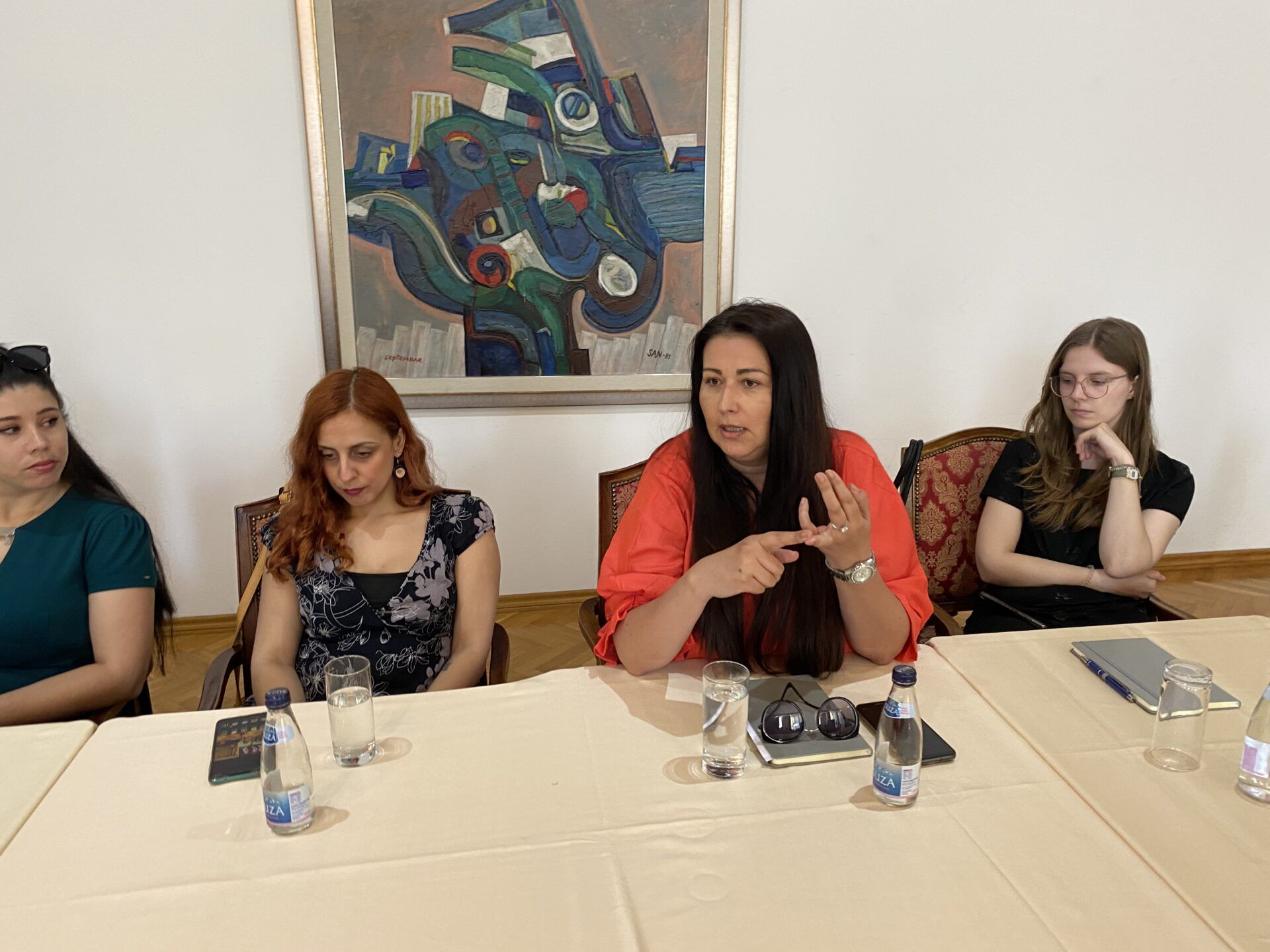
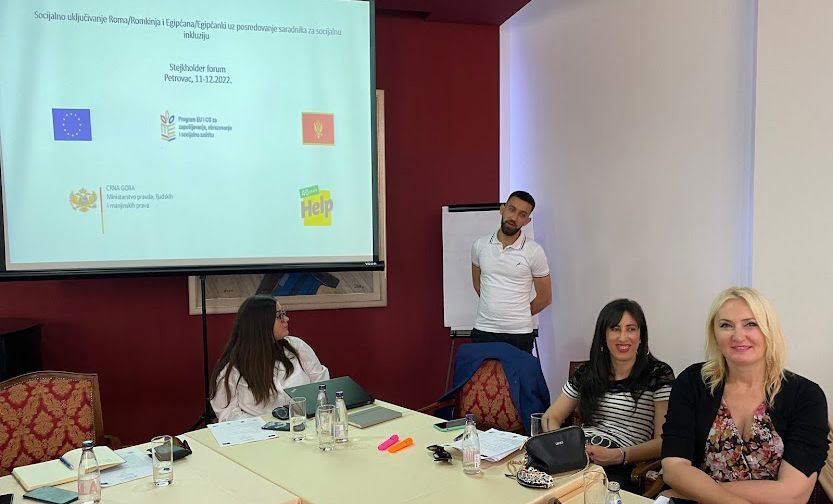
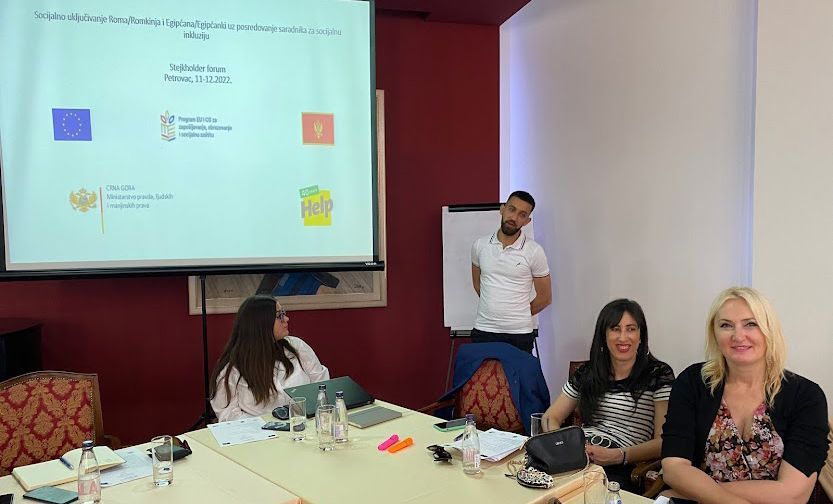
Below are also photos from the two-day meeting of the National Mediator Network held in Petrovac on October 6 and 7, 2022.

Help’s support for investing in young IT experts in Montenegro

4.10 . 2022

Radojka Poleksić graduated from the Faculty of Science and Mathematics at the University of Montenegro (PMF) majoring in mathematics and computer science. Milica Radunović from the HR of the Finagate IT company included Radojka in Help’s training program with work within the project “Social and economic empowerment in the region of the Western Balkans” financed by the German government.

Poleksić says that this was the perfect opportunity for her professional development:

“I am very satisfied and I hope that they are also satisfied with me. Classical education provided me with theoretical knowledge, but we did not have the opportunity to deal with such practical things that are necessary for work in this profession. Here, we work directly on projects with a mentor who checks everything, and from whom we receive good, corrective critique, on how and what needs to be changed, and that means a lot in terms of the speed of work, as well as the pace at which new knowledge is acquired. I am extremely satisfied and I would like to stay here even after the training”.

When asked if she would recommends this type of training to young talented people after completing classical education, who see their future in the IT sector, Radojka Poleksić answers absolutely :

“Definitely, after classical education, which is the foundation, we have to go through this kind of training to learn what is expected of us in this job. I would recommend all my peers to get involved in projects like this, whenever the opportunity arises. Here we have the opportunity to work on the most modern programs and technologies that exist, as well as to be trained by the best people in the field, from whom we can learn a lot.”

Milica Radunović from the Finagete HR department says that this kind of programs are necessary and as an IT company they were very happy to participate in such a project, because it has multiple benefits. Also they hope that there will be more this kind of project in the future. Young beneficiary Radojka Poleksić, has a perspective within their company.

“We would also offer young people to come for training with us after finishing school, and to keep them later. We are absolutely satisfied with Radojka, I hope that we provide her with enough knowledge and opportunities to use all the skills she has acquired and will continue to acquire. And we would certainly have kept her even without this program, because she proved to be great”, says Radunović.

She explains how their process of recruiting young talent usually goes:

“Mostly, we contact people from the University to give us recommendations for certain number  of the young people who did well in their respective studies, and to whom we could provide additional knowledge, improve them and then retain them. And of course young people today, especially those from the IT sector, contact us themselves, send their CV’s, so that’s a process in which we usually reach to them “.

However, Radunović says that there is still room for improvement and connection when it comes to young people from less developed areas, from the north part of Montenegro. Most of their employees, she notes, are from Podgorica and Nikšić. Unfortunately, young people from less developed areas only get a chance if they come forward themselves.

Ivan Bojanović graduated from vocational high school ETŠ “Vaso Aligrudić”, which work closely  with IT companies, and applied for on-the-job training after he had previously attended the Logate Academy, where he was trained as a Java developer. He is very pleased that, thanks to the Help  project, he had the opportunity to undergo a six-month on-the-job training at the Logate Institute.

Ivan told us that he was very satisfied, and, he believed, that he had used this great opportunity very well.

I hope that at the end of the six-month training I will continue to work in this company,” says Ivan Bojanović.

Filip Kečina from the Logate Institute confirms Ivan’s words and he is also grateful for the opportunity to engage talented young people through such a project. Ivan, says Kečina, has the opportunity to be part of the Logate team, where they are already counting on him.

We expect some top results from him. Ivan Bojanović has exceptional potential, even though he just finished high school, we are extremely satisfied with his potential, precisely because he is learning from some very good mentors and senior programmers. He has the opportunity to advance and be part of our team after he finish training on the job in this project. Ivan is a person we are already counting on, even after the conclusion of this project, so somewhere all the puzzle have come together. I believe that this opportunity for cooperation will continue to exist, we hope for successful cooperation with Help and with your partners in the future as well,” says Kečina.

Through the project “Social and economic empowerment in the region of the Western Balkans”, a total of 20 employers and the unemployed were supported and networked in this circle.

Within the program, Help  supported 20 employers through a non-reimbursable grant in equipment and tools for work. The equipment was delivered to them in July and August, after a previously process of the public tender.

The average value of the non-refundable grant was 2413.61 Euro per user/employer, and a total of 48 272.2 Euro was spent for the purchase and delivery of equipment to the user. Professional equipment was given to employers for use until the end of the project.

The employer’s obligation was to sign a minimum 12-month employment contract with the beneficiary at the end of the six-month paid on-the-job training. According to the contracts signed by the employer, unemployed persons and Help, the six-month on-the-job training is planned to last until the end of October.

To the satisfaction of Help, as many as 13 unemployed persons are women, of which two are from the Roma-Egyptian (RE) population and seven are men. Of the 20 unemployed, 15 of them were additionally supported through the project with licensed professional training with the aim of empowering, creating better conditions for work and further advancement, as well as obtaining a valid certificate from the licensed providers of the Center for Vocational Education of Adults for a specific profession/profession.

By the end of August, 13 of them successfully completed a three-month licensed training in the following professional occupations: IT-basics of computers, digital marketing and web sales – five people, administrator – four, two maids, one accounting technician and one cook.

It is ongoing and by the middle of November, licensed training will be completed for two more unemployed persons, for the profession of tourist guide and waiter.

Furthermore, two public calls are underway within the same project financed by the German government through the Ministry of Foreign Affairs, with the aim of revitalizing the economy and promoting employment for new candidates for on-the-job training in the IT sector.

We especially encourage members of vulnerable groups such as: young people, women, people with disabilities and single mothers to apply for a new round of networking for the unemployed and employers.

Volunteers with Help in the cleaning action in Podgorica and Bar

26.09.2022

World Cleanup Day 2022

About 200 kg of garbage were collected in Podgorica and Bar by Help activists, RE mediators, school students and citizens from the neighborhood,  in a symbolic action organized on the occasion of World Cleaning Day. Instead of September 17, when is the World Cleaning Day,  due to bad weather, our actions were postponed by seven days and held on Friday and Saturday (23-24 September)

In Podgorica, the cleaning was carried out at the location of the IPA settlement, in Konik. In Bar, where we had action with partners from the “Center for the Affirmation of the RE Population – CAREP” from Nikšić, has been cleaned in the Golo Brdo settlement and the beach in Sutomore. The activities were organized with the support of Nehlsen Group and RODIEK.

World Cleanup Day is an opportunity for millions of volunteers from the 191 countries to come together and contribute to the fight against global waste problems and to promote a sustainable future and development.

The Nehlsen Group, which supports this action, emphasizes that they want you to use this opportunity to be a pioneer in environmentally friendly waste and disposal as well as sustainable recycling.

More than three decades ago by adoption of the Declaration in Žabljak on September 20, 1991, Montenegro became the first ecological country in the world.

The declaration defines the country’s strategic determination to adopt and apply the highest standards and norms in the field of environmental protection, nature conservation and economic development, based on the principles of an ecologically sustainable system.

However, more than 30 years later, Montenegro is quite slow and in delay in this area, and the “wild beauty” environment is being destroyed in various ways, despite the declarative promises. Nevertheless, in accordance with the proclaimed goals of the ecological state, as well as obligations to the adopted of EU standards, in recent years certain efforts have been made to achieve the main goals: protecting nature, creating conditions for sustainable development and combating climate change.

Help regularly participates in actions aimed at promoting a cleaner environment and sustainable development in Montenegro.

Below are photos from actions in Podgorica and Bar:

Video – Ukrainian refugees, children and adults on the language classes

For Ukrainian refugees – children who arrived in Montenegro with their families, as well as for adults – Help has provided various types of assistance thanks to the network of German humanitarian organizations for quick action in disasters – Aktion Deutschland Hilft and in cooperation with the Ukrainian volunteer network Good deed. Learning the language for easier adaptation to the new environment is certainly one of the priorities.

Help supported language classes in Budva and Podgorica:

Video- Tennis and basketball in Podgorica and Budva for the youngest refugees from Ukraine

04. 02. 2022

For Ukrainian children who arrived in Montenegro with their families, Help together with the network of German humanitarian organizations for quick action in disasters – Aktion Deutschland Hilft (Akcion), and in cooperation with the Ukrainian volunteer network Dobro djelo, has provided support for the the tennis and basketball lessons in Podgorica and Budva.

Six months later – Ukrainian children in Montenegro

24. 08. 2022

It is the Day of Ukraina Independence and six months since the beginning of the Russian invasion of this wonderful country, whose yellow-blue flag symbolically represents endless wheat fields and the blue sky above them  – Слава Україні! Героям слава!

Among the approximately 7,000 Ukrainian refugees who sought save haven in Montenegro, away from Russian aggression, many are the children for whom Help, in cooperation with the network of German humanitarian organizations for rapid action in disasters – Aktion Deutschland Hilft, has had organized summer camps – to spend a moments in socializing, playing and having fun, in a hope that they will forget the harsh reality they left behind.

In the past two months, among other activities, Help organized six summer camps in cooperation with the Ukrainian volunteer network Dobro djelo.

#westandwithukraine #helpmontenegro #helpgermany #actiondeutschland

Distribution of 200 food packages in three Montenegrin municipalities on World Humanitarian Day

19.08.2022

On the occasion of World Humanitarian Day, the most vulnerable citizens of Rožaje, Budva and Podgorica will receive a total of 200 packages of food. This support has been provided by the German Organization Help, with the support of the network of German humanitarian organizations for rapid action in disasters – Aktion Deutschland Hilft and the Ministry of Labor and Social Welfare of the Government of Montenegro.

On this occasion, the Minister of Labor and Social Welfare, Admir Adrović pointed out that despite all efforts to eradicate it, poverty still remains a problem within Montenegrin society.

“Very aware of the fact that there are no mechanisms that can suppress poverty by 100%, we must, as a responsible society, work more intensively on reducing and tackling the consequences of poverty, and thus increasing the standard of living. It is therefore necessary for all of us together to put additional efforts to systematically address the problem of poverty, “Minister Adrović emphasized.

He added that today’s action, which was performed in partnership with Help, is another in a series of indicators that show that humanity and solidarity are the basic principles on which social justice is based, and that no individual or family, should be left behind.

Klaus Mock, Regional Coordinator of Help, has noted out that this is another opportunity to show that local institutions with international support can do a lot on providing assistance for the most vulnerable categories of the population.

“I am very glad that we are continuing our longstanding cooperation with the Ministry of Labour and Social Welfare in combatting poverty and alleviating the situation of so many socially disadvantaged families in the country. The international day for humanity is yet another occasion to show that local institutions and their commitment together with international support can provide much needed assistance to those in need”, he said.

An overall of 100 packages will be distributed through the Red Cross for the most vulnerable social cases in Rožaje.  70 packages have already been distributed in Budva in the Roma settlement of Palestine, and 30 packages for the most vulnerable social cases in Podgorica are being distributed by Help’s activists.

The total value of this support is 7,412 Euro.

How “Activate” changed the life of Lejla and Aleksandra

18.08 2022.

Two young, until recently unemployed and single mothers from Bijelo Polje, through the UNDP pilot project “Activate”, implemented by Help, got and used opportunity to find a jobs that fundamentally changed their lives.

Lejla Erović is a 25-year-old single mother – a customs technician by profession, has been registered at the Employment Office as unemployed. The program “Activate through training and mentoring” and  as she stresses, “first off all” mentor Danijela Armuš, opened the door to her for training though working for the job of assistant accountant in the SUKI car service in Bijelo Polje. Six months after moving from Bar to Bijelo Polje, she got what she says is her “dream job”, for which she has a one-year contract – and she believes she will keep it after that. She is happy at work, and the employer is satisfied with her work, and fair to her.

“As unemployed for some time, I attended your motivational workshops for work activation. We also have a group on viber, where Danijela (Armuš), our mentor, regularly sent us links to websites that we can visit, in order to find a suitable job. That’s how an opportunity opened up for me, so I decided to respond to a job ad at the SUKI car service. I had training from April 1 to May 13, which I successfully completed and thus got this job,” Lejla told us.

As she says, she is “more than satisfied” with her job.

“I have excellent communication and cooperation with the coleagues in the service and work here, where I was given the opportunity to work and learn a good and interesting job. My colleagues are excellent and cooperative, they help me a lot, so I am very satisfied”.

From the point of view of Lejla Erović, the pilot program “Activate” fundamentally changed her life in a positive direction.

The motivational workshops were very good, we learned a lot of good things there. For me a problem was the lack of courage to take that first step, and the workshops with a lot of young people, where we gave each other support and motivation, but also exchanged different experiences, helped me a lot”.

Work with the trainer from the workshops, communication specialist Radoje Cerović, and Help’s mentor Danijela Armuš, according to Lejla Erović, helped them immensely in discovering and opening new opportunities for the young and unemployed.

“If it wasn’t for that, I would probably still be wandering and looking for a job from one place to another.”

Lejla’s previous work experience was seasonal in the Bar, in a bakery and in a restaurant kitchen, but with the improvement of her job as an accountant’s assistant, she is very satisfied and would like it to be her permanent job. This was a new work experience in which, right from the training itself, she immediately found herself at ease  and was happy to learn everything – a new software program, price leveling, and more – everything that the job of an assistant accountant entails.

“For now, I have signed a contract for one year. However, as things are developing and the fact that I have an excellent relationship with my employer, I am satisfied and they are satisfied with my work, I have a high hope for permanent employment. I really tried and I try to do my best, to learn and acquire routines in this job – I like it. It is the first job that I liked and I am very satisfied, so I hope that we will continue and renew the contract latter on. Now I just want to improve my skills as much as possible in this job, in order to become really good at it”.

I think I found the job of my dreams, so to speak,” says Lejla Erović with a smile. She has a son with whom she lives alone and who goes to kindergarten. “Everything finally came together, much better than I had hoped,”  this young woman told us, who now, instead of social security aid, lives off her hard work – with satisfaction.

Aleksandra Šćekić, single mother, tourist technician – has been registered with the Employment Service for a year, because she lost her job due to the consequences of COVID-19. Program  “Activate yourself through training and mentoring” program and mentor Danijela Armuš motivated her to apply for the Job Fair. In the pastry shop ADI in Bijelo Polje, she is on the training at work as a bartender.

In parallel, every day after the end of the first shift, she goes to the close town Berane, where from 4 to 7 p.m. she also attends training for a teaching assistant – she would like to work with children.

“It’s great in any case, but if it weren’t for the UNDP project, Help and Danijela, I wouldn’t have achieved any of this,” says Šćekić.

For a year, she reported to the bureau as unemployed, because she lost her job as a surplus during the corona pandemic – she worked for a well-known chain of cosmetic and drug stores (House of chemical).

“Since I was regularly looking for a job, I had the opportunity to participate in this program, where we had extraordinary motivational workshops, now Dr. Cerović, during which we learned a lot of things that we didn’t know before – especially when it comes to communication, but also to meet our great mentor Danijela Armuš from Help. Her daily contact, motivation and work with us, in groups and individually, were crucial in our search for work and new opportunities. She helped us to prepare and report to the Employment Fair. It was at that fair that I found this job where I was accepted for training as a bartender, and where after three months I will receive a certificate for a bartender and be hired. ”

Aleksandra Šćekić made an extra effort and took part in another training, not in her own town but in the neighboring one, and she travels there every day after finishing her shift at the ADI bistro shop in Bijelo Polje.

“Parallel to this job, Help and my mentor Danijela enabled me to attend the training for a teaching assistant, which takes place in Berane, and I travel there by bus every day after the end of my shift here, where I work until 3 pm. In Berane, we have training from 4 pm until 7 in the evening and it’s wonderful for us. But really, if it wasn’t for this project and Help and Danijela, I wouldn’t have achieved any of this”.

Both Aleksandra and Lejla express special gratitude to their mentor Danijela Armuš, who was their driving force.

“She was persistent with all of us, as a group and individually, she opened up to us and showed us all the opportunities that arose and motivated us to apply. Three of us, beneficiaries of the project going to training from Bijelo Polje for Berane every day, and the Employment Office approved it for us. I really have to thanks to Daniela”.

When asked how, as a single mother, she manages to go to two trainings  and the work, she says behind it is a “really good organization”.

“There is a kindergarten, there are grandparents, and somehow we managae . It is better to start from something than to sit at home. When you start from something, you can always look for something new and better. I’ve started in the tourist industry as a tourist technician, and then, after completing my training as a teaching assistant, there is a chance that I could get a job there as of September 1st. My child also starts school in the fall. Apart from being a mom, I also love children very much and would like to work with them”.

In that case, working in the pastry shop would be an additional source of income for her, and she wants to keep it, especially becaus, after a three-month training, she committed herself to nine months of work, and she wants to keep her promise.Also, the staff  at the ADI pastry shop is also very good.

All the other participants of the pilot project Activate, in the contacts we had with them, about the impressions of this program, expressed their special gratitude to the mentors. Along with Help’s Danijela,  for the young mothers and unemployed beneficiaries of material security (MO), according to their words, great help had been provide by the other mentors – Marija Ružić Stajović, Ivana Tomašević and Marina Došen.

UNDP and Help implemented a pilot project within the Activate! program,  whose main goal is to help young and unemployed people up to the age of 35 to find employment more easily and quickly, through personal activation and engagement – working on themselves and their work profile.

Biljana Jovićević

Photo author: Marko Ilić

Support for Ukrainian children to learn the language, tennis and basketball

15.08.2022

Six months have passed since the Russian aggression against Ukraine started. It is more than clear that the war will last even longer. Around 7 thousand refugees who sought refuge in Montenegro will have to adapt to life here.  Among the refugees is a large number of children of different school ages, and they will start attending local schools in September.

Among a number of activities financed by Help, thanks to the network of German humanitarian organizations for quick action in disasters – Aktion Deutschland Hilft, for the Ukrainian refugees, are lessons of the Montenegrin language for children and adults.  The interest in attending these classes is very high. The classes are organized in volunteer centers for Ukrainian refugees in Podgorica and Budva.

Learning the language is of particular importance for children, who after the numerous stresses they have been exposed to in the past six months, will also face the challenge of continuing their education in a foreign language.

Professor Ms. Sanja Vojinović says that the language courses are based on the textbook, “Montenegrin language for foreigners”, which is a good starting point and base for upgrading knowledge fast.

“I think this is a good project, because it allows these people who were brought here by the tragic developments in Ukraine to live easier, better and happier. Going to school for children will be a big challenge, but for us here in Budva, despite the generally bad situation in education, it is still a little easier process, having in mind  we have had experience for years with the enrollment of children who had to learn Montenegrin language,  in addition to the regular curriculum.”

We attended classes and testified the enthusiasm with which both groups children and adults approach learning. Adults, says Professor Vojinović, are helped by the fact that it is a Slavic language with a lot of similarities. For children it is a bit more difficult; however, as we have seen, they can already introduce themselves and tell basic information about themselves and others.

When asked how they feel in Montenegro, everyone says it is pleasant, because they feel welcomed, and apart from the unbearable heat that lasts for a long time, which they are not used to, they have no complaints. They used the opportunity to thank the citizens of Montenegro for their hospitality and Help for the support provided.

In addition to language learning, Help supports Ukrainian refugees also through  psychosocial assistance. Help organized six summer camps for children;  the fifth one is ongoing now in Vučje. The previous four camps were organized in Vojnik mountain and in the Ethno village of Montenegro.

For the sake of better interaction, the groups include, apart from Ukrainian children, peers from Montenegro, along with instructors, who organize numerous joint activities for them.

Help also provided sports equipment for  a number of sports activities in Podgorica and Budva. In the two towns, live Ukrainian tennis and basketball coaches, who have organized groups that regularly train these popular sports.

Previously, Help also supported Ukrainian refugees in cooperation with their volunteer organization Good Deed with food packages (400), as well as some clothes, shoes and other items for the children.  Help supported the establishment of day care premises in Herceg Novi for Ukrainian refugees for their activities.

About 7,000 refugees live in Montenegro. They are mostly women with children and single mothers. Most of them are in Budva, Bar, Herceg Novi, Tivat and Podgorica.

Below is the atmosphere from basketball, tennis, language classes and summer camps.

The first of six camps for children from Ukraine started

21. 07. 2022

The Ethno village of Vojnik hosted the first group of Ukrainian refugee children as the first of six summer camps that Help organizes as part of its assistance for refugees from Ukraine who fled to Montenegro from the raging war in their homeland, due to Russian aggression.

The first group of 15 Ukrainian children, together with five peers from the domestic population, with the support of coaches and several parents, have the opportunity to get to know the village of Miloševići in a rural setting, see and play with domestic animals, and participate in various mobile and social activities such as games, to paint and draw etc.

In addition to Vojnik, three more camps will be successively organized in Brezna and two in Vučje.

The assistance is financed through Aktion Deutschland Hilft, a network of German humanitarian aid agencies for quick and efficient action in disasters – abroad. Part of the financial resources, for children from the local population, was provided by the Montenegrin Ministry of Labor and Social Welfare. The summer camps are part of the aid package that Help organizes for Ukrainian refugees in Montenegro and include food aid parcels, clothes, toys and other items for children.

In the photos, we convey some impressions  from Vojnik.

Help began the distribution of aid packages for Ukrainian refugees

The distribution of 400 aid packages for Ukrainian refugees who have found refuge in Montenegro, has begun in Podgorica, where 30 food packages are going to be distributed. 280 packages have been delivered to Bar, which will be distributed to refugees, and 90 packages have been delivered to Herceg Novi.

This aid, which was provided by Help, is funded through Action Deutschland Hilft, a network of German aid agencies for rapid and efficient disaster relief abroad. The total value of the packages of food is 17,144 Euro.

Aid is being distributed through the Dobro djelo network, the five Ukrainian volunteer centres which were established with the help of the Ukrainian Embassy in Montenegro.

As a consequence of Russian aggression against Ukraine, there are between 6,000 and 7,000 refugees in Montenegro according to available records, the most of whom are mothers with their children, and the elderly.

In addition to providing food assistance, Help will also provide clothing, sports equipment and children’s props for a number of children, and from the beginning of next week, Ukrainian children will be in the first out of six designated summer camps where, for better socialization, and with an adequate and professional programme, a number of children from Montenegro will join them. In total, there will be 90 Ukrainian children on six planned camps, who will have the opportunity to socialise with 30 children from Montenegro.

In addition to Ukrainian refugees, Help will distribute some food packages  for domestic socially disadvantaged persons made – possible by a contribution from the Montenegrin Ministry of Labour and Social Welfare.

Minister Gjeka and Help are working to support the systematization of the mediator job position

14.06.2022

Improved access to health, employment and social services is key to better inclusion of the Roma-Egyptian (RE) population in Montenegrin society, and the position of RE mediator has proven to be an effective model for better exercise of these rights, said the Minister for Human and Minority Righths Fatmir Gjeka during the meeting with the regional coordinator of Help, Klaus Mock.

Minister Gjeka, emphasized the importance of the social inclusion of the Roma and Egyptian communities in Montenegro and importance of co-operation in this area with international partners. Successful cooperation on the implementation of strategic policies is key to achieving the planned goals, said Minister Gjeka, who has emphasized better access of basic human rights.

“The results of the projects that we are implementing, in order to improve the position and quality of life of our citizens from the RE population, has been a motivation to intensify efforts and design further activities,” said the Minister.

Regional coordinator of Help, Klaus Mock, congratulated the Minister on his appointment and stressed the importance of the area in which Help cooperates with the Ministry of Human and Minority Rights.

Mock said that the project is a continuity of Help’s work on the inclusion of the RE population in Montenegro, and that the effects of the work of mediators in the fields of employment, social and health care are recognized by both the community and local institutions.

“The ultimate goal of this project is to systematize the position of RE mediator in institutions at the local level . In this way, Montenegro would fulfill one of the recommendations from the last  Progress Report from European Commission. We need to use the momentum and resolve the issue primarily for the benefit of the RE population, but also as proof of Montenegro’s commitment to the adoption of European values”.

Help, in cooperation with partners, the Capital City of Podgorica and the municipalities of Berane and Ulcinj, is implementing the project “Social inclusion of Roma men and women and Egyptians with the mediation of inclusion associates”, through which 43 mediators in social inclusion were trained.

The beneficiary of the project is the Ministry of Human and Minority Rights, and a total of 34 Help Mediators have been working since October 2021, for a period of 12 months: 13 in the field of social protection, 11 in the field of employment and 10 in the field of health care.

Project coordinator, Diana Anđelić, reminded that the project is financed within the Program of the European Union and Montenegro for employment, education and social protection, and is being implementing in 11 municipalities.

“The Roma and Egyptian communities, due to their specifics, primarily due to the fact that most of them speak Albanian or Roma, have numerous benefits from the mediation of mediators in the access of guaranteed rights,” said Anđelić.

“Having in mind the importance of the role of mediators in the social inclusion of the Roma and Egyptian communities, the Ministry will give its full contribution from its competence to integrate the systematization of the position of the mediator into the public service system in Montenegro,” said Minister Gjeka.

It was agreed at the meeting that from their competencies, all involved stakeholders will help create conditions for permanent work engagement of trained mediators.

Minister Gjeka and representatives of Help also discussed other modalities of cooperation.

Help helping Ukrainian refugees in Montenegro

10. 06. 2022.

German Humanitarian Organization Help will provide assistance to vulnerable Ukrainian refugees in Montenegro, mainly located in Podgorica, Herceg Novi, Tivat, Bar and Budva. Assistance will be provided in food, clothes, medicines,  materials for workshops,  psycho-social support,  summer camps for children and excursions for elderly refugees who have no other chances of leaving their immediate place of refuge.

These relief measures are funded by „Aktion Deutschland Hilft”,  a federation of German aid organizations acting concert to provide quick and effective help in response to major disasters and emergencies abroad.

Help will cooperate in this project with the Ukrainian relief organization „Dobor djelo“ (Good deed) that disposes of a  network of five Ukrainian volunteer centers that were established with the assistance of the Ukrainian embassy. Presently some 6,000 to 7,000 refugees are staying in  Montenegro. While many of the Ukraininan refugees have the means to take care of their needs, there are others who are in dire need of assistance:  accomodation, food, education for children, language courses and jobs.

Help’s budget for this relief projects amounts to  Euro  86,182.

Help and the Good Deed Network today signed a Memorandum of Cooperation for the distribution of aid.

Among the refugees are more than 1, 000 children. They are mostly in Budva, more than 600 and about 300 in Bar. In the past few months, six babies were born, and another 15 women are expected to give birth. The largest number of refugees are women, mostly as single parents.

Since 1999, Help has been providing aid in Montenegro, as well as all other countries in which it operates, for the most vulnerable categories, especially refugees and displaced persons, minorities, women and children in accordance with its mission “to enable people to take control of their lives and live in dignity, peace and safety.”

Continuation of cooperation between Help and the Ministry of Labor and Social Welfare

Help is an important partner in resolving humanitarian crises and providing assistance related to long-term economic reconstruction and development, it was assessed at the meeting of Montenegrin Minister of Labor and Social Welfare Admir Adrović and regional coordinator of Help Klaus Mock, on June 7.

They agreed that Help provided significant support to both, Montenegro and the countries of the region, in employment and self-employment projects, in supporting social and economic stability.

Minister Adrović and Mock discussed the current crisis due to Russia aggression in Ukraine, and the possibilities of cooperation in providing support to refugees from the country.

The Minister informed Mock about the activities that are being carried out at the level of the Government of Montenegro in order to provide support to refugees seeking refuge in Montenegro.
Minister Adrović pointed out the significant and successful work of Help, “which is seen through active participation in many projects that have contributed to improving the living conditions of smaller communities, vulnerable groups and their social inclusion in Montenegrin society.”

Help projects in Montenegro for years, among other things, are aimed at improving the living conditions of displaced persons and refugees, placed in private accommodation and collective centers, as well as Montenegrin citizens in a state of social need and vulnerable categories.

As it was announced, joint projects and programs of Help will be implemented in accordance with the defined activities with the Ministry of Labor and Social Welfare in these areas.

A new group of unemployed has started on-the-job training in the north and south

A new group of 20 unemployed persons began on-the-job training and licensed training lasting six months. The commission selected 20 employers and 20 unemployed, of which 12 in the north (Rožaje, Berane and Bijelo Polje) and 8 in the south (Ulcinj and Podgorica) of Montenegro.

Of the overall number of the hired unemployed – 14 are women and 6 men. They will be trained to work in the fields of IT, digital marketing, administrative work, accounting, and tourism services: as guide, cook, bartender, maid, salesman, etc.

At the end of April, contracts on practical training were signed at a work place, and after signing the contract, the unemployed started a six-month on-the-job training on May 1st.

In addition, contracts were selected and signed with three providers that will implement licensed training programs for 15 of the 20 hired unemployed by the end of the year.

A public tender has been announced for the procurement of equipment and funds for work, which is in progress and those interested can apply until June 9. 2022. An tender was conducted for the selection of adult education providers.

Employers, who have announced that they will keep people who have been trained with them after the training, will receive equipment as a form of incentive for hiring the unemployed. Thus, among other things, Help will provide employers with valuable IT equipment, refrigeration equipment, kitchen and bakery appliances, tools for repairing machines and more.

Everything is being implemented within the project that Help is implementing in the Western Balkans under a program worth 3.35 million Euro, with the support of the German government called “Socio-economic empowerment of the Western Balkans” to strengthen regional stability in 2021 to the end of December 2022.

The project coordinator Dženan Demić says that this is a continuation of good practice of the successful model in connecting the unemployed and the employers, which has been tested in Help for a long time, and enabling professional development through certified trainings.

“We pay special attention to the criteria. Among our priorities are the deficit occupations that employers themselves need, as well as providing vocational training to the most vulnerable categories of the unemployed, such as women and young people. We also take in consideration to give priority to the unemployed in the poorer north of the country, where there is a lack of jobs and skilled labor. As we have been implementing the same model for a long time, through different programs, except for the unemployed, the employers themselves have regained interest – they get a trained workforce and valuable equipment for business improvement. ”

Help at the European Projects Fair in Podgorica

Chamber of Economy of Montenegro, in cooperation with the Ministry of European Affairs, organized the Fair of European Projects on May 28 in the Petrović Park in Podgorica.

Help’s stand was among more than 60 other stand at the fair.

For years, Help has been implementing EU-funded projects in Montenegro. A particularly important project at the moment, for the Roma-Egyptian (RE) community in Montenegro, with which Help has been working for more than two decades, is “Social inclusion of Roma men and women and Egyptians with the mediation of inclusion associates”, implemented in a total of 11 municipalities (Bar, Berane, Bijelo Polje, Budva, Cetinje, Herceg Novi, Nikšić, Pljevlja, Podgorica, Tivat and Ulcinj).

The project is funded by the European Union and Montenegro Program for employment, education and social welfare. Help’s partners on the project are the Capital City of Podgorica and the municipalities of Berane and Nikšić.

A total of 34 Help’s Mediators have been working in local institutions since October 2021, for a period of 12 months: 13 in the field of social welfare, 11 in the field of employment and 10 in the field of health care. The goal is: The State to recognize importance of the model of Roma mediator/associate for social inclusion through institutions/services and include it in the systematization of jobs at the local level, which will benefit the RE population in Montenegro, as well as contribute to their effective inclusion in society.

The event, organized as part of the celebration of The Month of Europe, was an opportunity for visitors to get acquainted with projects implemented by institutions, municipalities, companies, universities and NGO sectors, and to talk with potential partners about expected upcoming calls.

The fair was opened by the EU Ambassador to Montenegro, Ms. Oana Cristina Popa, the Deputy Prime Minister and Minister of European Affairs, Ms. Jovana Marović, and the host, the President of the Chamber of Economy of Montenegro, Ms. Nina Drakić.

Participation of overall of 45 institutions, organizations and companies in the Fair, which they were represented more than 200 projects that are implementing, on the over 60 stands, confirms that Montenegro has the capacity to work on itself and meet the set goals using the available support of European funds. While there’s always room for improvement, I think we have reasons to be proud of what is being done in this field. I hope that you all share my belief that we will use IPA III (funds) in an even higher percentage, especially taking into account all the benefits offered through it. So we are ready for upcoming calls that will be announced for the second half of the year, “said the President of the Chamber of Economy of Montenegro, Nina Drakić.

EU ambassador Oana Cristina Popa believes that the numerous projects presented at the EU-funded Fair not only prove that the Union is the largest donor to Montenegro, but also that their support is being used in the right way.

She pointed out that EU pre-accession funds are used for many important projects, from support to public administration reforms and strengthening the rule of law, to investing in environmental protection and transport infrastructure.

“Our new IPA funds will focus even more on the priority areas selected by Montenegro. We have already granted assistance to Montenegro worth 40 million Euro, which cover transport, environment, agriculture and others within the 2021 program, which will be implemented this and next year”, said Ms. Popa.

Deputy Prime Minister Jovana Marović pointed out that Europe is the main topic these days, considering that the European House has also been opened.

“European integration is at the core of the work of the new government, which is committed to Montenegro joining the EU as soon as possible and these projects contribute to achieving that goal,” says Marović.

She reminded that Montenegro has been using EU funds since 2007, and that numerous projects have been implemented with their support.

They are currently working on a framework for funds that will be used until 2027.

Below you can see the photos we took at the Fair. Ambassador Popa and Minister Marović visited the Help stand and our RE mediators:

Young Roma and Egyptians visiting high schools

The question number 1 in front of primary school graduates is: Which high school to enroll in? Young graduates from the Roma-Egyptian (RE) population were in looking for a response to this dilemma, assisted by Help’s mediator Dejvid Sejdović, who organized a two-day visit to high schools in Podgorica, during which future high school students will be introduced to specific programs offered for further education in the Capital city of Podgorica.

Visits to the high schools began with 23 RE students at the “Sergije Stanić” School for Secondary and Higher Vocational Education, where, as school representatives told us, already are schooling RE high school students in each of the programs. Some of them are so successful that they recently participated in an international competition in Greece for high schools.

A group of students expressed a desire to meet their successful fellow RE students and share their experience with them, soon as possible.

School “Sergije Stanić” offers professional education in the area of various service hospitality and tourism industries. Representatives of the school, PR and pedagogue presented to future potential students all the educational modules they have, as well as which doors they are offered for work or continuing their education after completing three or four years of high school.

The children had the opportunity to ask questions and seek for answers, as well as to visit some of the classrooms where classes, practices and internships are conducted, which is of the great importance in this school.

Project coordinator Diana Andjelić, emphasized that the initiative is very important, especially because, when it comes to students from the RE population, drop out of enrollment in high school is still one of the key problems when it comes to education.

Apart from Help’s mediators, Sejdović, as well as Erdi Beriša and Nedžmedin Šalja, in the school visit were also the representatives of Help, as well as the head of the Roma office in the Capital Podgorica, Hristana Laban.

The Capital Podgorica, along with the municipalities of Ulcinj and Berane, is a partner with Help in the implementation of the project “Social inclusion of Roma men and women and Egyptians with the mediation of associates for inclusion” which is implemented in 11 municipalities (Bar, Berane, Bijelo Polje, Budva, Cetinje, Herceg Novi, Niksic, Pljevlja, Podgorica, Tivat and Ulcinj). The project is funded under the European Union and Montenegro Program for Employment, Education and Social Welfare.

A total of 34 Help Mediators have been working in local institutions since October 2021, for a period of 12 months: 13 in the field of social protection, 11 in the field of employment and 10 in the field of health care.

The goal is:the State, through institutions / services at the local level, to recognize the importance of the institute of Roma mediator / associate for social inclusion and include it in the systematization of jobs at the local level, which will solve this issue for the benefit of RE inclusion in the country broader society.

The visits to the high schools is just one of many activities, which mediators organize every day, in addition to regular obligations and responsibilities in the institutions at the local level, as a support of the RE community and its more efficient inclusion.

After the visit to the high school “Sergije Stanić”, the students and the mediators continued their tour of the high schools of medicine, mechanical engineering, construction, chemistry and electrical engineering. A group of students who will visit the school’s tomorrow will also visit the high school of economics in Podgorica.

Mediators and representatives of institutions exchanged experiences at the Forum

Roma-Egyptian (RE) mediators, who have been working in local institutions for more than half a year – employment bureaus, social work centers and health centers in 11 municipalities, mediating between the community and these services, exchanged experiences and positive practices in previous work with representatives of these institutions at a two-day Forum in Petrovac.

In addition to representatives of local services from the municipalities where the project is implemented,  Help Forum was attended by representatives of state institutions: an adviser of the President of Montenegro, for Health and Social Policy – Dr. Amer Halilović, representative of the Ministry of Health – Nina Milović, representative of the Ministry of Justice and Human and Minority Rights – Ramiz Šahman and representative of the Ministry of Economy – Jasmin Lukačević.

The project “Social inclusion of Roma and Egyptians with the mediation of associates for inclusion” in the departments of health, social protection and employment, which Help is implementing together with partners: The Capital City of Podgorica and the municipalities of Berane and Ulcinj, is funded by the European Union and Montenegro Employment Program.

34 mediators, who had a professional training and received certificates, were deployed in 11 municipalities. The project coordinator, Dijana Anđelić expressed hope that these state services would recognize the importance of this project and in systemic way, by introducing the position of mediator for social inclusion in the systematization of jobs at the local level, as  a  good solution for the benefit of the RE population in Montenegro and their more efficient inclusion in society.

Proudly, we can point out that number of representatives from the institutions emphasized the importance of the work and commitment of Help’s mediators, for whom they did not lack words of praise. The general assessment is that the mediators have shown the importance of their work and role in using the rights of the RE population in a much faster and more efficient way than before.

Through group work, in addition to positive examples of newly established cooperation, mediators and representatives of local institutions exchanged experiences about certain problems that showed up through practice and considered ways in which these obstacles could be overcome.

Help hopes and expects that the representatives of institutions at the local and state level will convey their satisfaction with the work of mediators to their superiors and in that way we will all prove the importance of systematizing the work of mediators in these three areas within the public administration.

Have a look below – the photos from the Forum and two subsequently workshops that followed

Help’s RE mediators with President Đukanović

11.04.2022

President of Montenegro,  Milo Đukanović met with Help’s Roma-Egyptian (RE) mediators and Klaus Mock, Regional coordinator of Help, as a part of marking Roma Day.

On this occasion, the Montenegrin President was introduced to the project aimed at social inclusion of the Roma and Egyptian population in Montenegro, “Social inclusion of Roma men and women and Egyptians with the mediation of associates for inclusion.” The project is implemented within the Program of the European Union and Montenegro for employment, education and social protection in 11 municipalities. Help partners on the project are the Capital Podgorica and the municipalities of Berane and Ulcinj.

The ultimate aim of the project is to recognize importance and accept the model of RE mediators and to systematize it as a job in institutions at the local level.

President Đukanović said he was glad with the meeting on the occasion of the recent World Roma Day, which is an opportunity to draw public attention and continue with affirmation the community of Roma and Egyptians in Montenegro.

Đukanović thanked Help “for the important mission they have been carrying out in Montenegro for more than two decades, both in the humanitarian field and in the emancipation of the entire society when it comes to the inclusion of Roma and Egyptians in social processes.”

In that sense, it is especially important to strengthen inclusion in the field of education, said the President, emphasizing that in the past few decades attention has been drawn to these issues and the results are seen, as well as the needs to have a much more responsible society.

Regional coordinator of Help, Klaus Mock, with gratitude for the reception, which is seen as a sign of support to the organization, mediators and the entire Roma community, presented the results of the activities of Help in Montenegro to the President, as well as the current program for mediators in order to involve them in the work of institutions at the local level in the field of employment, social protection and health.

Mediators Šejla Pepić, Denisona Beriša, Minira Delija, Nardi Ahmetović, Dejvid Sejdović and Enis Eminović expressed gratitude on behalf of the community for the support so far and said that such programs should be a priority of state policy in this area.

The President expressed readiness for full affirmation of actions aimed at overcoming the backwardness of the community in relation to social movements and strengthening the civic and multiethnic identity of Montenegro, which will be concretized through his address to the competent executive institutions.

Project coordinator Dijana Anđelic presented the project “Social Inclusion of Roma Men and Egyptians with the Mediation of associates for inclusion” to President Đukanović, emphasizing that the work of Help Mediators in the field, both through the project and through the years of model testing by Help, in the areas of education, health, social protection and employment, showed that local RE communities, in 11 municipalities where the project is implemented, have easier access to basic rights in local services, but also the institutions themselves for better and more efficient communication with Roma-Egyptian population.

A total of 34 mediators, who went through professional training and received certificates, were deployed in 11 municipalities. Anđelić expressed hope that a competent state services would recognize the importance of the project, and through the introduction of mediators for social inclusion in the systematization of jobs on the local level, solve this issue for the benefit of the RE population in Montenegro and their more efficient inclusion in society.