
Certificates for locksmiths and carpenters
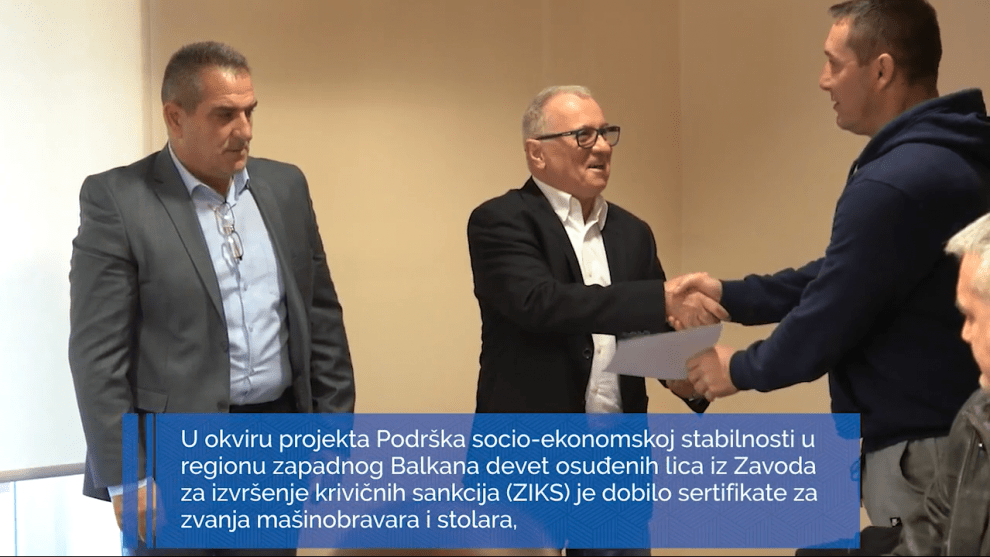
Within the project “Support to social and economic stability in the region of the Western Balkans”, nine convicted persons from the Institute for the Execution of Criminal Sanctions (ZIKS) received certificates for locksmiths and carpenters, enabling them to be competitive in the labor market and increasing the chances of finding employment upon leaving the prison. The project component has been implemented in cooperation with NGO “Juventas”.
https://youtu.be/AShifYZziZo
Help and Roma Council signed the Memorandum on Cooperatio
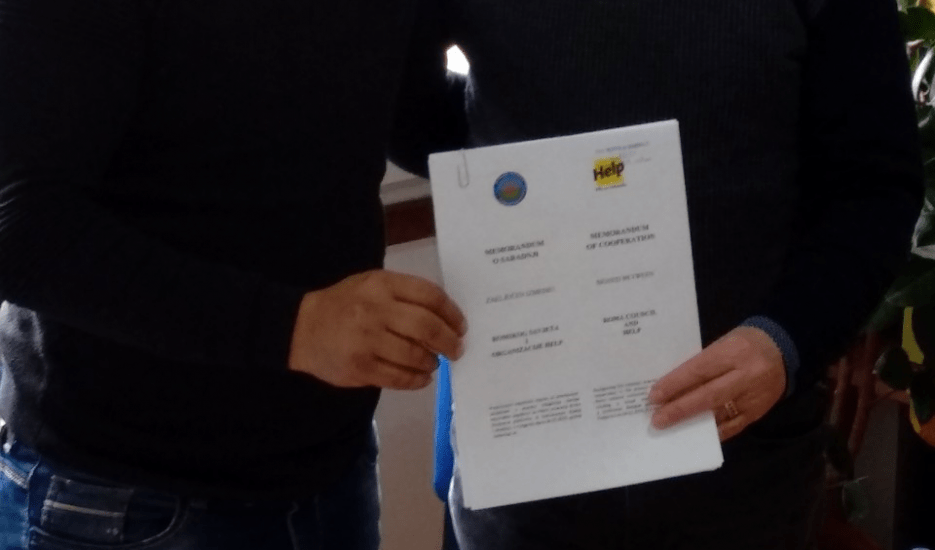
Long-lasting cooperation between Help and Roma Council strengthened by signing the Memorandum on Cooperation with the aim of fostering positions of RE population.

Help starts new programme in Support to socio-economic stability in the western Balkans region 2019-2020

With financial support from the German government Help started a new programme to support the socio-economic stability in Bosnia and Hercegowina, Serbia, Kosovo and Montenegro.
In Montenegro this programme comprises 3 components:
Project component I: Provision of durable housing solutions
The project component in Montenegro is implemented in close cooperation with the municipalities of Niksic, Danilovgrad and Bijelo Polje.
The construction of 2 prefabricated buildings in Niksic has already started in 2018 and will be completed within this new project. 12 newly built flats in the 2 buildings will provide adequate and dignified living conditions for 12 families presently accommodated in barracks in Kapino Polje settlement in Niksic. The beneficiaries of these housing units are social cases, mostly without any income, with multiple health and social problems, which are multiplying on daily basis due to inadequate living conditions. In these families, there are many children with developmental disorders, single parents, psychiatric patients and people with disabilities with first category disability.
The municipality of Danilovgrad has undertaken a number of activities in order to provide durable and sustainable housing solutions for the care of families in state of social need and the most vulnerable categories of displaced and internally displaced persons not covered by the Regional Housing Program living in the territory of Danilovgrad Municipality. Within this programe component a building in Danilovgrad will be adapted in order to create 12 flats. The problem of permanent care for the most vulnerable families has been evident for many years. These families presently live in dilapidated houses that are not suitable for living. The urgency of finding solutions has been recognized both by the municipality of Danilovgrad as well as by the Ministry of Labour and Social Welfare. Two of the flats will be allocated via the Ministry of Labour and Social Welfare to 3 orphaned children who are forced to leave the orphanage in Bijela upon reaching the age of 18.
Both, the Ministry of Labour and Social Welfare as well as the municipality of Danilovrad have committed themselves to contribute also financially to the construction of the 12 apartments.
The municipality of Bijleo Polje confirmed their desire and need for support in the realization of the project “Construction of housing for the accommodation of Roma families in Bijelo Polje in the period from 2019-2020 years”, which will enable them to solve and improve living conditions of vulnerable Roma in the municipality and thus to provide long-term solution of a high quality. It is planned to construct 2 buildings with 10 flats for vulnerable Roma families. In order to stress their determination to arrive at a dignified solution for the housing problems of the Roma population the municipality of Bijelo Polje expressed the readiness of the Municipality to participate in the co-financing of this project.
Project component II- Improvement of the treatment programs in correctional institutions for adults
The Work Sector of the Correctional Facility is an integral part of the overall activities of the Institute for Execution of Criminal Sanctions aimed at achieving the re-socialization and reintegration of the prisoners into the society. The working engagement of prisoners involves working in the Service for the maintenance of facilities, machinery and equipment as well as in production, which is divided into agricultural and workshop production. Agricultural production within the Institute for the Execution of Criminal Sanctions was organized in the field of poultry, cattle breeding and pig-farming. The prisoners are engaged for these jobs, and the obtained products are used for the prison’s needs, as well as for further sale on the Montenegrin market (this mostly applies to carpentry products and sale of eggs in the Egg Store at the entrance to the Institution). In workshop production, prisoners are engaged in carpentry, locksmith’s, carving, tailoring and hairdressing workshops. Help has commenced cooperation with the correctional institution in 2018 when a facility for chicken for the production of eggs was built and 10 inmates received professional training in various professions.
The Action Plan for the Implementation of the Strategy for Execution of Criminal Sanctions envisages measures concerning treatment, labor and employment. One of the strategic measures is the expansion of working activities for prisoners within the prison system, including the modernization and procurement of the necessary equipment for opening new and reconstructing old workshops. It also envisages the improvement of the economic directorate and the working directorate: the establisment of a working directorate that will manage the work, offering jobs in each prison, as well as school and professional development.
Within the new programme it is foressen to organize training for 10 prisoners (5 cooks and 5 gardeners) in cooperation with the Center for Adult Education. Cooks and gardeners are two of the professions in Montenegro for whom exists a great demand. The training would last for at least 3 months and would involve theoretical and practical training by licensed instructors, after which the prisoners would get a certificate. In addition, the correctional institute will receive equipment allowing for increased agricultural production.
Help started cooperation with and support of correctional institutions in 2014 in Serbia. In order to demonstrate the potential and good experiences made in the prisons in Serbia it is planned to organize for the staff of the prison in Spuž a field visit to the prisons in Niš and Sremska Mitrovica. This will enable them to make further plans for development of their institution.
Project component III: Facilitating access to health, employment and social services for RE population
Roma and Egyptians are the most vulnerable national minority in Montenegro that has always been, and is still today, discriminated against. With some 8.500 RE living in Montenegro they are the third largest minority group in the country. The general difficulties that face this population group include: poor living conditions, health problems, unemployment, poverty, social problems and educational difficulties.
Help has successfully introduced the system of RE Health Mediators in Montenegro. 2 RE Health Mediators in Podgorica have already been incorporated into the Montenegrin health system and are now on the budget of the Ministry of Health. Within an EU funded project that started in December 2016 Help has extended the network of RE Mediators by recruiting and training RE Mediators for health in Niksic and Berane. The RE Mediator for health in Berane is already working from within the public Health post in Berane and will be funded in 2019 onwards through the budget of the Ministry of Health.
In addition, RE Mediators for Employment and Social Inclusion were introduced in Podgorica, Niksic and Berane. The introduction of RE Mediators will ensure the overall improvement of the situation of RE population as main target groups and strengthen state and local governments’ technical and management capacities to continue strengthening the position of RE population in the Montenegrin society. Within the new programme it is foreseen to continue with the work engagement of the Mediators for employment and social affairs in Podgorica and Niksic as well as with the Mediator for Health in Niksic.
The total value of this regional programme amounts to Euro 3.590.000. The share of Montenegro in this programme amounts to Euro 586.510.
Help distributed food aid to 55 Roma and Egyptioan families
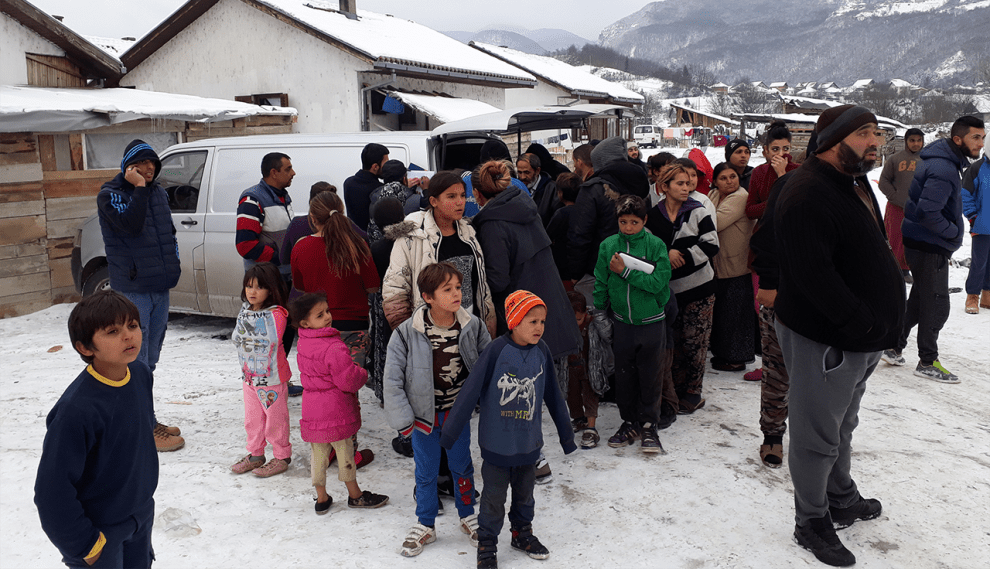
The German organisation Help distributed food aid to 55 RE families in Podgorica, Berane and Niksic. Through regular activities of RE mediators in Podgorica, Berane and Niksic, several families were identified in an extremely difficult socio-economic situation that needed food aid. Also, RE mediators visited the Riverside settlement, realizing that the inhabitants of this settlement are in a very difficult situation.

On the proposal of the RE Mediator, the German organization Help, in accordance with its possibilities, helped all the families in Riverside in Berane by providing flour to them as well as by providing 6 families in the municipalities of Podgorica, Berane and Niksic with a package of basic foodstuffs.
Help takes this opportunity to point out the difficult socio-economic situation and the big problems in the settlements where the RE population lives, as well as to invite people of good will to react by helping the most vulnerable.
Realisation of the project promotion and protection of human rights
Realisation of the project promotion and protection of human rights of Roma, Egyptians and other vulnerable groups
https://www.youtube.com/watch?v=sUJ6MGaYLmY&feature=youtu.be
Housing projects implemented by Help – Hilfe zur Selbsthilfe Montenegro from 2001 to 2018
Housing projects implemented by Help – Hilfe zur Selbsthilfe Montenegro from 2001 to 2018:

Call for proposals for the implementation of the Igman Initiative Small-Grants Programme: ‘CARE – Contribution to Access of Refugees and IDPs to Rights and Employment Opportunities’
The Igman Initiative is seeking proposals for the implementation of the projects under the regional Action “CARE – Contribution to Access of Refugees and IDPs to Rights and Employment Opportunities” financed by the European Commission, DG NEAR, and aimed at contributing to the technical, socio-economic and socio-cultural sustainability of the Regional Housing Programme.
The Action is implemented in Bosnia and Herzegovina, Croatia, Montenegro and Serbia.
The total budget of the Small-Grants Programme is 230,000 EUR.
The duration of the projects under this Call for proposals is estimated up to 12 months.
This is a restricted Call for Proposals, where the first step is approval of the evaluation of the full application along with the Declaration by the Applicant, registration related documents, and financial statements for the past 2 years, for eligibility check reasons.
The deadline for submission of full applications is December 15th, 2018.
The applicants with Full Applications provisionally selected, will undergo a detailed eligibility check, based on the supporting documents submitted.
Budget, target groups and priorities have been identified for each country, according to the needs of beneficiaries of the Regional Housing Programme, and stated in Guidelines for each country, available for download bellow.
Civic society organizations located in Serbia are encouraged to apply for a grant under the Guidelines and Priorities for Croatia.
The Final Conference within the Project ‘Promotion and protection of human rights of Roma, Egyptians and other vulnerable groups’
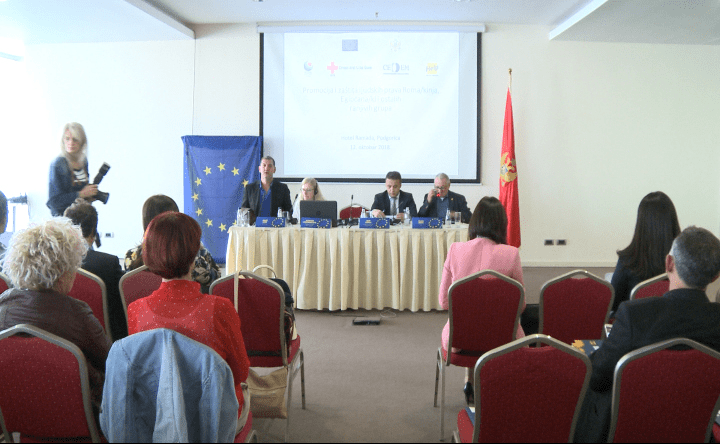
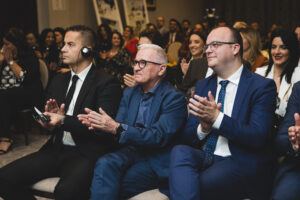
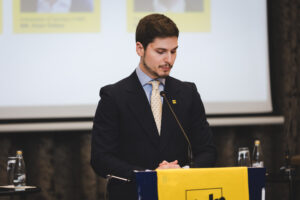
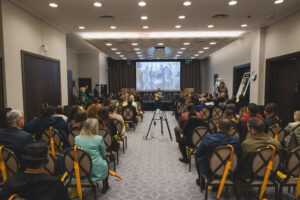
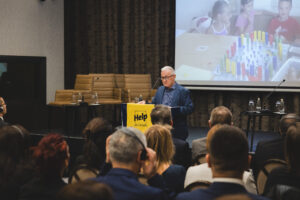
Help in cooperation with the Roma Education Fund, the Montenegrin Red Cross and CEDEM organized the Final Conference within the project “Promotion and protection of human rights of Roma Egyptians and other vulnerable groups”, supported by the Delegation of the European Union in Montenegro.
Speakers at the conference were Mrs. Audrone Urbonaviciute, Deputy Head of the Sector for Cooperation in the Delegation of European Union, Mr. Leon Gjokaj, Deputy Minister in the Ministry of Human and Minority Rights, and Mr. Klaus Mock, Regional Coordinator of Help. The implemented activities and results of the project in the form of a documentary film, as well as CEDEM’s research on employment and socio-economic situation of the RE population in Montenegro, were presented by the methodologist Miloš Bešić, PhD.

Ms. Audrone Urbonaviciute, Deputy Head of the Sector for Cooperation in the Delegation of the European Union, emphasized the importance of the implemented project, the visibility of the results thanks to the work of partners and involved institutions in the project, for which the European Union has allocated total funds in the amount of one million euros: “The project does not only make figures, but people and activities that bring changes to society. Our goal was to contribute to the reduction of the socio-economic gap between members of the RE population and others in the Western Balkans, and to strengthen the institutional obligations of the Government to incorporate and implement specific interactions in policy development. ”
Leon Gjokaj, Deputy Minister in the Ministry of Human and Minority Rights, said that the Government of Montenegro and line ministries devote special attention to the protection and promotion of the human rights of Roma and Egyptians in Montenegro. “Our political and strategic commitment is aimed at creating the conditions for a better life of the RE population, using all the rights prescribed by the laws of our country. The Government of Montenegro adopted the third social inclusion strategy of Roma and Egyptians in Montenegro, 2016-2020, which is harmonized with the European framework for the development of strategies concerning RE population. It defined seven priority areas in which specific measures and activities are foreseen for all competent institutions that are focused on solving the RE population in Montenegro. A significant result has been achieved in some areas. ”
Klaus Mock, Regional Help Coordinator, pointed out the following: We have joined our resources in order to improve the status and integration of Roma through action at local and national level and through field work, directly assisting members of the Roma and Egyptian communities. In the long run, RE integration can only be successful if RE are in a position to exercise their rights, if they themselves as well as state institutions are aware of their rights and the latter are prepared to assist RE to exercise these rights. I am very pleased that I can conclude that through this project we have built the foundations on which RE integration can thrive. Most local RE organizations still have only limited capacities to take up their roles as representatives and effective lobbyists for the sake of their communities.

The CEDEM survey on employment and socio-economic position of the RE population in Montenegro was presented by the methodologist Miloš Bešić, PhD, who presented the results of the research, pointed out that many segments this year are better than results in 2016. The objectives of the research were to measure the material status of the RE population, the level of cultural capital, the analysis of the health status of the RE, identifying issues with documents, measuring health status RE, measuring the level of social protection, determining the level and practice of media presentation of RE, facts and practices related to the employment issues of RE and examining the attitudes of employers when it comes to employment of RE.
Watch the documentary film on implemented activities and project results:
TV Show on 777 TV “Promotion and protection of human rights of Roma, Egyptians and other vulnerable groups”
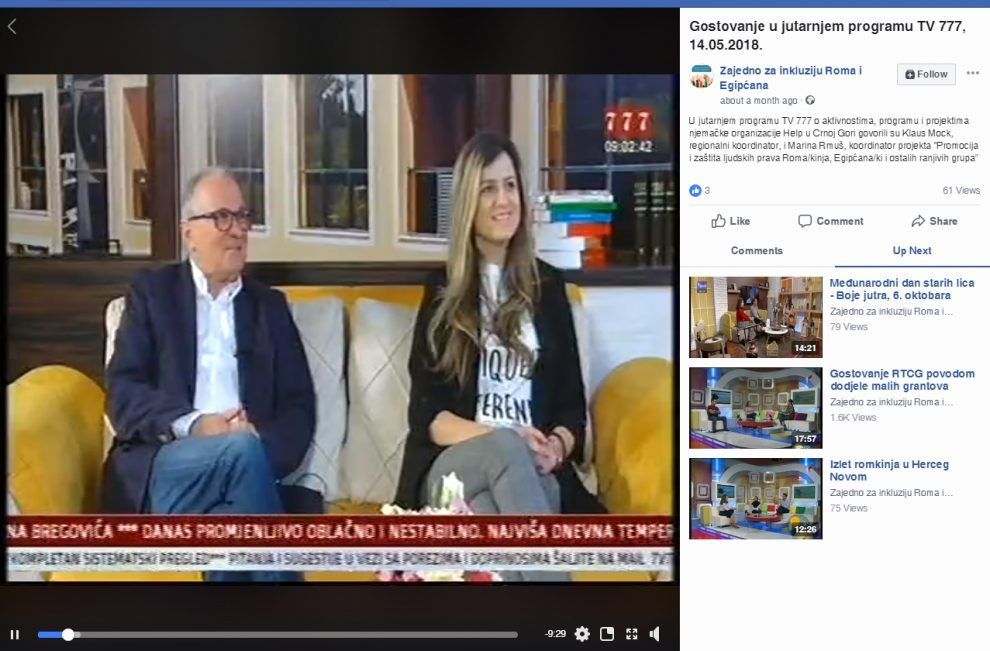
Regional coordinator of Help, Mr. Klaus Mock and Project Coordinator, Ms. Marina Rmuš were guests on a TV show on 14 May 2018, on 777 TV.
The results of the project “Promotion and protection of human rights of Roma, Egyptians and other vulnerable groups” were presented, as well as the main activities of Help as an organisation in Montenegro.
Watch the extended clip on facebook by clicking on this link or the image below:

TV Show: RTCG’s Putevi života (Roads of life) on Projects by Help
Montenegro’s public service broadcaster RTCG (Radio and Television Crna Gora) features sub-granted projects within Help’s project “Promotion and protection of human rights of Roma, Egyptians and other vulnerable groups” on the TV show Putevi života (Roads of life).
Watch the clip by clicking here or on the image below:

Project Preparation Training for Sub-grantees hosted in PR Center
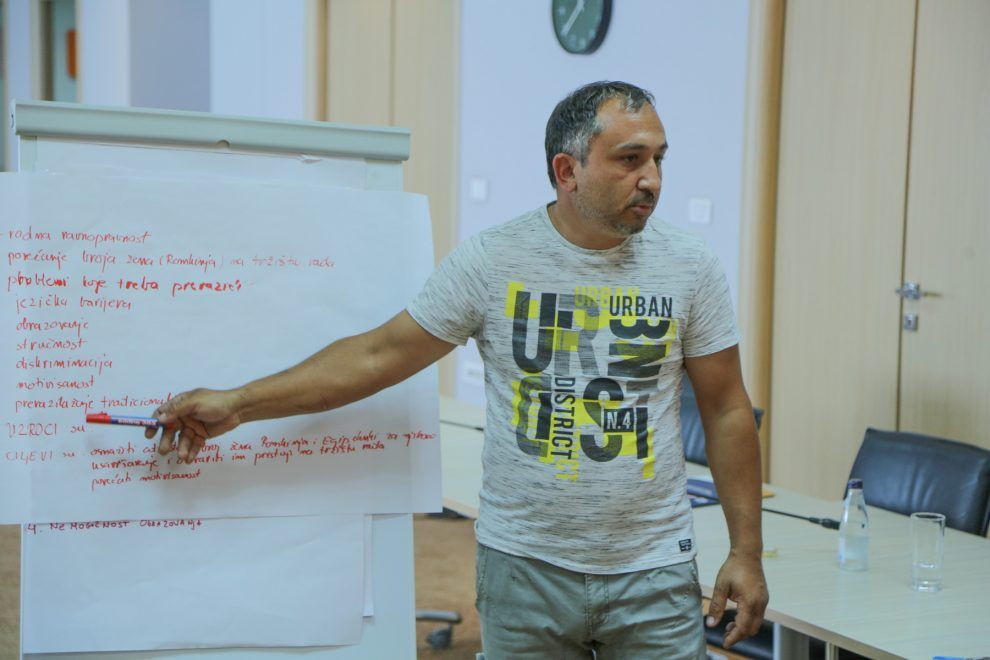
The training for sub-grantees within the project “Promotion and protection of human rights of Roma, Egyptians and other vulnerable groups” was organised in the PR center. The focus of the training was project preparation.
The participants had the opportunity to be introduced to the necessary steps and project cycle management for how to define their objectives, as well as discovering the ways their NGOs can benefit from the know-how of writing up projects.


Five Students from the Roma Community Awarded for Texts in the Roma Language
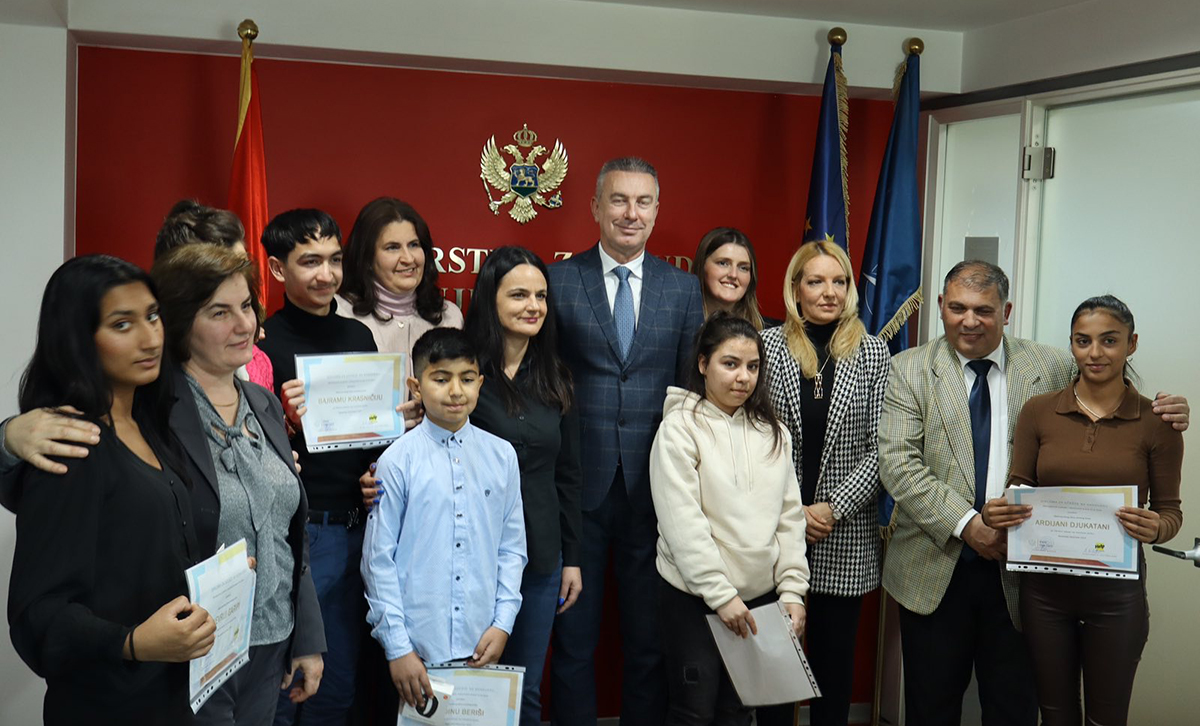
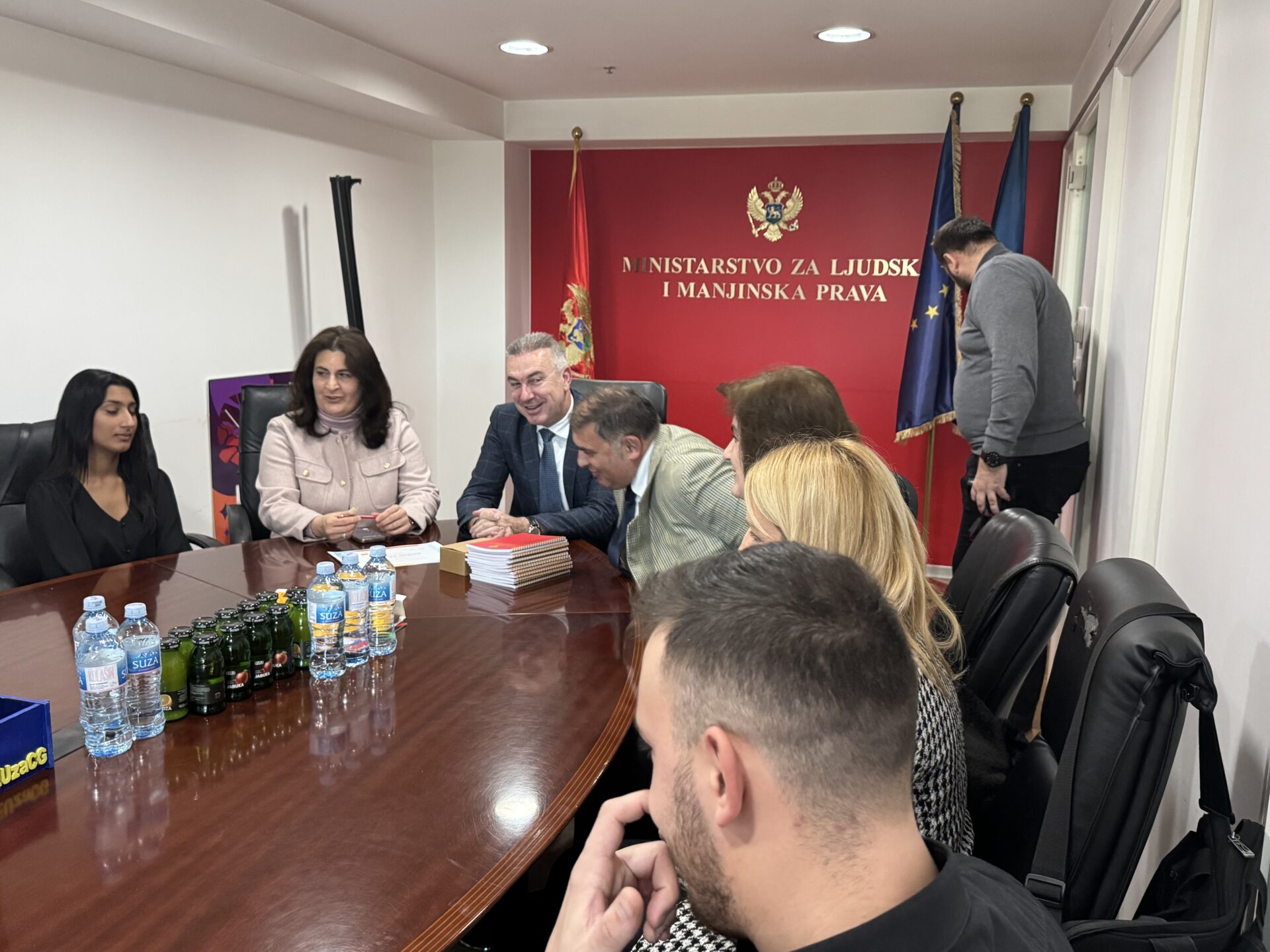
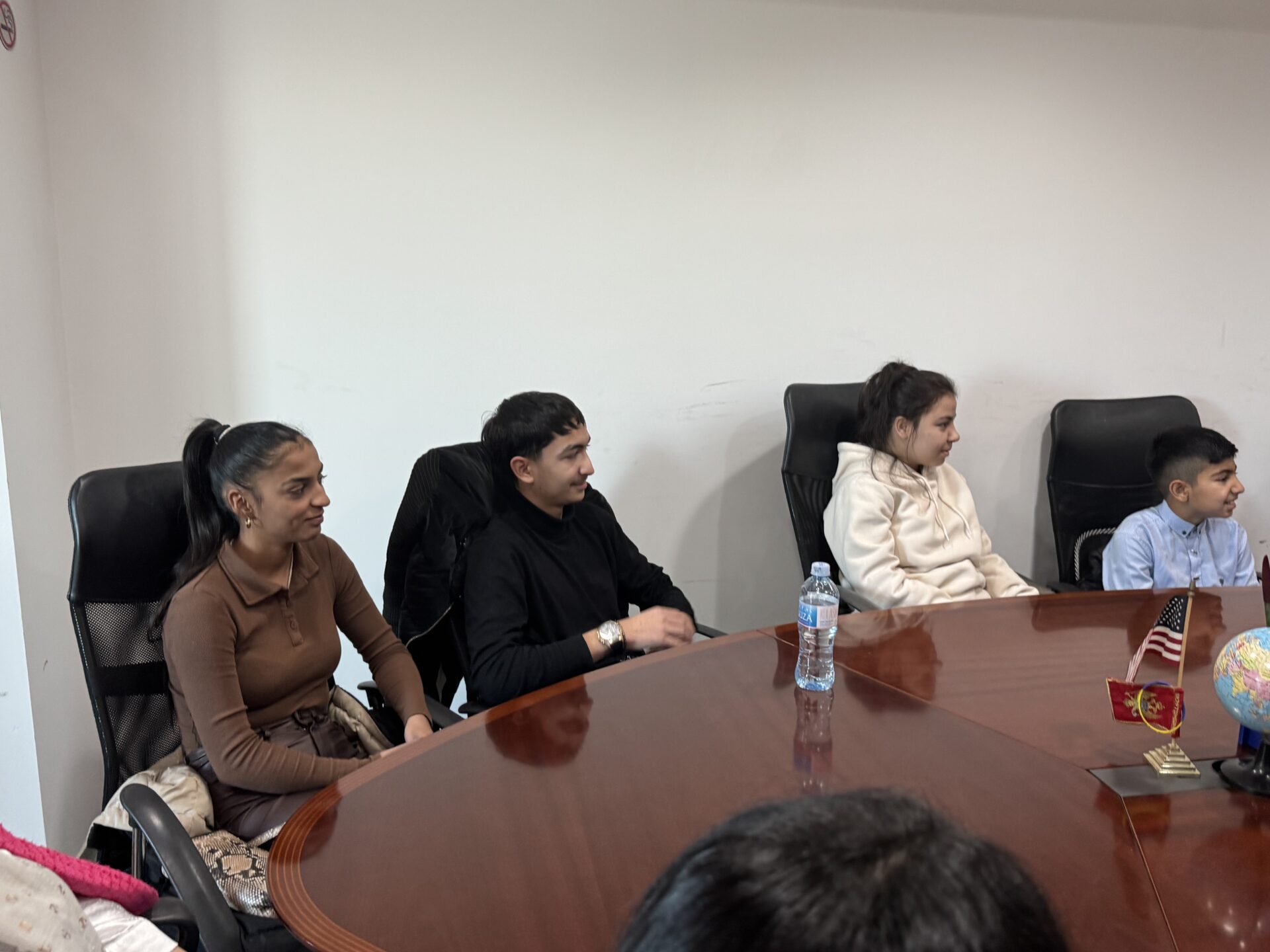
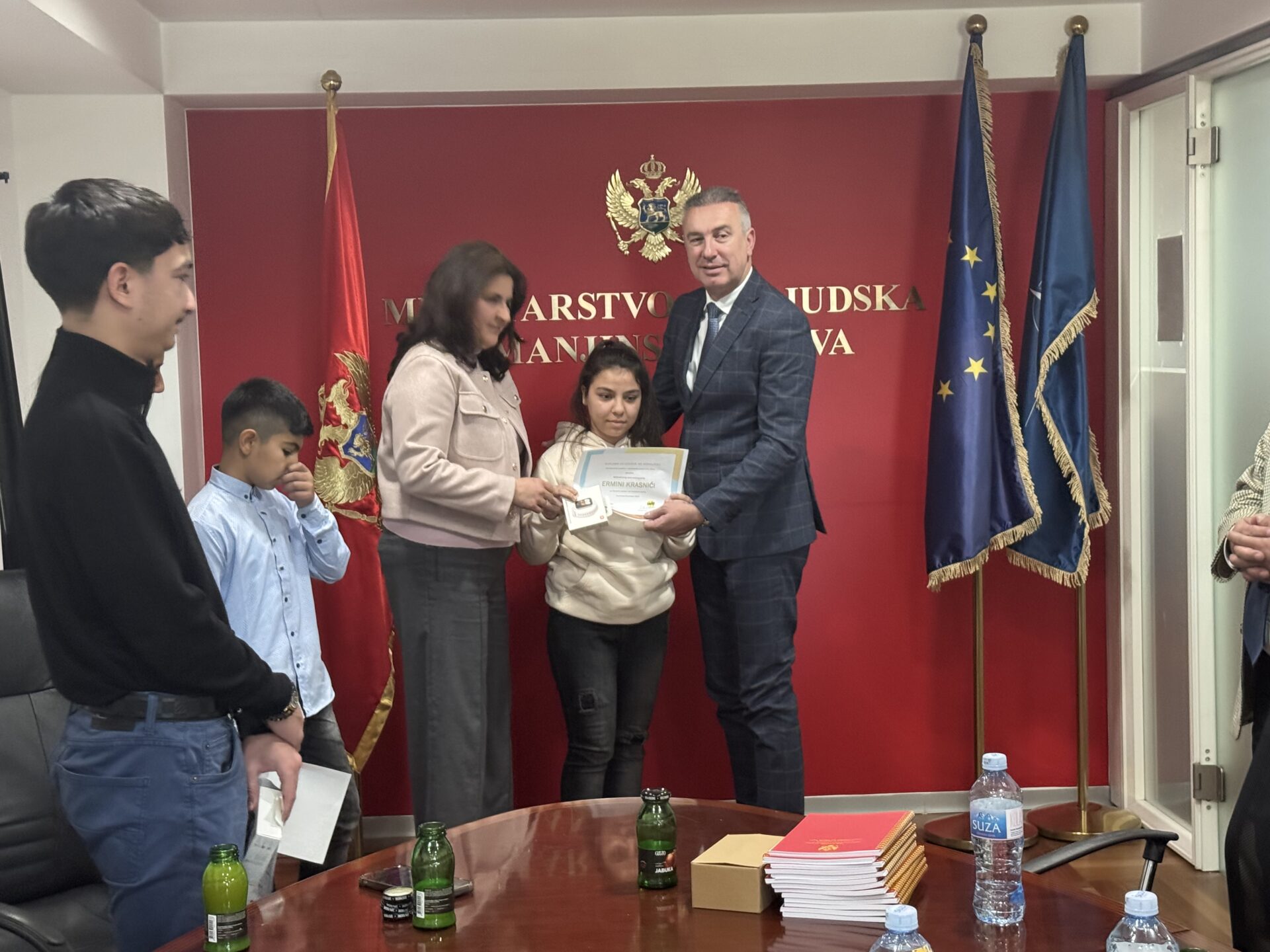
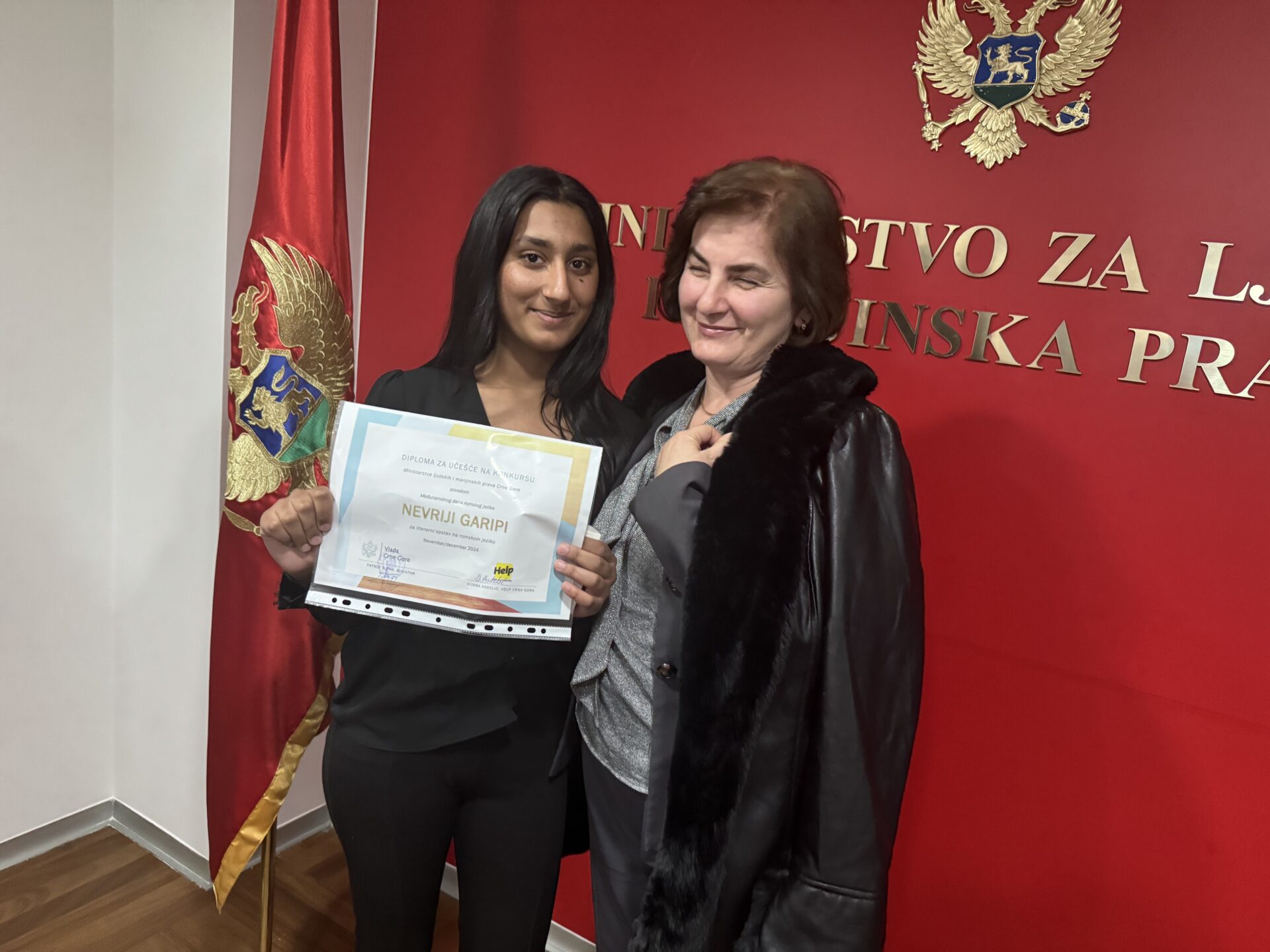
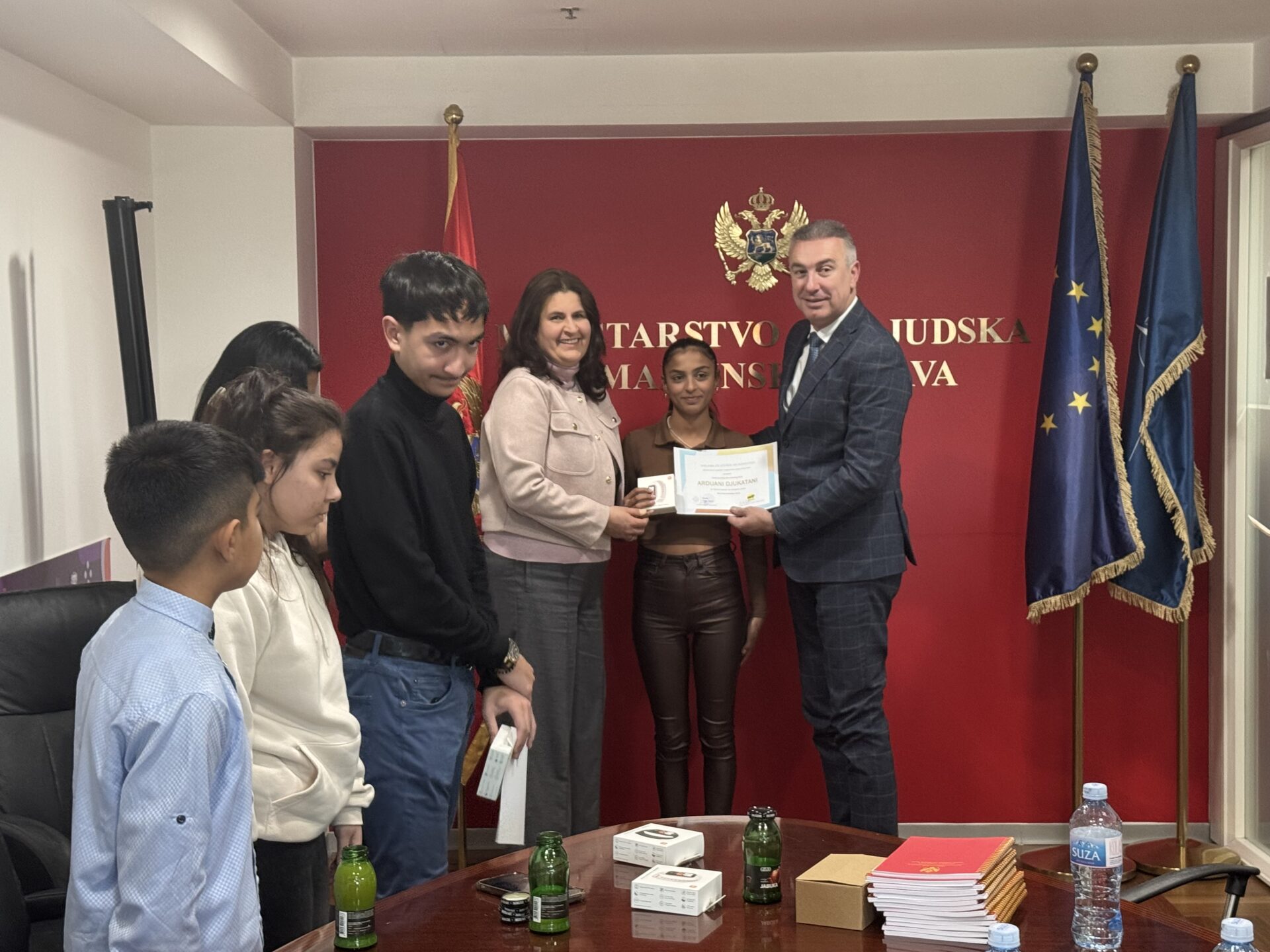
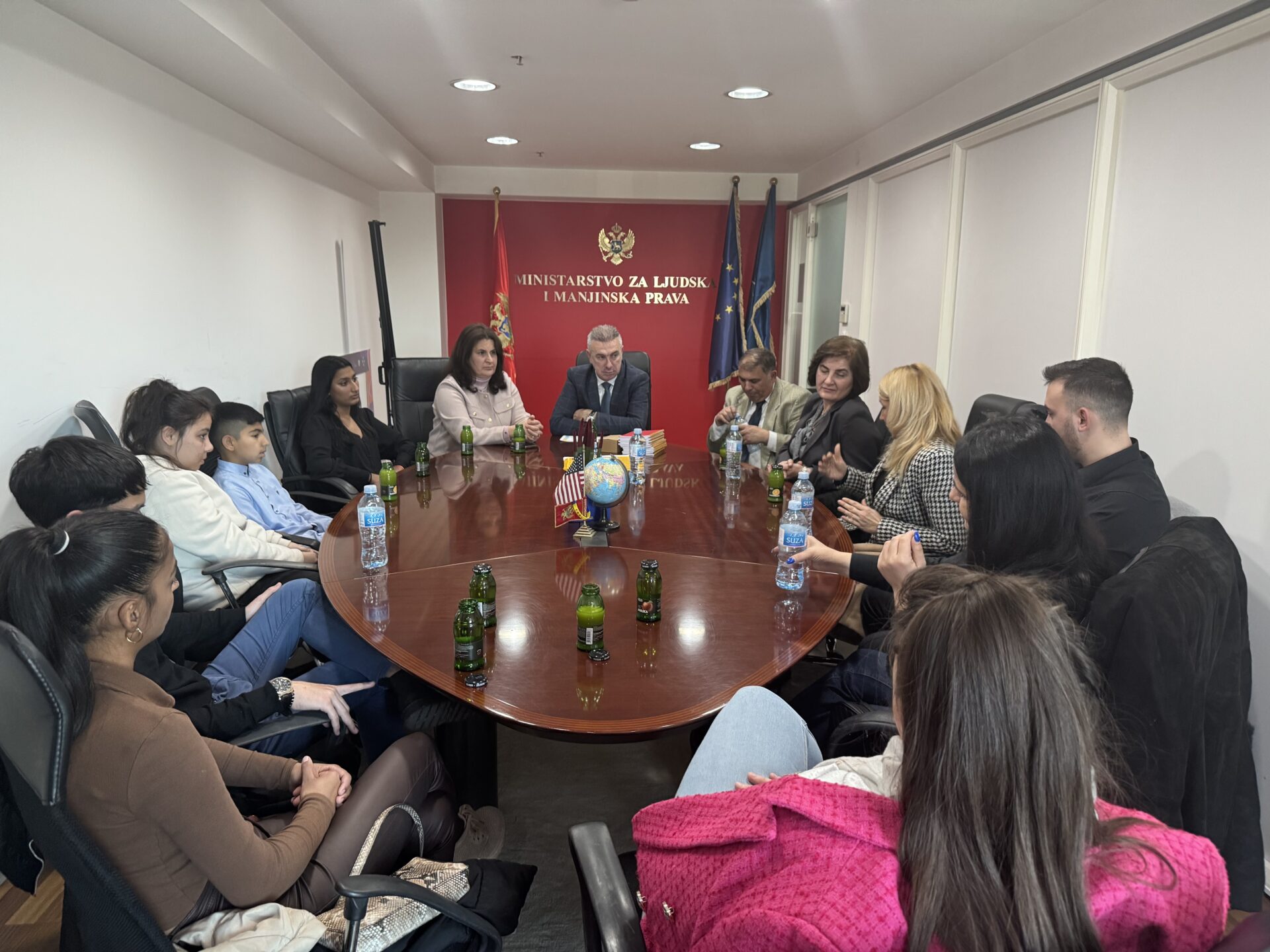
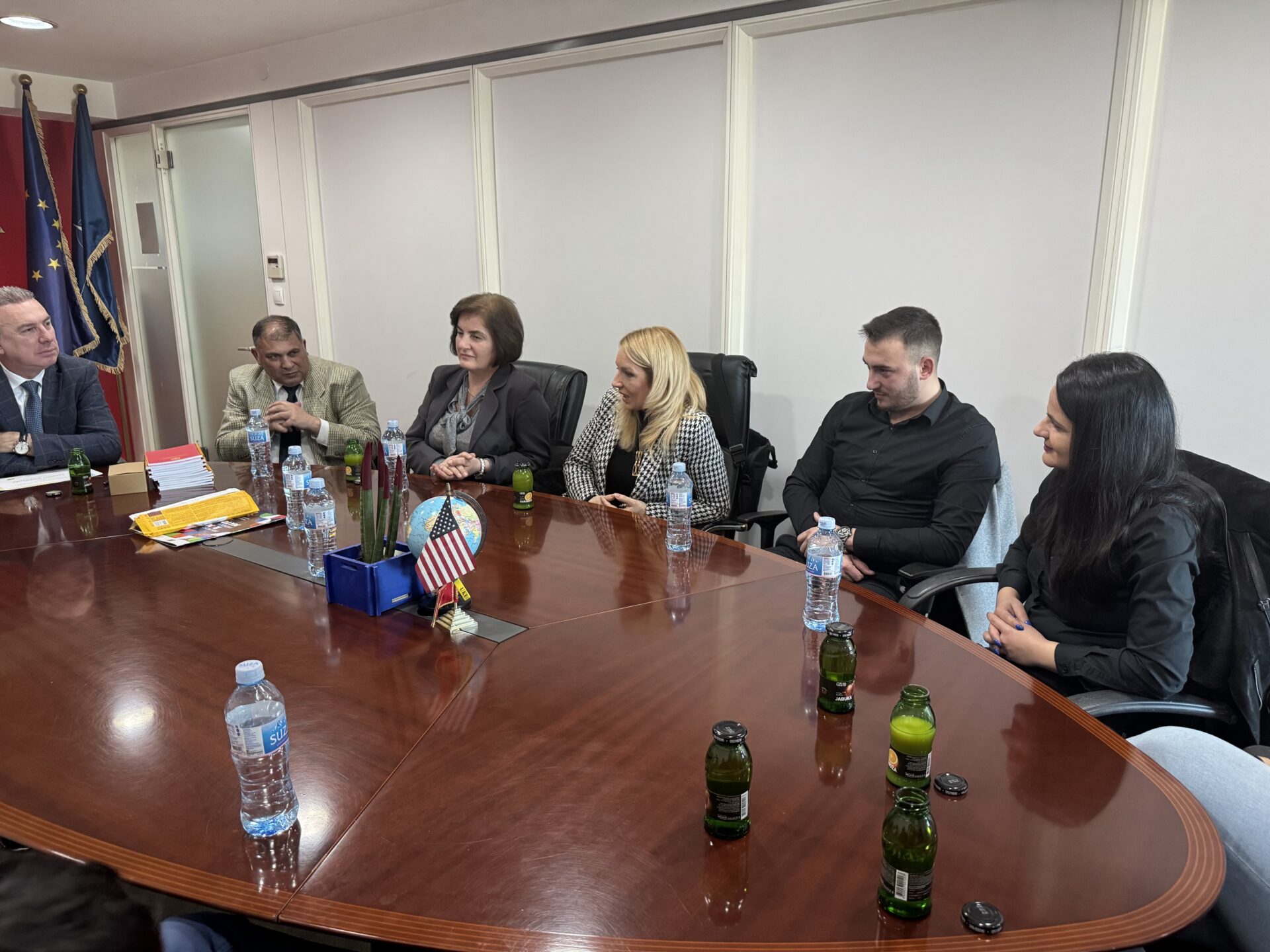
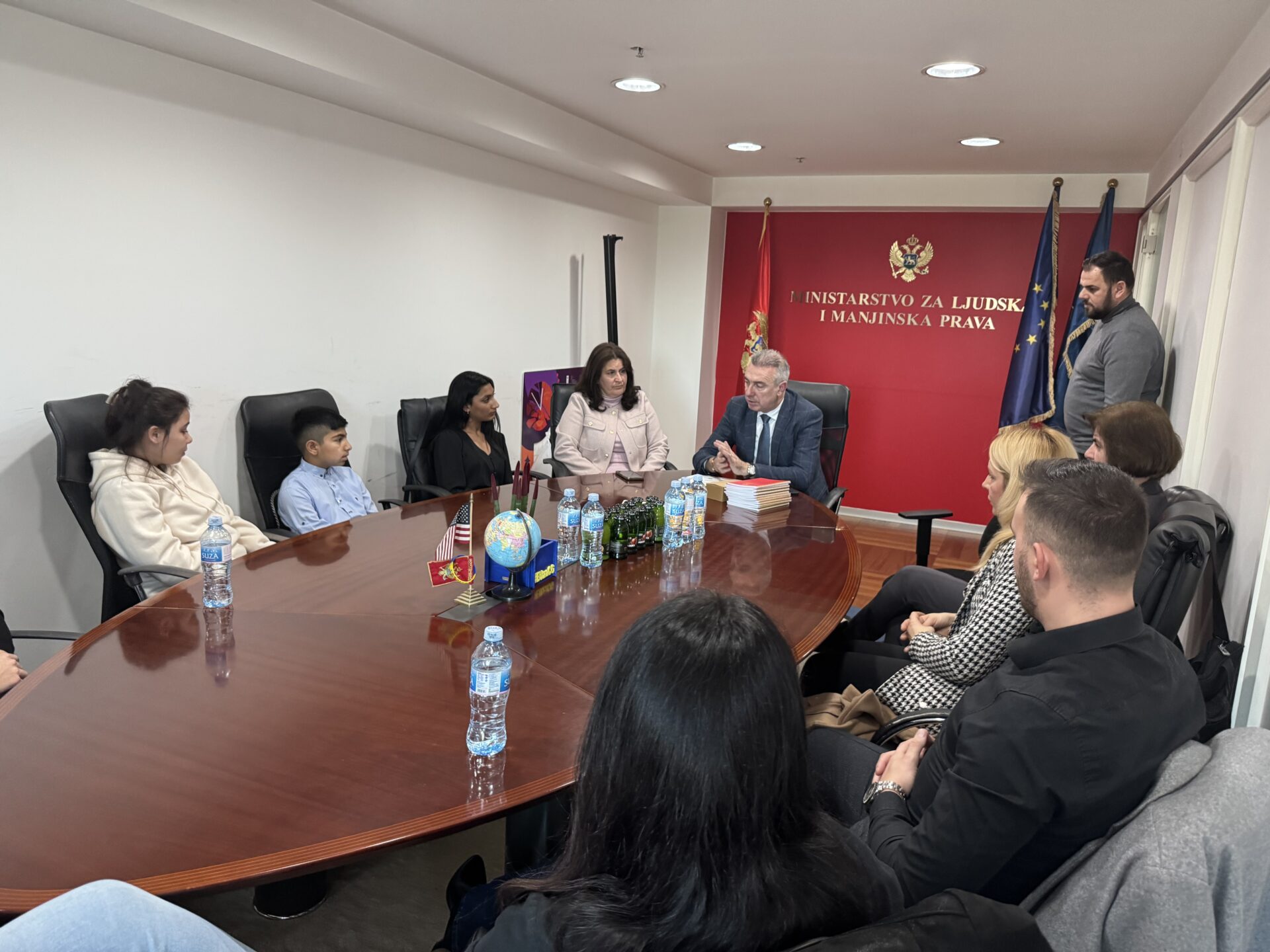
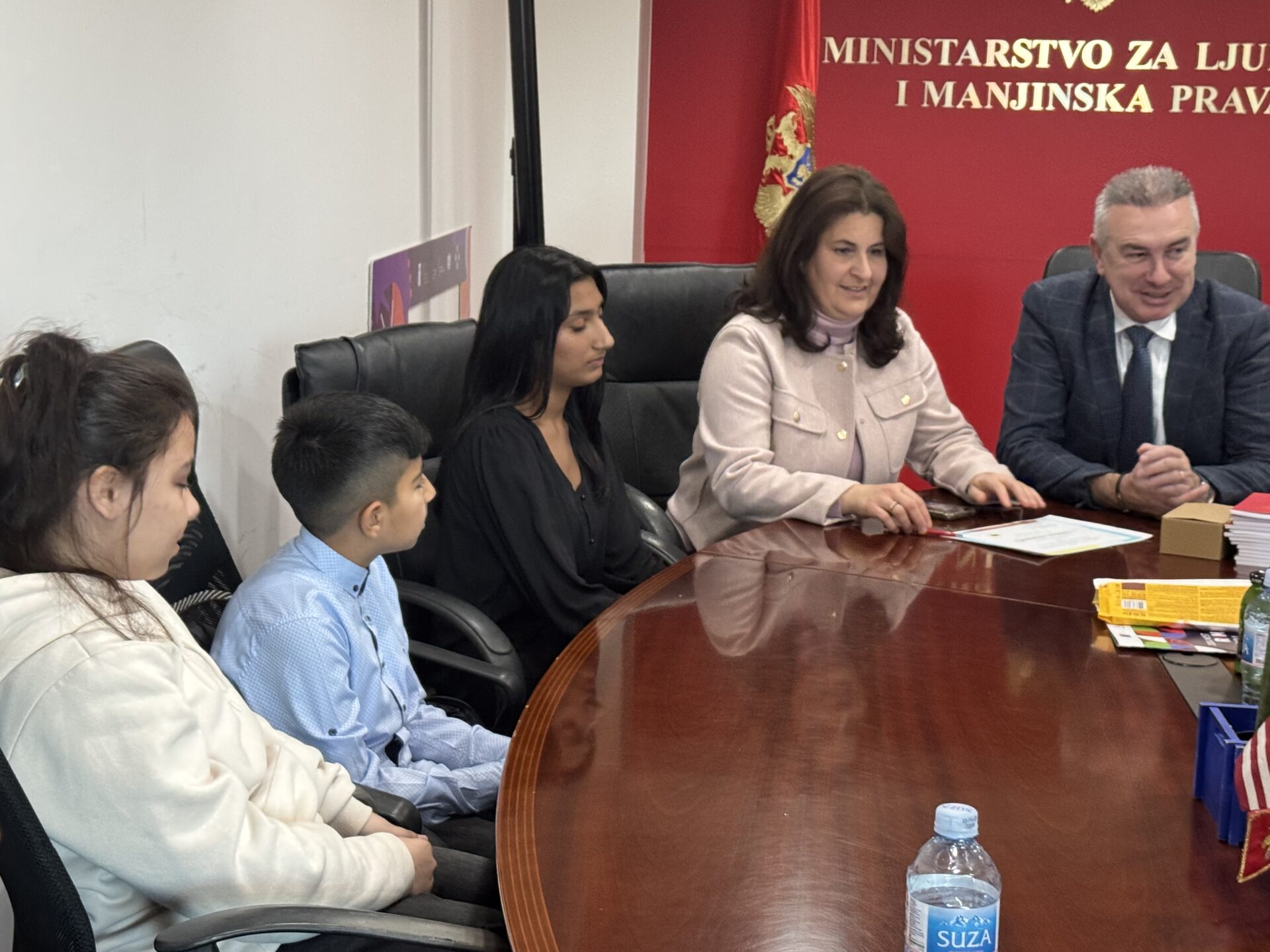
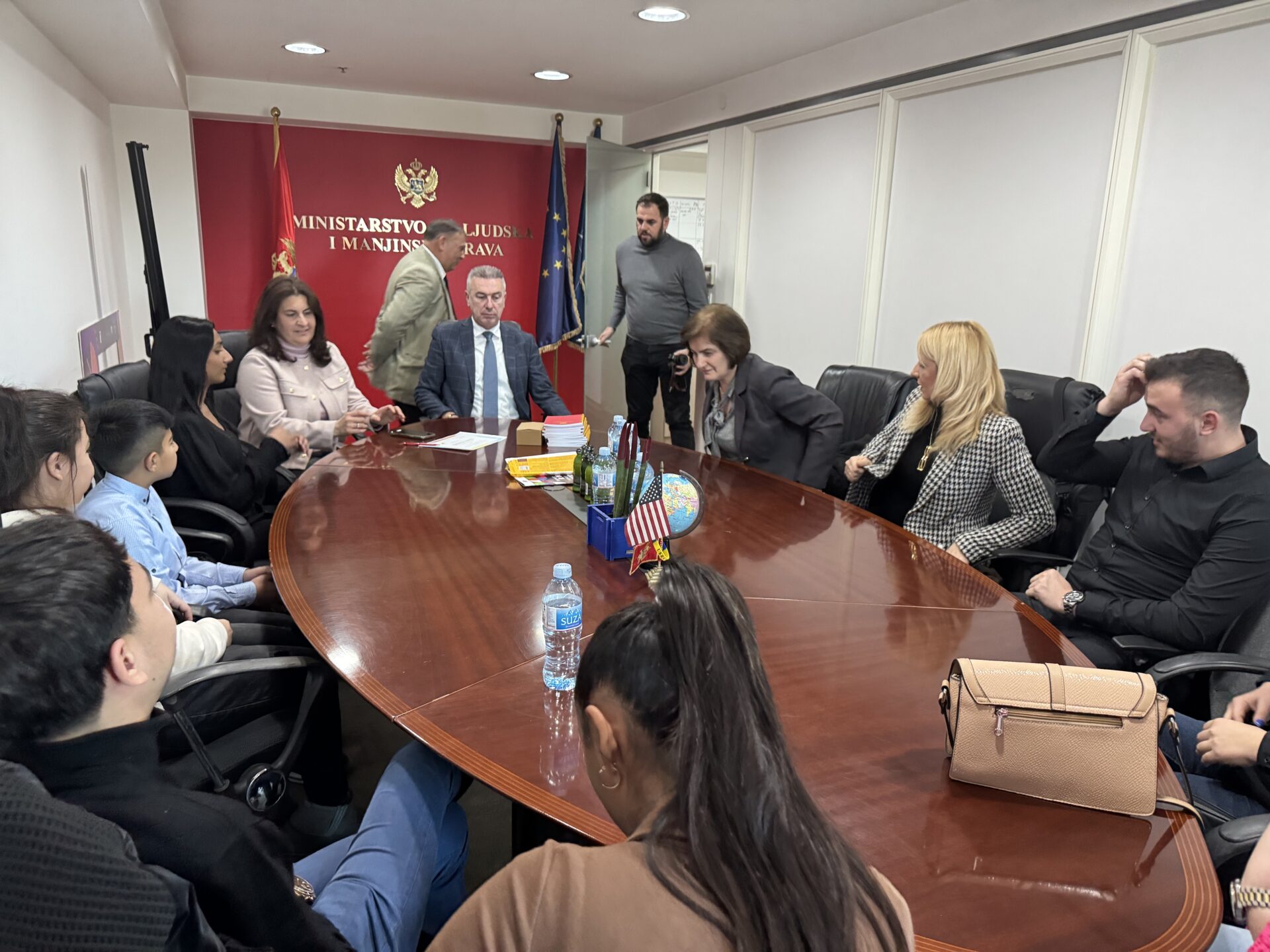
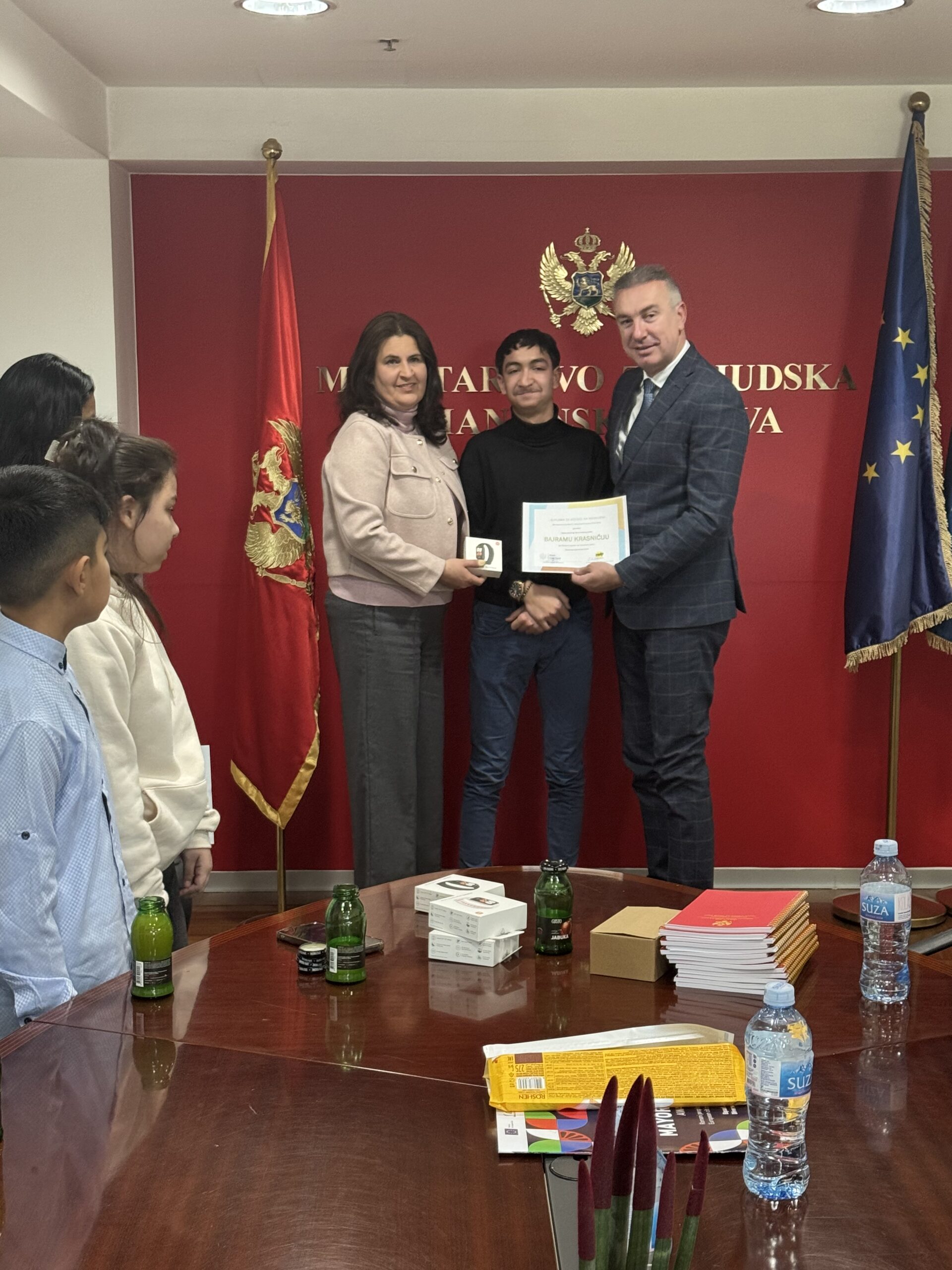
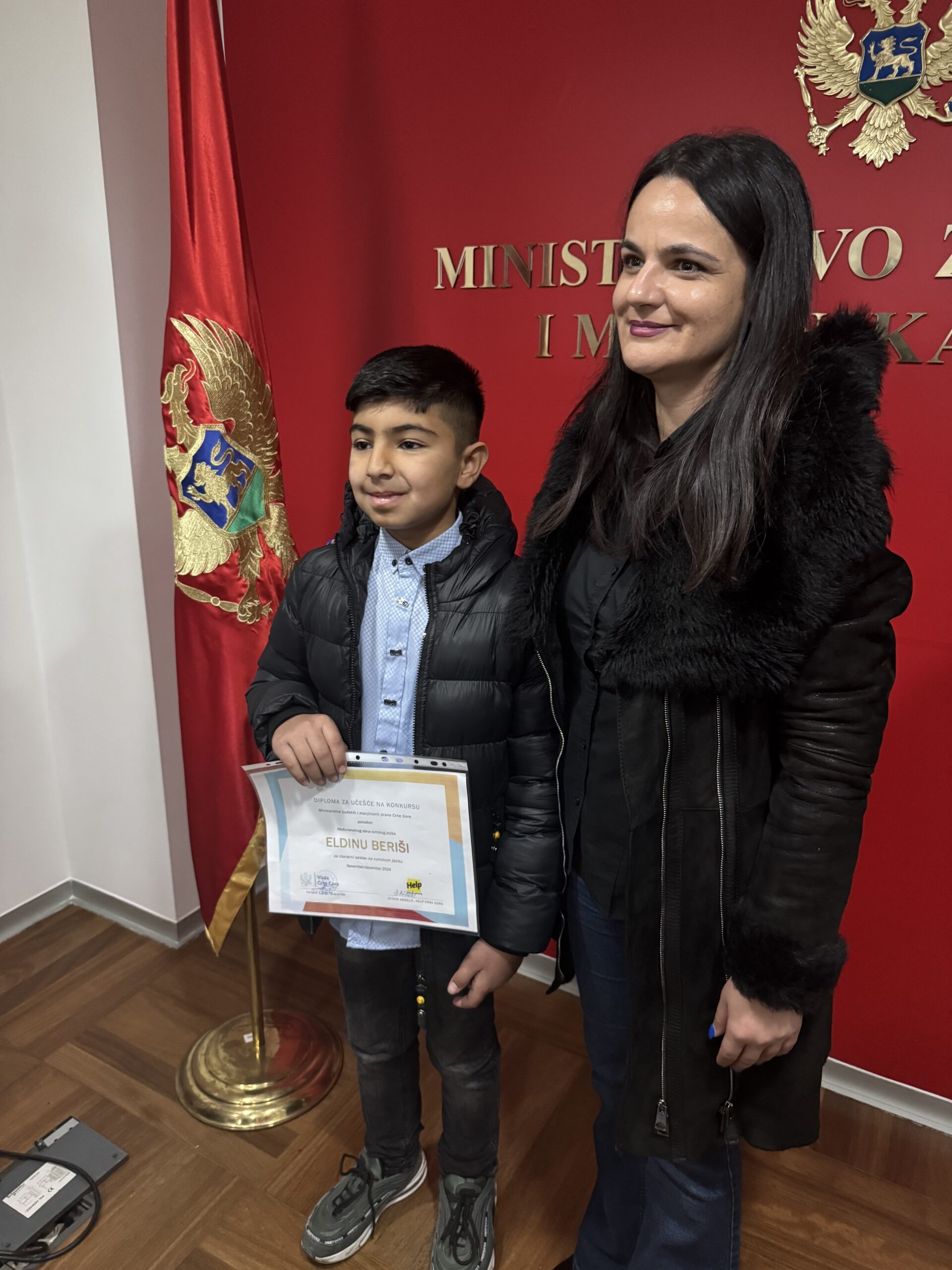
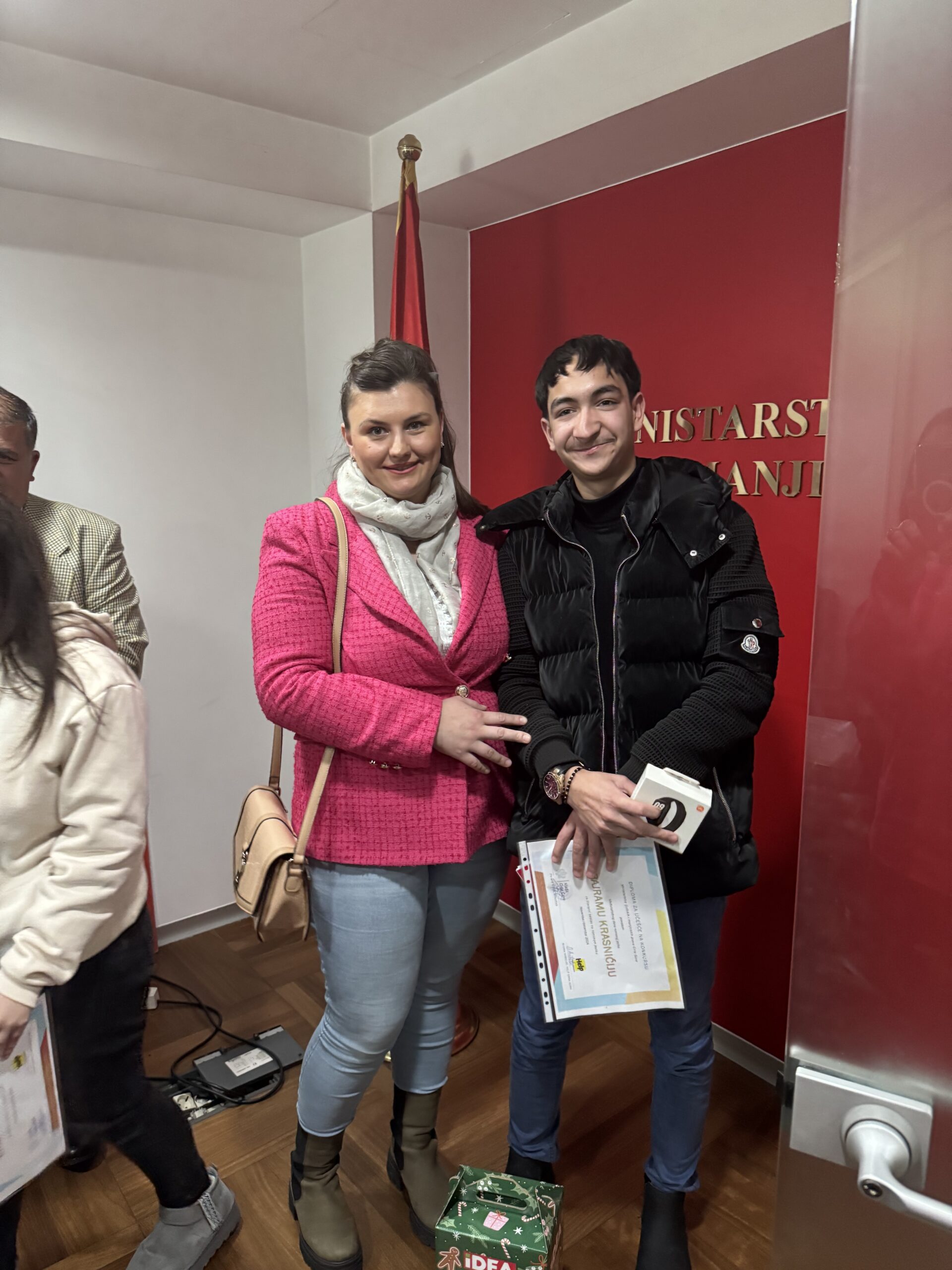
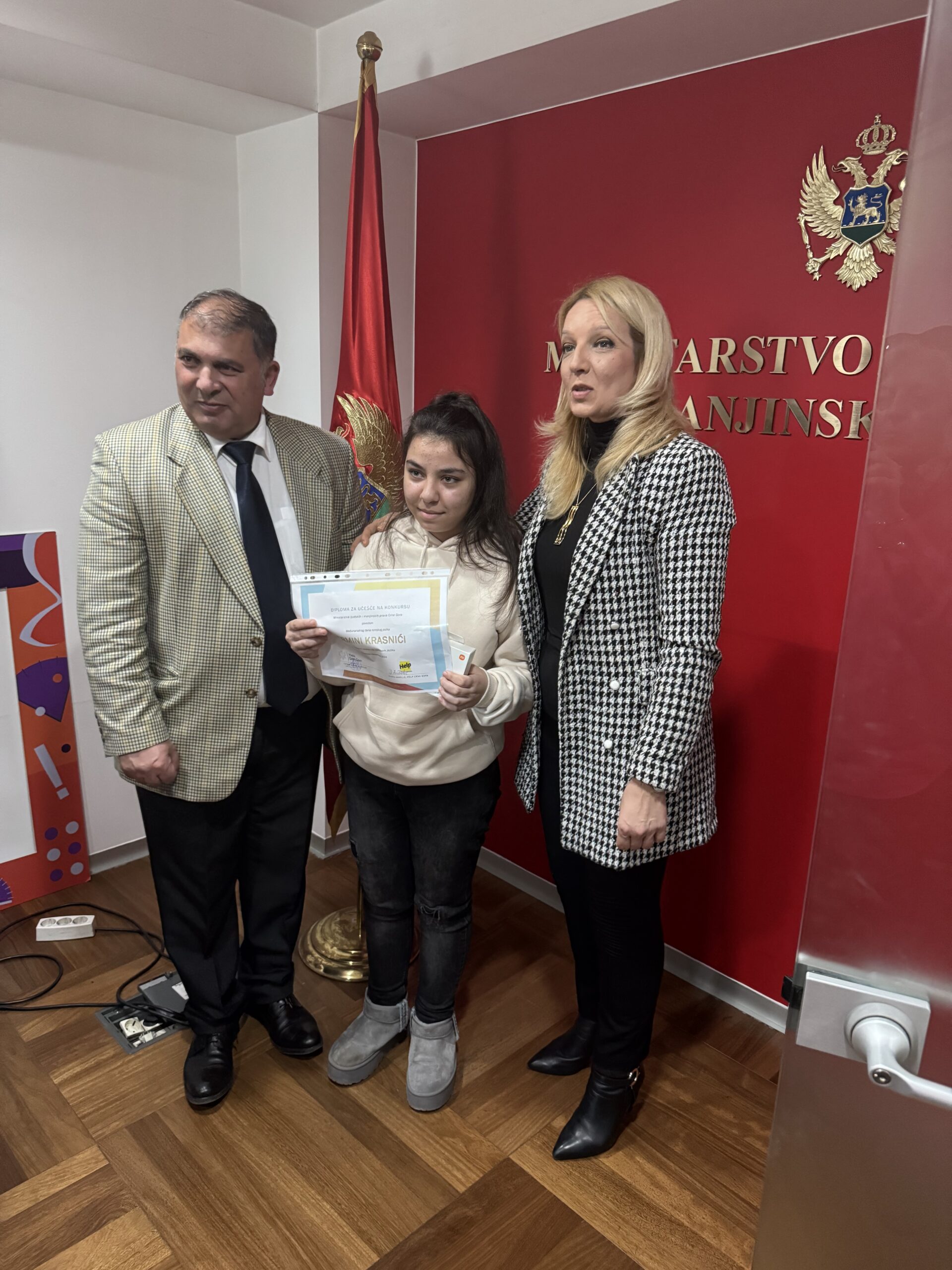
Five students from the Roma community were awarded in the competition for literary texts written in the Roma language, organized by the Ministry of Human and Minority Rights of Montenegro, in cooperation with Help, on the occasion of International Romani Language Day.
The students who won smartwatches for their literary texts written in their native Roma language are: Ermina Krasnići, a student at “Marko Miljanov” Primary School; Nevrija Garpi, Eldin Beriša, and Bajram Kranići, students at “Boždar Vuković Podgoričanin” Primary School; and Ardijana Djukatani, a student at “Spasoje Raspopović” Technical High School. The awards were presented by the Minister of Human and Minority Rights, Fatmir Gjeka, and Dijana Anđelić, the director of the Help Montenegro.
The competition, held in honor International Romani Language Day (of November 5th), aimed to motivate young members of the Roma community to begin using their native language outside of the family setting. The Roma language, which is not yet taught in schools, is primarily used at home by the community members.
Minister Gjeka addressed the young Roma by sharing a personal story about his class teacher in primary school who was Roma, the most beloved teacher that he had throughout his entire schooling.
“Before you is the future, and you can achieve anything you want, as long as you continue learning. We are satisfied with the progress made on inclusion field, but I know that much more can be achieved. It is up to you to speak up, to point out everything that bothers you, that you are dissatisfied with, and want to improve. This is the time of freedom, equality, and we must be open and honest with each other about everything that bothers us. There are many opportunities available to you, which you should use. I cannot imagine Montenegro in any other way but as a multiethnic, multireligious, and equal state for all, and you represent the future of this state,” minister Gjeka emphasized.
The students were accompanied by their mentors, who work with them every day: Professors Tatajana Jovanović, Anđela Labović, Mersiha Sijarić, and Rajka Šćepanović. The Director of the Ministrie’s Directorate for Roma and Egyptians, Sokolj Beganaj, especially highlighted the importance of teachers who motivate their students to preserve the Roma language, which has not yet been included in the school system, despite being a key element of Roma history, culture, and identity.
The opportunity was also used to discuss with Minister Gjeka the issues of the inclusion of the Roma language in the education system, yet on standby despite the willingness and interest from the Roma community in Montenegro to achieve this fundamental human right. The Minister expressed his willingness to seek a solution through cooperation with the Ministry of Education, Science, and Innovation.
The director of Help praised the students for their motivation to write literary works in their native Roma language.
“I hope you will continue to using and preserving your language in the future and that you will become even better in it. I believe that, together with you, Help and the Ministry will have future collaborators with whom we will work together for the benefit of the Roma community,” she said.
Gjeka and Beganaj praised the collaboration with Help, in constant effort to provid support for the better and more comprehensive inclusion of Roma and Egyptians in Montenegro.
“If it weren’t for Help, we wouldn’t have a lot of things we have today, like the RE mediators, which are now a reality. In my opinion, this is something that has been finalized, and now it’s just a matter of the formalities of permanently hiring the 21 mediators in local institutions. If it weren’t for Help, this wouldn’t have been realized either. They initiated it, gave us the idea, and I understood its importance. Now we must continue and identify where else this should be implemented, in other segments,” said Minister Gjeka.
On this occasion, Help donated 4 PC’s to the Ministry for the needs of the Directorate for Roma and Egyptians.
25 years of Help in Montenegro – more than 136 completed projects valued at 36 million euros
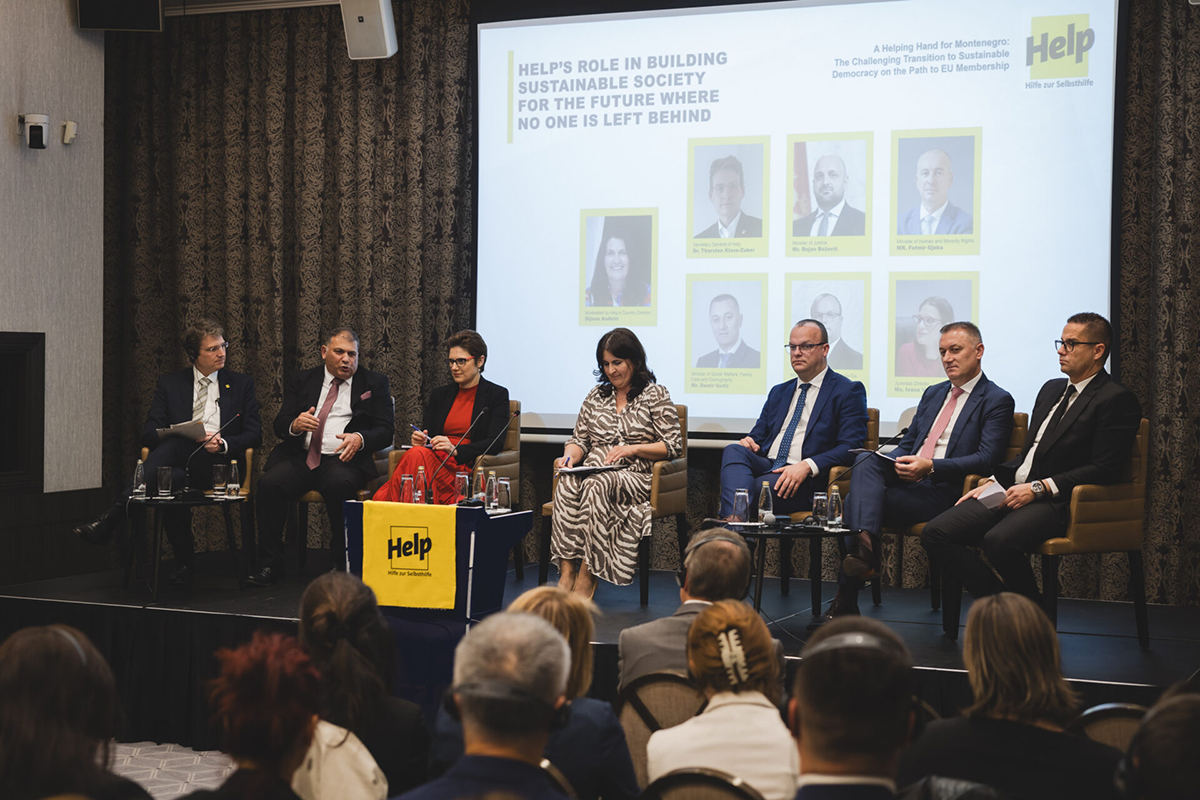
German humanitarian-development organization Help Hilfe zur Selbsthilfe is celebrating 25 years of work in Montenegro.
During a quarter of a century, Help has implemented more than 136 projects with a total value of around 36 million euros, providing support to the most vulnerable and at-risk groups: children, youth, women, and the unemployed through humanitarian aid, housing projects, and socio-economic empowerment.
The German organization arrived in Montenegro in 1999, when, during the war in Kosovo, Montenegro opened its doors to more than 120,000 refugees, recalled Klaus Mock, the long-time regional coordinator of Help.”
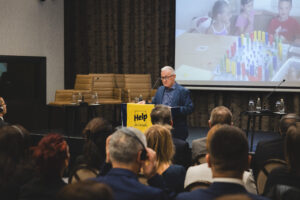
“Twenty-five years ago, amid the chaos and uncertainty of war, Help began its operations in Montenegro. At that time, over a hundred thousand refugees from Kosovo sought solace within the country’s borders. In their time of greatest need, we provided humanitarian aid, embodying the spirit of compassion and resilience”.
Mission – to empower individuals to help itself build their future
Primarily focused on humanitarian aid, Help assisted in supporting the resettlement of more than 84,000 displaced persons and refugees. Since then, Help has remained a pillar of support for the most vulnerable, including the Roma population, through 45 projects that have directly supported more than 17,000 people.
“By 2001, we recognized that many of these refugees would not return home as swiftly as hoped. We understood that our mission needed to evolve—not only to respond to immediate crises but to empower individuals to build sustainable futures. Thus, we initiated our income-generating projects, helping countless people start their own small businesses. It was vital for us to extend our support beyond the refugee community, reaching local vulnerable populations who also needed a hand up,” says Mock to explain the work strategy over the past two and a half decades.
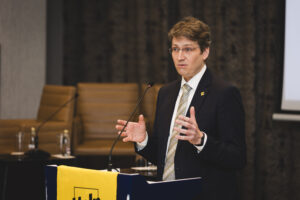
The Secretary General of Help, Dr. Thorsten Klose-Zuber, said that we are proud to be able to provide humanitarian aid and development support in 28 countries worldwide, reaching over 13 million people annually.
“Our work in the Western Balkans is a prime example of how we can successfully transition from emergency aid to sustainable development – whether it’s by supporting most vulnerable population groups, strengthening civil society or promoting start-ups and social enterprises,” said dr. Klose-Zuber.
The German government is a regular important donor of Help’s projects
Help is one of the largest recipients of financial support from the German government precisely because of the way it operates, pointed out the German ambassador, Peter Felten, who himself was once at the head of the humanitarian aid department of the German Ministry of Foreign Affairs.”
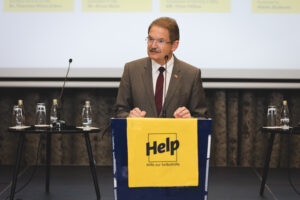
„The German organization that is fully integrated into the international aid network in the spirit of cooperation and partnerships, and actively participates in its structures, while at the same time being deeply rooted in the German civil sector with strong support from the German Parliament and in partnership with a large number of donors, not only from Germany, but primarily from the EU, and, as I have just heard, in the past also from the USA and others. It is especially important to emphasize its partnership, for example, with other actors, particularly the beneficiaries on the ground – in all the countries where Help operates,” said ambassador Felten.
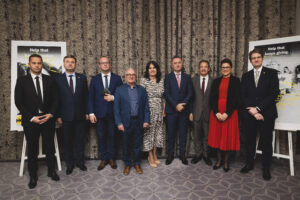
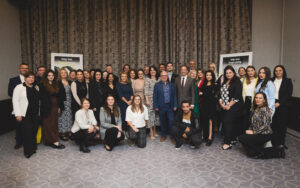
“Collaboration with Help is the example that can be a model of cooperation for all government institutions, non-governmental organizations, or international organizations,” said the Minister of Social Welfare, Damir Gutić, at the panel organized on the occasion of an important anniversary – where the results were summarized, and foreseen plans for the future.
New models of cooperation for sustainable development will follow for underdeveloped North
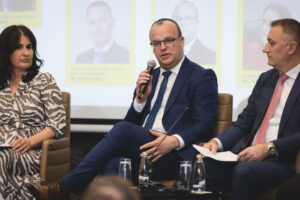
The Minister of Ecology, Sustainable Development, and Development of the North, Damjan Ćulafić, announced a new memorandum of cooperation with Help, which will open space for new forms of cooperation – such as the construction of wastewater treatment plants, sewage networks, and water supply networks in the northern municipalities of Montenegro that face challenges with ecological infrastructure.
Darko Vukčević, Director of the Administration for the Execution of Criminal Sanctions (UKIS), an institution to which Help continuously provides support, outlined various activities and programs aimed at improving standards for individuals serving prison sentences, training and education for prison staff, as well as infrastructure supporting the sustainability of the prison system, both at the UKIS in Spuž and in the prison in Bijelo Polje.
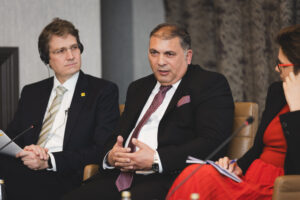
The Director of the Directorate for Roma and Egyptians at the Ministry of Human and Minority Rights, Sokolj Beganaj, expressed his gratitude for the cooperation with Help in two capacities – on behalf of the ministry he represents and in his personal capacity, as a representative of the Roma community.
Beganaj: Help is the mother to the RE population in Montenegro
“Help means assistance, and that help has truly been of crucial importance for the Roma population. Starting from when we needed to build or rebuild a house, to providing assistance and later working with refugees and displaced persons, or now, when we want to include RE mediators in the system permanently, not only for education but also for employment, healthcare, and social welfare. As a member of the Roma community, I can only say, emotions overwhelmed me, when I think about everything we’ve been through, I can only say – you have been the mother to the Roma population in Montenegro, because when help was needed, you were there. And even when we, as state institutions, sometimes failed – you were/are there.”
“Country director of Help Montenegro, Dijana Anđelić, said that ‘the emotion of Mr. Beganaj speaks even more louder then words.’ Anđelić has assured Beganaj that Help will remain a support to the Roma and Egyptian community and the ministry in addressing all the problems the community faces.
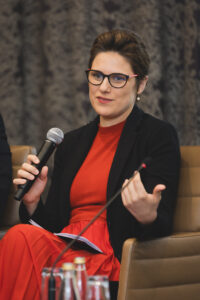
“I realized that these 150 completed projects so far are 150 reasons for you to be proud,” said Ivana Vujović, the executive director of Juventas, one of the local organizations with which Help has worked and continues to work on various projects.
Vujović: A holistic approach and flexibility yield results to be proud of
“When we look at everything that Help does, we can see that it is a holistic approach to assisting the beneficiaries you work with. We know that you involve the beneficiaries in every project, and that it is the beneficiaries who, together with you, implement these projects to meet their needs. The word that stands behind us – sustainability – is more present and applicable with you than with others, because you have a more flexible approach in your work – you listen to the needs and adapt them to the needs on the ground – to the beneficiaries,” said Vujović.
From humanitarian aid, to social empowerment, through support for housing, employment, self-employment, education, social and healthcare programs for vulnerable groups, to development projects supporting the strengthening of the less developed north and the overall transformation of society towards sustainable development with a focus on cleaner and more sophisticated technologies in a society where no one will be left behind – all of this has been and continues to be Help’s mission in Montenegro.
Donor support is crucial for the work – EU, UNDP, embassies, ministries…
All projects in the past 25 years have been implemented thanks to donors, primarily the German government, which has funded over 9 million euros for various activities supporting social and economic inclusion in Montenegrin society, followed by the EU, UNDP, UNICEF, and other UN agencies, as well as the U.S. Embassy through USAID grants, the French Ambassy and other diplomatic missions in Montenegro, as well as Montenegrin ministries and local institutions, with whom we have worked and continue to work on the inclusion of the most vulnerable and raising standards in the areas of human rights, social empowerment. All this wit the aim of creating a better and more just society that will fundamentally, not just declaratively, meet EU standards and values, and ultimately join the European family of the most developed nations.
In the end, the best witnesses to us and our work are those whose lives we have touched. Some of them have told their stories as the Testimonials’
The recording of the anniversary is on the link below:
Photos will follow





Award Notice / Odluka o dodjeli tendera

Award Notice / Odluka o dodjeli
Social Housing – Construction of new houses in the South, adaptation and material provision/ Socijalno Stanovanje – Izgradnja novih kuća u južnoj regiji, adaptacija i obezbjeđivanje materijala
| Contracting Authority / Ugovarač: | Help – Hilfe zur Selbsthilfe Montenegro | ||||
| Reference / Referenca: | P-MNE-183-24-24-1 | ||||
| Publication date of the Tender Notice / Datum objavljivanja poziva za učešće u tenderu | 23.07.2024 | ||||
| LOT 1: Upgrade of housing conditions in Roma Settlement Pljevlja / LOT 1: Poboljšanje stambenih uslova u romskom naselju u Pljevljima | |||||
| Contract value / Vrijednost ugovora: | 126.198,87eur | ||||
| Date of award of the Contract / Datum dodjele ugovora: | 30.09.2024. | ||||
| Number of offers received / broj primljenih ponuda: | 1 offer / ponuda | ||||
| Name and country of successful contractor / Naziv i zemlja porijekla uspješnog ponuđača: | CEMA doo, Crna Gora/Montenegro | ||||
| LOT 2: Construction and Material Provision for the individual residential structures / LOT2: Izgradnja i obezbjeđivanje građevinskog materijala za individualne stambene objekte | |||||
| Contract value / Vrijednost ugovora: | 251.627,00 eur | ||||
| Date of award of the Contract / Datum dodjele ugovora: | 12. 09.2024. | ||||
| Number of offers received / broj primljenih ponuda: | 1 offer / ponuda | ||||
| Name and country of successful contractor / Naziv i zemlja porijekla uspješnog ponuđača: | EUROZOX doo, Crna Gora/Montenegro | ||||
StrategEast Forum about Trustworthy AI for a Sustainable Economy within RECONOMY

19. 09. 2024
Help, as an implementing partner of Helvetas within the RECONOMY an inclusive and green economic development program of the Swedish International Development Cooperation Agency (Sida) is proud to support partnership with the StrategEast.
RECONOMY program via Help signed contract the with the StrategEast in the beginning of August. The purpose of the Agreement is to foster the development and adoption of a commercially viable and inclusive AI policy framework in Ukraine, Moldova, Georgia, and Armenia through the “AI Policy Dialogue” initiative. This initiative will promote a multi-faceted approach that includes policy dialogue, stakeholder engagement, and capacity building to harness the transformative potential of Artificial Intelligence (AI) for economic and social progress.
The primary objectives are to promote AI adoption and improve government readiness in the four countries through comprehensive policy dialogue; to develop regulations, share best practices, and leverage insights from leading AI companies; to engage key stakeholders from government, academia, industry, civil society, and international organizations in the policy development process; to address challenges such as regulatory lag, ethical complexities, public trust, and socio-economic impacts of AI adoption, as well as to ensure that AI policies are inclusive, transparent, and aligned with international standards and best practices.
At least 600 women and youth, including the most disadvantaged, will have improved access to opportunities in the growing AI sector, fostering long-term competitiveness and growth for professionals and enterprises in the region.
The theme of this year’s StrategEast Forum held in the last two days in Chisinau , Moldova, was “Trustworthy AI for a Sustainable Economy,” addressed a critical issue for all stakeholders: the development, deployment, and application of transparent, responsible, and effective artificial intelligence. As AI continues to reshape industries, fostering trust and ensuring ethical practices are essential.”
The session dived into the talent crisis in Eurasia’s tech and service sectors. The expert panel has been tackling how to boost skills, create opportunities, and keep talent at home. Additionally a topic was how AI is reshaping the workforce and how to leverage the diaspora to turn brain drain into brain gain: Irina Stamatović, Project Coordinator in Help, implementing partner of Helvetas in RECONOMY, Eugenia DANU, President of ABSL Moldova, Executive Director of DOPOMOGA GROUP Moldova Representative in Moldova, Vasile Putina, Chief Technology officer at Pentalog, Vice President of Technology at Globant, Pavel Liber, CEO of Nations Digital Platform were the panelist.
Help is the implementing partner of Helvetas in the RECONOMY initiative, and RECONOMY is an inclusive and green economic development program of the Swedish International Development Cooperation Agency (Sida), implemented by HELVETAS Swiss Intercooperation in partnership with Help-Hilfe zur Selbsthilfe and others in the Eastern Partnership and the Western Balkans countries.
RECONOMY in Yerevan – Soft Skills for the Modern Job Market -Quick Start

In today’s rapidly evolving job market, particularly within the ICT sector, soft skills have emerged as a critical differentiator for success. As technology continues to advance, the demand for professionals who not only possess technical expertise but also excel in communication, teamwork, problem-solving, and adaptability is on the rise. Soft skills are becoming increasingly essential for navigating the complexities of modern work environments and driving innovation within organizations.
Help through implementation of the RECONOMY program is proud to to support “Quick Start” in this meaningful initiative, which aims to address this pressing need by fostering the development of these crucial competencies.
As we are facing significant challenges, particularly regarding unequal economic and territorial development, many regions struggle with limited access to well-paid, sustainable jobs, especially youth, woman and the most disadvantaged. In response to these challenges, a critical gap in labor market was recognized: the deficiency in soft skills. Consequently, the regional Soft Skills Conference specifically tailored to the needs of the sector was held in Yerevan, Armenia on 26th of July.
The conference drew robust engagement, with 149 registered participants and over 90 attendees representing HR professionals, education experts, and industry managers. These participants gathered to delve into the evolving demands of the labor market, particularly the increasing importance of soft skills.
Irina Stamatović, speaking on behalf of Help opened the conference by outlining the strategic objectives of the RECONOMY initiative. She emphasized the program’s commitment to driving systemic change that is both sustainable and socially inclusive.
“Our mission through RECONOMY is to catalyze sustainable, large-scale impact by ensuring that women, youth, and marginalized communities benefit from enhanced economic opportunities, improved income levels, and access to green, decent jobs. A key component of our approach is fostering regional cooperation among Eastern Partnership countries, contributing to broader, inclusive economic development”, outlined Stamatović.
The event, titled “Soft Skills for the Modern Job Market,” was designed to present critical findings from a recent study by Quick Start, offering valuable insights for industry leaders and stakeholders. During the two-hour session, attendees were presented with results from Quick Start’s research, which was driven by a need to adapt to changing market strategies.
A panel discussion, moderated by industry expert Samvel Gevorgyan, served as a focal point of the event. Panelists shared their organizations’ experiences, highlighting the vital role of soft skills and the actionable steps they have taken to foster these competencies within their teams. Gevorgyan guided the discussion with precision, addressing numerous questions from the engaged audience.
Guest speakers from Georgia further enriched the conversation by sharing their perspectives on the growing importance of soft skills in their local markets and the freelance sector. The conference concluded with a practical session led by trainer Anna Konyoryan, who introduced four actionable methods for developing these crucial skills.
As the RECONOMY initiative continues to support the development of key professional skills, this conference underscored the critical importance of soft skills in fostering inclusive economic growth and enhancing the competitiveness of the workforce across the region.
Help is the implementing partner of Helvetas in the RECONOMY initiative, and RECONOMY is an inclusive and green economic development program of the Swedish International Development Cooperation Agency (Sida), implemented by HELVETAS Swiss Intercooperation in partnership with Help-Hilfe zur Selbsthilfe and others in the Eastern Partnership and the Western Balkan countries.


Award Notice / Odluka o dodjeli tendera – Solar system/Solarni sistem

| Contracting Authority / Ugovarač: | Help – Hilfe zur Selbsthilfe Montenegro |
| Reference / Referenca: | P-MNE-SOE10-23-24-2 |
| Publication date of the Tender Notice / Datum objavljivanja poziva za učešće u tenderu: | 30.03.2024. |
| Contract value / Vrijednost ugovora: | 65720,00 eur for/za LOT1,LOT2 |
| Date of award of the Contract / Datum dodjele ugovora: | 11.06.2024. |
| Number of offers received / broj primljenih ponuda: | 3 offers / ponude |
| Name and country of successful contractor / Naziv i zemlja porijekla uspješnog ponuđača: | EUROLUKS doo, Crna Gora/Montenegro |
Award Notice / Odluka o dodjeli tendera – Energy saving lighting/Štedna rasvjeta
Award Notice / Odluka o dodjeli
Energy saving lighting/Štedna rasvjeta
| Contracting Authority / Ugovarač: | Help – Hilfe zur Selbsthilfe Montenegro |
| Reference / Referenca: | P-MNE-SOE10-23-24-4 |
| Publication date of the Tender Notice / Datum objavljivanja poziva za učešće u tenderu: | 29.03.2024. |
| Contract value / Vrijednost ugovora: | 34125,00eur |
| Date of award of the Contract / Datum dodjele ugovora: | 28.05.2024. |
| Number of offers received / broj primljenih ponuda: | 3 offers / ponuda |
| Name and country of successful contractor / Naziv i zemlja porijekla uspješnog ponuđača: | Mirabou doo, Crna Gora/Montenegro |
From Unemployed Single Mother to a Worker Who Helps Others Find Jobs…
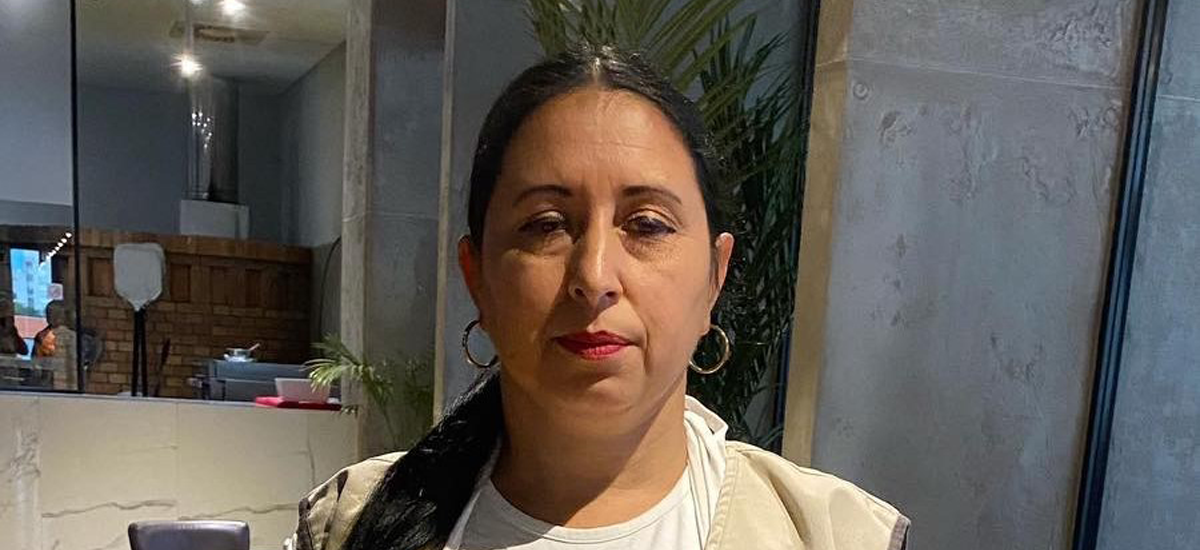
24.06.2024
The story of Ms. Sarajka Sejdović from Podgorica, until just two years ago an unemployed single mother of five children, with little education and almost illiterate, barely surviving on social care assistance (MOP) – now a regularly employed woman helping others to find jobs and breaks boundaries in a good way, is one of those stories that serve as a proof that offering a helping hand to someone, joining efforts and changing what seems very difficult task, actually is it possible and worth the effort.
This is the story of a determined woman – motivated to help herself and her children, and about a well-conceived and carefully executed project in just six months, whose long-term results we are presenting below:
Thanks to the financial support of UNDP Montenegro, Help implemented the project “Work Activation for Social Welfare Beneficiaries” in 2022. The project focused on supporting the activation of unemployed youth in Podgorica, Tuzi, Golubovci, Nikšić, Plužine, Šavnik, Bijelo Polje, Ulcinj, Bar, and Rožaje. The project was conducted in collaboration with the offices of the Employment Agency and the Centers for Social Work in the mentioned municipalities.
The overall goal of the project was to contribute to the Work Activation of the unemployed, focusing on social welfare beneficiaries, through services/programs that address the specific needs of the users. The project increased employability for about 100 unemployed young people, both through training focusing on soft skills and three-month individual mentoring.
After two years, we contacted Ms. Sarajka Sejdović in Podgorica, whose mentor during the project, and even after it, on a personal as well as voluntary basis, was social inclusion expert Mrs. Marija Ružić Stajović. Mrs. Sejdović, who was then a MOP beneficiary, is now an employed single mother of five children. She confirmed that the project had a deeply positive impact and was a turning point for her and her children’s lives, being crucial for the empowerment and work activation of her family.
With a very emotional voice, Ms. Sarajka, an illiterate mother of five children, without any formal work qualifications, who also had issues with her ex-husband, explained how through the Work Activation program, thanks to the well-crafted idea and great experts engaged by Help on the project, especially her mentor Ms. Marija Ružić Stajović, who “did not abandon her” even after the project ended, she is now, two years later, an employed woman living decently from her work.
After undergoing training, Ms. Sejdović managed to find a permanent job as a cleaner in the Restaurant 67 – part of the Voli company (a chain of food markets) in Zabjelo, instead of occasional jobs she previously did to support the family budget which consisted only from the social care assistance (MOP). In the conversation she emotionally recalls receiving her first “regular” salary “in the bank”, not knowing how to use the card to withdraw it, or what amount of the paycheck she would receive. A colleague helped her and explained the ATM withdrawal procedure, and to her surprise, she found out that 500 euros had been deposited into her account as her first paycheck.
“I was completely in shock, and he asked me ‘so how much do you want me to withdraw for you?’. I said ‘all of it – all’! And I couldn’t believe that I managed to buy a lot of food for my children, and even to set something aside,” Ms. Sarajka Sejdović recollected for us, with a tearful voice.
For almost two years now, she is very satisfied with her job, working conditions, and colleagues. Sarajka has been working in the same place, where she is regularly insured and where, apart for herself, she found jobs for another eight people, including two of her own children, after they finished high school, as well as six neighbors, friends, and relatives in various positions, depends of their skills.
As turn out to be, besides the drastic turnaround in her life, the project “Work Activation for Social Welfare Beneficiaries” had a very important impact on other individuals from the RE (Roma and Egyptian) community, who were not direct beneficiaries of the project, but were indeed a vulnerable category of the population – from this UNDP project, successfully implemented by Help in a short period of time but as a long-term solution.
Ms. Sejdović’s immediate supervisor at the Restaurant 67 – within the “Our Market” – Voli in Zabjelo, Mr. Dejan Gogić, with whom we also spoke, confirmed that she is an exceptionally diligent person and hard worker, and that they are extremely satisfied with her engagement as well as her human qualities. This mutual satisfaction led them to accept her suggestion to employ several more members of the RE community, whom she recommended, including her two children upon completing their secondary education.
“This is a place where hard work and human human qualities are truly valued, and where that, rather than ethnic, religious, or racial affiliation, are the key criteria. Following that principles we are glad to break prejudices together, and Sarajka and the other worker that she brought here, are the best model for that,” Mr. Gogić told us.
Thanks to the guiding Ms. Sarajka as volunteer, after the the project the mentor Ms. Ružić Stajović, who modestly and persistently insists that the greatest driving force for everything is in Ms. Sarajka’s perseverance and desire to help herself and her children, beneficiary Sejdović managed to ensure, in addition to her salary that she is earning to support and raise her children – also to receives her legal right for an alimony from her ex-husband.


Ms. Sarajka is not the only successful participant of the project with the long-term life changes. Help’s mentor from northern Montenegro, Danijela Armuš, has sent us information about a number of other participants she worked with, whose lives also turned around in positive direction due to their participation in the “Activate Yourself” program and her persistent mentorship.
For instance, Ms. Dragana Stambolija from Bijelo Polje, a mother of three, who had been unemployed for a long time, despite having a university degree, not only received mentorship, but also had the opportunity to undergo a licensed training course for adult education, specializing as a clothing and textile tailor. Thanks to sewing and handcrafting, she managed to overcome what she described as a “crisis” period, as she recently got employed at doo Franca (food production and market chain). Ms. Stambolija now has a steady job, but sewing remains a valuable source of income for her. Two years ago we had a video story about Ms. Stambolija during the project implementation, which you can watch below. As she says, the handcrafted items she now creates are not just work, but a hobby as well. She told her mentor Danijela that her greatest joy comes from the fact that, by earning “little by little,” she managed to save enough, and her family recently bought a house, so they are no longer tenants.
Help’s Danijela Armuš also mentored Ms. Suada Demić from Rožaje. Besides receiving mentorship support, Mrs. Demić completed training aimed at supporting business startups and subsequently launched her own business by opening a children’s clothing boutique. Two years later, Suada Demić’s boutique is working successfully, and she considers herself a successful entrepreneur in Rožaje. She says that the Labor Activation project was the ideal opportunity for her to start her own business, providing the knowledge and essential information she received during the free training – as part of the project concept.
The Labor Activation program also helped Ms. Aleksandra Šćekić from Bijelo Polje, another single mother. With support from the project, she completed training for adult education, specializing as a teaching assistant. Unfortunately, as this young woman explained to us, despite applying for several job postings, she was not hired because “the opportunities were given to those with connections and political affiliations”. However, she gained motivation and learned not to give up, so now she regularly monitors job announcements and will apply again for positions in kindergartens or/end schools. In the meantime, to ensure decent livelihood for her and her child , she works in a bakery and she is content, for now. She enjoys her work engagement and it is good feeling to be active. She says that through the Labor Activation project, she learned that work is the best remedy for everything, and a way to spend time productively and focus on positive thoughts. We also spoke with Aleksandra during the project’s implementation, a two year ago.
Ziko Kurtagić from Rožaje completed training as a tourist guide through the Labor Activation project. While he was a student, the fees from tourist visits and tours were his only income, as there are not enough tourist guides in Rožaje. He recently graduated and is now actively seeking employment in his field, but he says he still eagerly looks forward for opportunities to work as a guide whenever needed. It is not only a chance to earn and be active, but also his hobby, a connection with nature, and meeting people.
The stories of these individuals remind us of the key message embodied in the name of our organization – Help for Self-Help (Help – Hilfe zur Selbsthilfe).
UNICEF, EU and Help implemented the first cycle of the “Caring Families” program

19.06.2024
Over the past twelve weeks, Help volunteers Mirha Hadžajlić and Lea Agović have implemented the “Caring Families” program. This program, which focuses on educating parents towards positive parenting, providing positive attention, and applying non-violent discipline, aims to promote lifelong health for young children.
Starting from the premise that every family should be a supportive environment that encourages child development, we proudly announce that the first cycle of the Caring Families program, conducted in Konik with mothers from the Roma and Egyptian communities, has been successfully completed.
Given the limited number of spots, nine mothers applied for the program. Of those, eight mothers successfully completed the program and received certificates on June 12, 2024. The program lasted 12 weeks and included 12 workshops. The program leaders, volunteers, also held eight supervisory meetings after the training, to support the realization of the first cycle.
The “Caring Families” program has proven to be extremely beneficial for parents, providing them with the necessary skills and knowledge for positive parenting. Help coordinator, Irina Stamatović emphasized the importance of implementing this program specifically in Konik, as she believes the participants will be a good examples in the community. This is another program within the long-term aimed at improving the position of Roma and Egyptians in Montenegrin society.
“We look forward to continuing our work and involving new parents in the next cycle. With each new cycle, we strive to spread positive changes in the community and contribute to a better future for every child,” concluded the program implementers on behalf of Help.
The small ceremony of the awarding of the certificate was also attended by RE mediator Milica Vujadinović, who is on the daily basis helping the inclusion of the RE community.
The Caring Families program for young children, also known as Parenting for Lifelong Health for Young Children, was created as a result of a partnership between the universities of Oxford, Cape Town, and Bangor, as well as Clowns Without Borders from South Africa, with the support of the World Health Organization and UNICEF. The program has been implemented in several countries around the world, and in Montenegro, it has been conducted with the support of UNICEF and the EU since 2018.

RECONOMY Eastern Partnership – PowerPlay Game Development Conference 2024 in Jerevan

The PowerPlay International Game Development Conference 2024, organized by the Armenian Code Academy, marked a significant milestone as the first cross-regional event fostering cooperation between the Western Balkans and Eastern Partnership countries. Held in Yerevan, Armenia on 2nd of June, within the framework of the RECONOMY Program, the conference aimed to facilitate knowledge and experience exchange among game development professionals and enthusiasts.
RECONOMY is an inclusive and green economic development program of the Swedish International Development Cooperation Agency (Sida), implemented by HELVETAS Swiss Intercooperation in the partnership with Help Hilfe zur Selbsthilfe for the Eastern Partnership and the Western Balkan countries.
The event commenced with welcome speech from Ruben Simonyan, Deputy Minister of High-Tech Industry of the Republic of Armenia and and inspiring opening speech by Alexander Gogoberidze, Regional Manager of Eastern Partnership (EaP) countries in the RECONOMY Program.
With a total of 635 registrations, the PowerPlay conference witnessed 447 participants attending in person and an additional 576 online views, split between the Main Stage (387) and the Workshop Stage (189). The diverse attendance highlighted the growing interest and importance of game development in the digital age.
The agenda featured a variety of sessions, starting with a keynote by Djordje Markovic from Bohemian Pulp, who shared his journey of releasing the first indie game, “Let Bions Be Bygones.” This was followed by a talk by Davit Mkrtchyan of Kimura Games on managing free-to-play multiplayer games sustainably. Valeriia Trofimova from My.Games provided insights into developing mobile zombie shooters, while Ramiz Trtovac from GameBiz Consulting explored creative blind spots in user acquisition success. A panel discussion on “How to Get into Game Dev in 2024” featured notable speakers like Narek Aslikyan, Co-Founder and CEO at ACA, and Milica Todorović, Associate Producer at Ubisoft. Aleksey Karmanov, a Deep Learning RnD Engineer at NVIDIA, conducted a workshop that delved into the future of AI in game development.
The event brought together 18 speakers, 7 partner companies, and 2 partner associations, with an estimated 213 tech companies and 77 game development companies participating. The PowerPlay Game Development Conference 2024 not only highlighted the regional talent and innovation but also emphasized the importance of collaboration in driving the industry forward.


Help presentation at the European Projects Fair in Kruševac
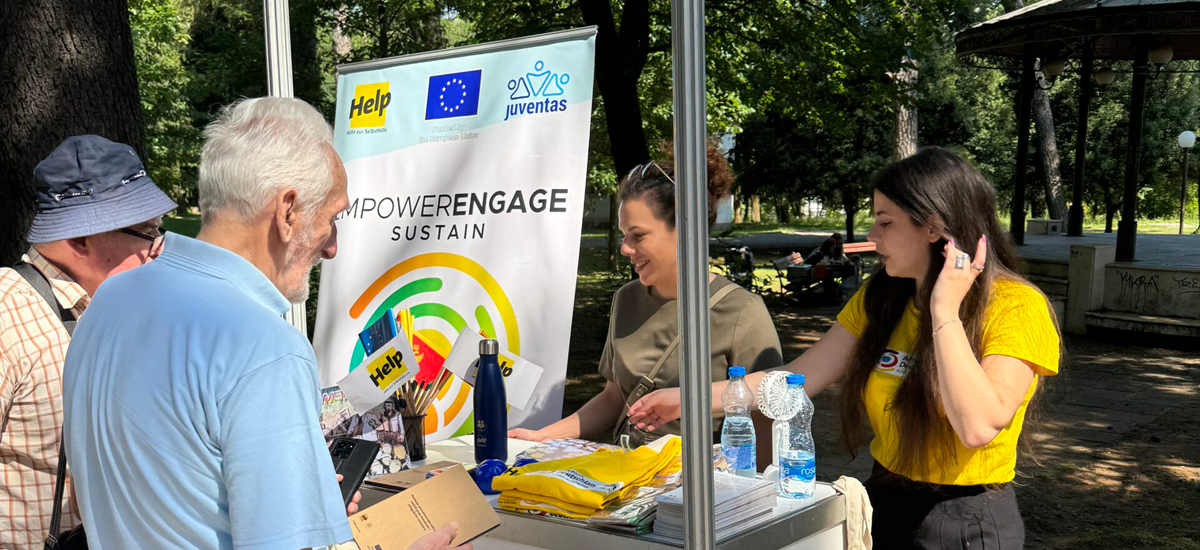
Help, as in previous years, participated in the European Projects Fair as an organization that implements European projects. The fair was held on June 8th at Petrović Castle Park in Kruševac.
Help’s Lejla Hadžijusufović and Jovana Božović presented to the visitors the projects implemented by Help, funded by the EU – currently even two in collaboration with the partner organization Juventas – and giving away interesting promotional materials.
For 25 years of operation in Montenegro, the German humanitarian-development NGO Help has implemented numerous projects funded by the EU, contributing to the social inclusion of the most vulnerable categories of the population. At the moment, as we are hoping to enter in the finalization of negotiations between Montenegro and the EU, such projects have particular significance in terms of aligning with EU human rights standards.
More than 40 organizations and institutions participated in the European Projects Fair, presenting around 200 projects. The fair was opened by the President of the Chamber of Commerce of Montenegro, Dr. Nina Drakić, and the Minister of European Affairs, Maida Gorčević.
“European projects are not just financial support but a key component of our path to a more prosperous future. They enhance our knowledge, bring innovations, and open opportunities for collaboration with partners across Europe. Through these projects, Montenegrin organizations, institutions, and companies become part of a larger community that shares values, goals, and a vision for the future,” said Ms. Drakić.
Minister of European Integration, Maida Gorčević, emphasized that “the projects fair provides an opportunity to directly present the results of projects funded by the European Union and draw public attention to all the benefits these projects bring to our citizens.”
As she emphasize, with the support of the European Union’s pre-accession funds, Montenegro has been actively implementing projects for over 17 years that directly contribute to the sustainable development of our country and improve the standard of living for our citizens. Starting from the fields of health, education, social inclusion, and environmental protection, to the development of tourism and the preservation of cultural heritage, the projects bring multiple benefits in numerous areas.
“Projects also allow us to collaborate with neighbors and all EU member states. Thus, within the framework of European territorial cooperation programs, through mechanisms such as Interreg, Montenegrin institutions and organizations have the opportunity to implement projects together with colleagues from the broader region, thereby exchanging good practices, addressing common challenges, fostering good neighborly relations, and contributing to regional stability,” said Ms. Gorčević.
The head of the EU integration negotiating team highlighted that for Montenegro, “which has decisively set out towards full membership in the European Union with the 44th government, the projects funded by the European Union play a crucial role in the process of European integration.”


Award Notice – MNE 184
Award Notice
MNE 184
Construction of a social housing facility (basement and ground floor) with delivery and installation of construction materials for individual construction objects in the municipality of Herceg Novi
| Contracting Authority: | Help – Hilfe zur Selbsthilfe Montenegro Country Office |
| Reference: | P-MNE-184-23-23-01 |
| Publication date of the Tender Notice: | 27.12.2023. |
| Contract value: | 408.586,94 EUR |
| Date of award of the Contract: | 15.03.2024. |
| Number of offers received: | 2 offers |
| Name and country of successful contractor: | EUROZOX d.o.o, Montenegro |
Empowerment through literacy for Romani and Egyptian women

06.03.2024
17 women, from the Roma-Egyptian (RE) population in Podgorica, attended a literacy course organized by Help as part of the “Inclusion and Economic Empowerment in the Western Balkans” program, funded by the German Government.
Dijana Anđelić, director of Help for Montenegro, awarded diplomas to the participants who completed the course and talked to our fellow citizens about the practical significance of basic literacy in their lives. As these 17 women, who for various reasons never had the opportunity for basic literacy, have told her, after acquiring the basics, they are more than interested in for going above this level of knowledge and continuing with literacy.
Education is a fundamental prerequisite for improving the socio-economic and cultural status of Roma and Egyptians, as well as their integration into society. The educational level of the RE population in Montenegro is low, although efforts have been made in recent years to change this through non-formal education supported by non-governmental organizations and institutional support. This mostly relates to efforts to ensure regular enrollment and attendance of RE children in school, as well as advanced education for those who have completed elementary school.
However, we must not forget the women from the RE population who have never even had the opportunity for basic literacy. Knowing how to read and write at a basic level is a fundamental human right, which will, at least partially, although not nearly enough, facilitate the daily functioning of these fellow citizens.
We believe that every step taken towards empowering women from the RE population is invaluable for the essential inclusion of this community – and literacy is the first and elementary step.
Therefore, Help supports literacy programs through various project activities.


Help is beginning a collaboration with the Faculty of Applied Sciences

20.02.2024
Help and the Faculty of Applied Sciences (FPRN) at the University of Donja Gorica (UDG) formalized today their partnership by signing a Memorandum of Cooperation. This crucial document, which underscores the importance of inter-sectoral collaboration, establishes the foundation for implementing various activities, particularly focused on supporting the development of skills for students of applied psychology.
According to the agreement, two students will have the opportunity to participate in volunteer practices within HELP, gaining invaluable experience in the fields of humanitarian work and social inclusion. Additionally, students will have access to programs and training at Help and its partner organizations to further enhance their skills and apply their knowledge. It is emphasized that this document provides a framework for collaboration and support in projects aimed at improving the positions of Roma and Egyptians. This significant step highlights the commitment of both parties to building an inclusive society.
By signing this Memorandum, Help and the Faculty open doors to new opportunities and strengthen their roles in shaping a better future, not only for students but also for the community as a whole.
Help at the meeting of the Coordinating Body for Monitoring the Poznan Declaration

15.01. 2024.
Dijana Anđelić, the director of Help in Montenegro, attended a meeting with representatives of the coordination body for monitoring the Poznan Declaration and representatives of the Employment Agency of Montenegro (ZZZCG). The goal of the meeting was to improve the socio-economic and legal position of Roma and Egyptians – assistant /mediators in the social inclusion of Roma and Egyptians (RE) in the field of employment.
As stated by ZZZCG, the group et meeting, expressed interest in finding and adopting a better model for the long-term employment of members of the RE population, who have been working as assistants in employment in four Employment Bureaus (Podgorica, Nikšić, Bijelo Polje, and Bar) for an extended period.
“The importance of Assistant in social inclusion for Roma and Egyptians in the field of employment can be seen through providing assistance to individuals from the Roma and Egyptian population in exercising the right to employment. In cases of language barriers, they act as intermediaries between the community and the Employment Agency. RE Mediators in Employment Bureaus are also involved in performing tasks in bureau service areas and archives, in the mediation process when integrating Roma and Egyptian members into active employment policy measures. The Assistants also provide legal guidance for the Roma and Egyptian community, specifically for individuals who have been victims of discrimination or whose employment rights have been jeopardized,” it was stated.
In addition to Anđelić, the meeting was attended by the host, Acting Director of the Employment Agency, Gzim Hajdinaga, Sokolj Beganaj – Head of the Department for the Improvement and Protection of the Rights of Roma and Egyptians at the Ministry of Human and Minority Rights, Budimirka Đukanović – Head of the Directorate for the Protection of At-Risk Groups at the Ministry of Labor and Social Welfare, Nerma Dobardžić Kurti – Deputy Ombudsman for Human Rights, Acting Assistant Director of ZZZCG Aleksandar Rakočević, and the head of the employment preparation department, Alisa Dizdarević.
The Employment Agency emphasizes that RE mediators are highly motivated to engage in all available training organized by numerous non-governmental and other organizations to promote the rights of Roma and Egyptians, “which is all the more reason for the ideas from this meeting to become a positive reality.”
From 2021 to the end of 2022, RE Mediators/ Assistants were engaged by Help through a project financed by the EU with the support of the budget of the Government of Montenegro. In addition to mediators for employment, the project included assistants in healthcare and social care. The project’s beneficiary was the Ministry of Human and Minority Rights, and all mentioned mediators received training and certificates for performing collaborator tasks according to the established program by the relevant authorities.
To prevent interruptions in the work of collaborators, the Ministry of Human and Minority Rights approved funds through the Law on the Budget for 2023, and funds were secured for 2024 as well.
The role of Assistants/Mediators is recognized in European Union countries as a positive and successful example of the inclusion of citizens from the Roma and Egyptian communities. The involvement of assistants/mediators is also a recommendation of the European Commission in the process of Montenegro’s accession to the EU, which is significant for fulfilling chapters 23 and 19.
The photo: Courtesy by ZZZCG
Help and UMPCG signed an agreement within RECONOMY program

12. 01 2024
Help Montenegro has sign agreement with the Union of Young Entrepreneurs of Montenegro (UMPCG) in the frame of the RECONOMY program. The purpose of this agreement is to support the creation of a more favorable environment for the economic empowerment of young entrepreneurs in the Western Balkan region in vulnerable business categories by providing support and developing their entrepreneurial skills and knowledge.
Activities to be supported by RECONOMY target competences of the future entrepreneurs and advocacy activities of the UMPCG in development of services at the national level in Montenegro, establishing a Regional Association between Montenegro, Serbia and North Macedonia, and extension of services in North Macedonia and Serbia, and extension of Regional Association in WB6 and developing multilingual regional e-platform to encourage digitization of the services.
RECONOMY is a regional inclusive and green economic development program of the Swedish International Development Cooperation Agency (Sida), implemented by HELVETAS Swiss Interoperation in partnership with Help—Hilfe zur Selbsthilfe and others in the Eastern Partnership and the Western Balkan regions.
At the beginning of December, within the framework of the RECONOMY program, Help also signed an agreement with the e-platform Seljak.me.


Help organization started with formal trainings for the Associates in social inclusion of RE
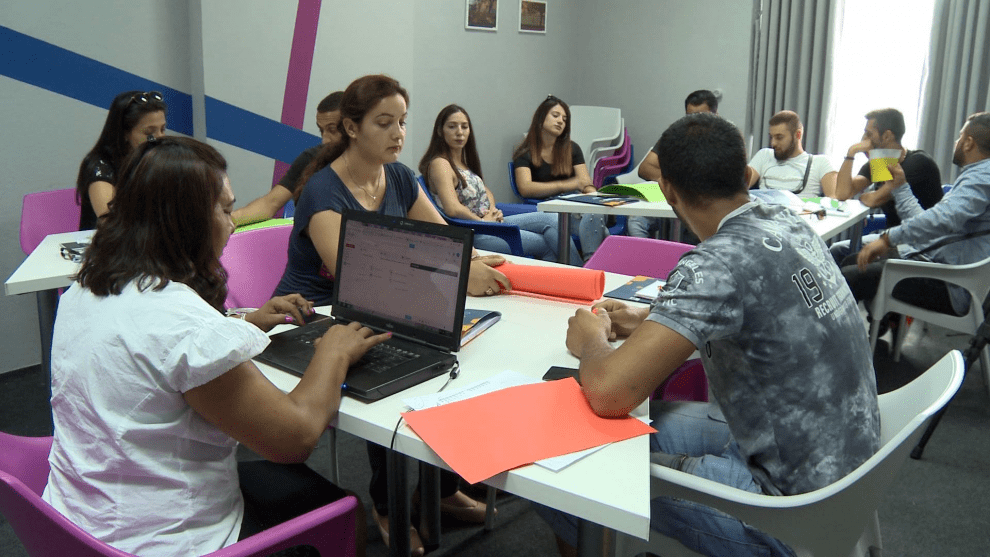
Help organization started with formal trainings for the Associates in social inclusion of RE in the field of employment and social protection. The training will take place in the period from July to September 2018, with the aim of training the trainees for mediation in activities aimed at providing support to RE beneficiaries with a view to facilitating access to social protection and employment institutions in order to exercise the right to social and child protection, as well as the to benefits on the basis of employment, and unemployment insurance.


April Activities: Celebrating international Roma Day with Culture, Sports and open Discussion
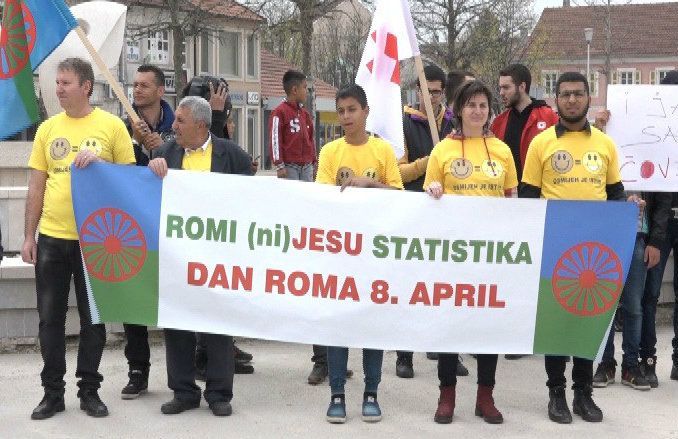
Within the project “Promotion and protection of human rights of Roma , Egyptians and other vulnerable groups”, NGO Help, project partners and RE NGOs (project beneficiaries) organized series of activities to mark International Roma Day (8 April), organizing activities from 4 to 11 April 2018 in Podgorica, Berane and Niksic.
4 April: Exhibition of unique jewelry and handicrafts
EU Info Center
Organizers: NGO “Dorra” and Red Cross of Montenegro
The exhibition of unique jewelry and handicrafts was opened on the occasion of the International Roma Day celebration with the aim of affirmation and promotion of handmade products. Jewelers, bags, garments and ornaments were presented by ten exhibitors. Some participants are independently engaged in production, and some are members of associations that have attended training and were supported by donors.
The fair was of sales character, and all revenues were dedicated for purchase of materials for work and for training organized by the NGO “Dorra”, which deals with the social inclusion of Roma women and Egyptians through vocational training sessions.

5 April: Showing of the film „Stop Child Begging“ at Berane Culture Center
Organizer: Help
A screening of the documentary film “Stop Child Begging” was held in Berane after premiering in May in Podgorica. The film is directed by Nikola Vukčević and was produced by Galileo Productions. The making of the documentary took place over the course of one and a half years. The showing was attended by representatives of the Center for Social Work, Employment Bureau, Berane Municipality and RE NGOs, as well as children from Beranes primary and secondary schools, accompanied by teachers.

5 April: Workshops with the topic of Begging (discussion regarding the film „Stop Child Begging“)
Red Cross of Berane
Organizers: Red Cross of Berane and NGO “Children-Enfants”
Within the project ” Promotion and protection of human rights of Roma , Egyptians and other vulnerable groups “, one of subgrantees-NGOs “Children – Enfants”, in cooperation with the Red Cross Berane and Center for Social Work, organized a workshop on begging, as well as a discussion with the participants of the workshop about the documentary “Stop the Child begging”.

5 April: Theater rehearsal – preparation of the theater play “Roma Wedding”
Community Center, Konik
Organizers: REF, Help and NGO “Association for Roma Affirmations”
Within the project “Promotion and protection of the human rights of Roma, Egyptians and other vulnerable groups”, one of subgrantees NGO “Udruženje za romske afirmacije” realized performance “Roma Wedding”. The play represents a reflection on Roma culture, customs and tradition and in a creative way tends to promote their traditional values, but also to point out a number of prejudices that are still present in society when this population is at stake.

5 April: Presentation of judo skills and techniques
Judo Club “Nenad Sinanovic”, Konik
Organizers: REF, Help and NGO “Roma in Sports”
The “Sport Against Drugs” project, supported by the Help and by the EU Delegation, is just one among many programs implemented by NGOs “Roma in Sports” within the project ” Promotion and protection of the human rights of Roma, Egyptians and other vulnerable groups “. Presentation was done in cooperation with Judo Club “Nenad Sinanovic” in order to integrate young Roma, Egyptians and members of other vulnerable groups into society through sports, to help their education, sports training and encourage children to work and socialize.

10 April: Panel discussion about human rights, democracy and the EU
EU Info Center
Organizers: CEDEM and Help
Participants: Association of Roma of Montenegro, NGO “Romska duša” and Association “Čovjek Rom”
The panel and workshops are intended for Roma and Egyptians of all ages, in order to improve the position of this population through education. Participants were selected within the framework of the project. The following three NGOs who are subgrantees within the project “Promotion and protection of human rights of Roma, and other vulnerable groups “funded by the EU Delegation, attended the panel discusion: Association of Roma of Montenegro, NGO “Roma Soul” and NGO “Man – Roma”.

11 April: Campaign and the main square & Workshop
Organizers: Red Cross Niksic, NGO “Romska nada” and Roma Association “Budo Tomovic”
After Podgorica and Berane, activities of were continued in Niksic, at the city square Organizers of the event were Red Cross Niksic, NGO “Romska nada” and Roma Association “Budo Tomovic”.The event was a part of the project “Promotion and protection of human rights of Roma, Egyptians and other vulnerable groups “. Members of the Roma and Egyptian population walked to the square with messages and banners, with the desire to show their affiliation to the Montenegrin community, as well as the problems they face with on daily basis.
Home at last: Five Roma Families move into new prefabricated Houses in Herceg Novi
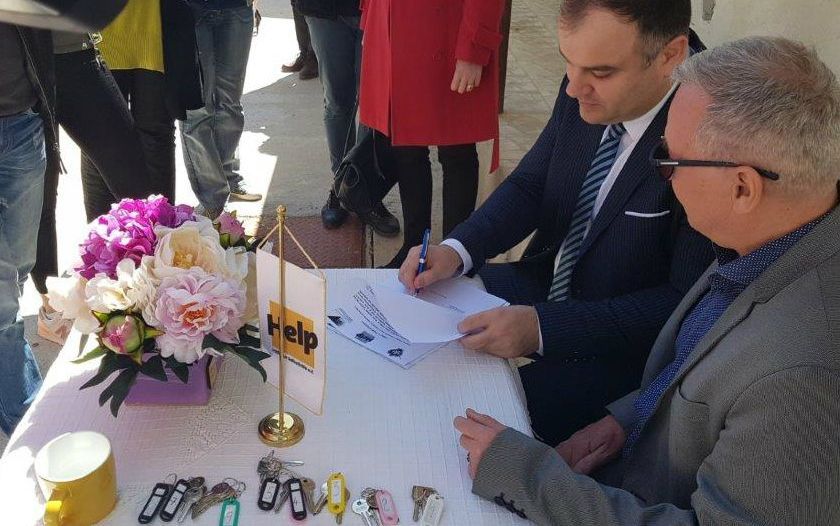
On April 3, 2018, five Roma families with 27 members moved into new prefabricated houses in the settlement Drenovik in Herceg Novi. The housing issue was resolved as a result of the donation of the German Ministry of Foreign Affairs and the Stability Pact for South Eastern Europe, i.e. 176,890 euros were approved for this project. Also vital to the project’s success were the cooperation of the Herceg Novi municipality and the international humanitarian aid organisation HELP.

The municipality of Herceg Novi provided land plots, utility equipment, electricity and water connections, access roads, as well as building permits for construction and use permits for all five prefab houses. This project is a permanent housing solution for vulnerable families of Roma, who previously lived in inadequate conditions in the settlement of Šištet. Long-term housing care of socially vulnerable persons is a basic precondition for their inclusion in society. This was the first project initiated for the residential care of the domicile Roma community on the coast.
After the handover letter was signed, the keys were given to the beneficiaries by the Mayor of Herceg Novi, the Municipality’s President Stevan Katic, the regional coordinator of HELP Mr. Klaus Mock, and German deputy Ambassador to Montenegro Uwe Meerkötter. The handover ceremony was attended by Serjant Baftijari from the NGO “Young Roma”, as well as representatives of the Municipal Secretariat for Local Governance led by Secretary Vesna Samardzic.


Motivational Workshops: Programme for acquiring vocational Qualifications
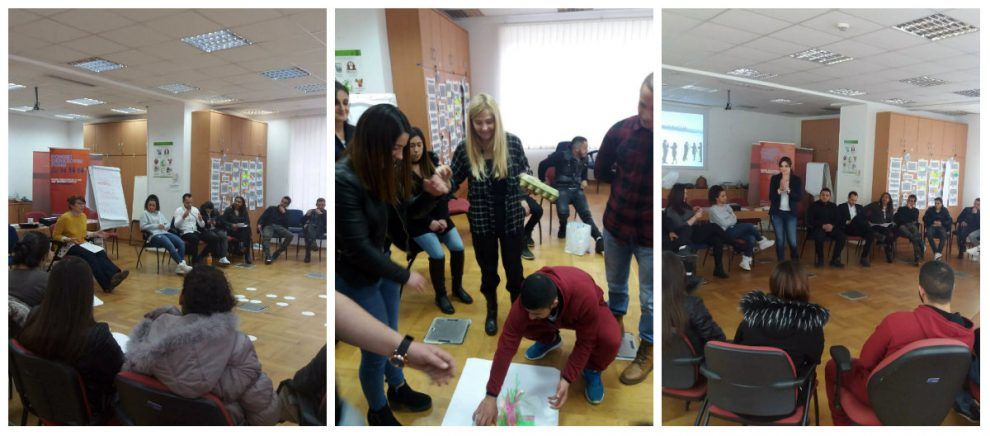
Social Inclusion for Roma and Egyptians through vocational Qualifications
The development of occupational qualifications for social inclusion of Roma and Egyptians is an important step towards the successful integration of this population and their involvement in different spheres of social life and work. The Center for Vocational Education, with the support of REF (Roma Education Fund) and HELP organization, developed four professional qualifications: Associate in social inclusion of Roma and Egyptians in the fields of education, employment, health and social affairs.
These four professional qualifications have passed all adoption procedures and are included in the National Qualifications Framework and as such represent a direct link with the labor market.

In order to familiarize potential trainees with the content of professional qualifications, work to be performed by associates in the social inclusion of Roma and Egyptians and their motivation to be included in the programmes and gain one of the above professional qualifications, the Center for Vocational Education, with the support of REF, developed the Motivation Program for Roma Inclusion and Egyptians in vocational qualifications in the field of social inclusion.
Based on the content of this program, REF organized the first motivational training for over 30 participants, with the engagement of trainers from the Center for Vocational Education and Employment Agency. On behalf of the Ministry of Education Mr. Roko Đoljaj and the representative of REF, Ms. Marijana Blečić welcomed the participants and introduced them with the training programme.

After the introductory address, the trainers Vesna Radulović and Gordana Bošković implemented a series of educational sessions, presenting the contents of all four professional qualifications at the beginning, pointing to their significance, their connection with the institutions of the system and the labor market.
The development of soft skills is an essential prerequisite for the quality work of associates in the social inclusion of Roma and Egyptians, and therefore the participants actively participated in the presentation of team work, the development of communication skills and the construction of mechanisms to combat prejudices and stereotypes.

Documentary film ‘Stop Child begging’ Premiere 27 March
Within the project “Promotion and protection of Human rights of Roma, Egyptians and other vulnerable groups”, supported by the Delegation of the European Union in Montenegro, Help supported the creation of the documentary film titled “Stop Child Begging” directed by Nikola Vučević. The film is part of the public awareness campaign to stop and prevent child begging and the exploitation of children who are victims of the streets. The film addresses key recommendations for dealing with this problem. Particular attention is devoted to mapping the gaps in the system of fighting against child begging, which particularly affects Roma and Egyptian children. The documentary will premiere soon and have English subtitles.
The film will premiere in the Cineplexx cinema (Delta City-Podgorica) on Tuesday March 27, 2018, starting at 11 a.m. Looking forward to seeing you there!
Movie trailer:
HELP Storytelling: Social Inclusion through Employment
Within the project “Social inclusion of Roma and Egyptians through employment”, implemented by Help Montenegro and Capital Podgorica, out of 33 interns who successfully finished on-the.job training which lasted almost 9 months, 13 interns have been employed (40%).
Results of the second call for allocation of subgrants within the project
Results of the second call for allocation of sub grants within the project ‘Promotion and protection of human rights of Roma, Egyptians and other vulnerable groups’
Approved projects:
- “Parliamentary class” – Udruženje Roma Crne Gore, Podgorica (approved funds: EUR 3,426.68)
- “ Attempt to reduce begging of RE children – Berane” – NGO “Djeca – Enfants”, Berane (approved funds: 2.310 EUR)
- “ Sports against drugs “ – NGO “Romi u sportu”, Podgorica (Approved funds: 2.032,50 EUR)
- “ Empowering Romani women and their protection “ – NGO “Romska duša”, Podgorica (approved funds 2.853,69 EUR)
- “ Prevention of violence in the family and child begging in Roma and Egyptian population towards effective integration of the mentioned population “ – NGO “Romska nada”, Niksic (approved funds 3.592,39 EUR)
- “Man – Roma” – Udruženje Čovjek – Rom, Podgorica (approved funds: 2.238,58 EUR)
- “Prevention of drug addiction and the use of psychoactive substances” – “Udruženje Roma Budo Tomović “, Niksic (Approved funds: 2.330 EUR)
- “Right to work as a basis for equality and social inclusion” – NGO “DORRA”, Posgorica (approved funds: EUR 3,707.55)
- “Roma Wedding” – ‘Udruženje za romske afirmacije’, Podgorica (Appropriations: EUR 3,450)
Total amount of approved funds: 25,941.39 EUR
RE Beneficiaries receive Certificates for Completion of the on-the-job Training
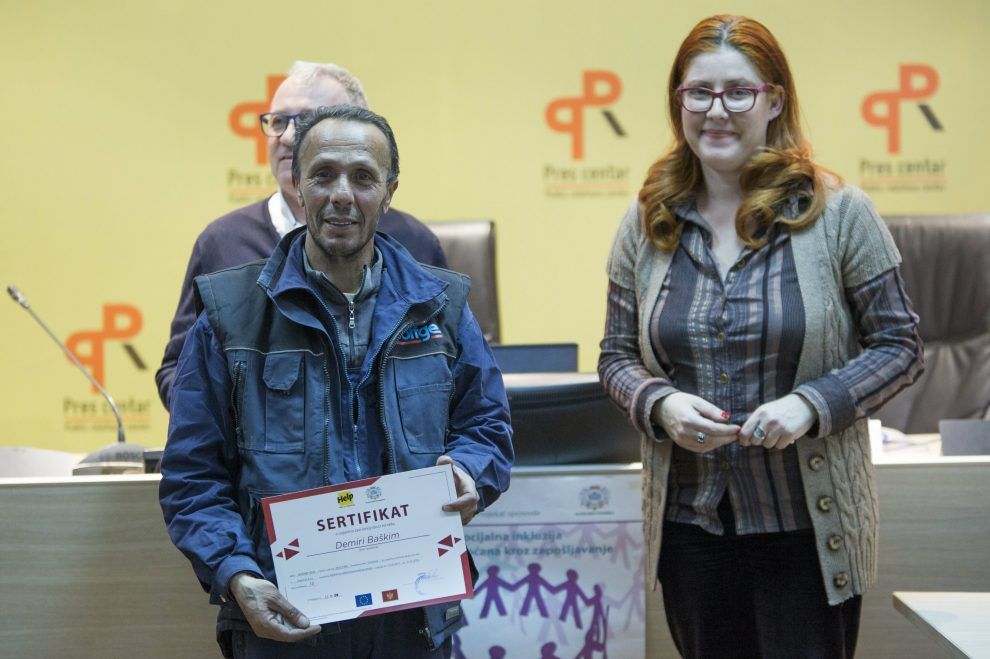
Representatives of German organization Help-Hilfe zur Selbsthilfe and representatives of the Capital City awarded certificates on completion of the On-the-Job training to the RE beneficiaries on Monday, January 22, 2018.

Thirty-three (33) Roma beneficiaries successfully completed training within the project “Social inclusion of Roma and Egyptians through employment”. Duration of the training was eight and a half months.
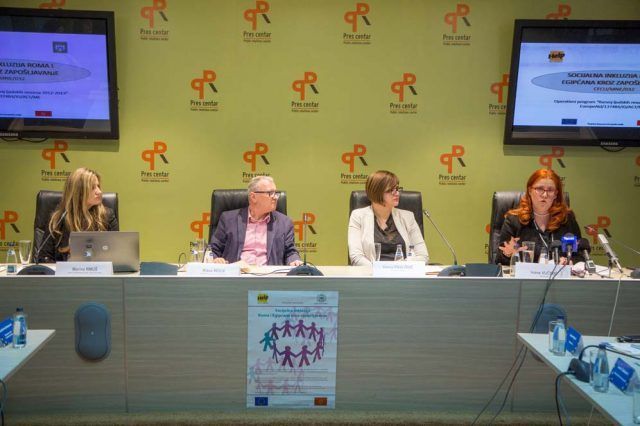
During the period, beneficiaries acquired certain skills, knowledge and experiences that will be of crucial importance in job search, and will facilitate access to the labor market. Trainings were provided by 13 companies / organizations from Podgorica: Deponija, doo, Zelenilo, doo, Čistoća, doo, Laković, doo, Protection Service Podgorica, Velma, doo, Sibila, doo, Roma Cultural Center, Association of Roma of Montenegro , Roma Council, NGO “Young Roma”, NGO “Fiat” and Football Club “Ribnica”.

The internship / on-the-job training programme extended until the end of January 2018
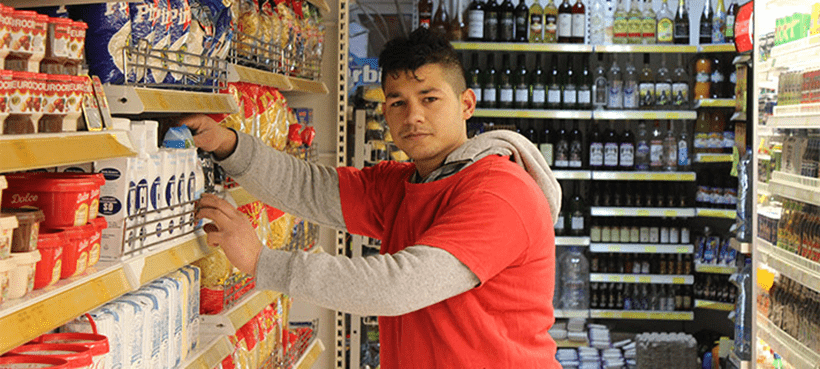
Within the project “Social inclusion of Roma and Egyptians through employment”, 32 interns continued the internship/ on-the-job training programme at 12 employers until the end of January 2018, which enabled them to gain more skills, knowledge and experience in the company / organisation.
At the end of the project, RE beneficiaries will get a certificate of completion of the on-the-job / internship programme.


Completed project ‘On-the-job training and mentoring for women and youth, with focus on the northeast region’
On 31 October 2017, at the Regional Business Center in Berane, a press conference was held, whereby the project “Training at work and mentoring for women and youth with focus at the northeastern region” was officially ended. The project of 12 months’ duration was implemented by Help in partnership with the Berane Municipality and the Association of Business Women of Montenegro. The value of the project was € 211,143.00, out of which the Delegation of the European Union to Montenegro participated with € 189,580.00.
During the promotional campaign 12 motivational workshops were organized in order to provide information about the project and its opportunities; 103 employers and 174 unemployed women and youth participated. 71 applications for inclusion in the project were submitted by companies in 12 towns and 95 applications from unemployed women and youth from all over Montenegro were received. 53 companies were selected and 65 interns participated in the six months training period. Thanks to the on-the-job training, the unemployed improved their professional skills and became more competitive on the labor market. After the training period work engagement continues for 31 persons with 27 employers/companies. The 10 highest-ranked employers were supported in equipment for the work of the trainees in the amount of € 2,000 per company.
As a part of the component aiming to strengthen self-employment 51 persons attended self-employment workshops. The 10 best participants were selected for mentoring by various business experts. Up to date, 5 of them registered their businesses, out of which 3 as d.o.o (limited liability company), 1 as entrepreneur and 1 as producer.
In order to strengthen local employment partnerships 5 meetings were held with representatives of all stakeholders in the target region. The importance of the role of all local actors was emphasized and recommendations for establishment of local employment partnerships were given as well. The project itself was an ideal example of joint action of local employment partnerships.
Information Sessions for RE Trainees since May 2017
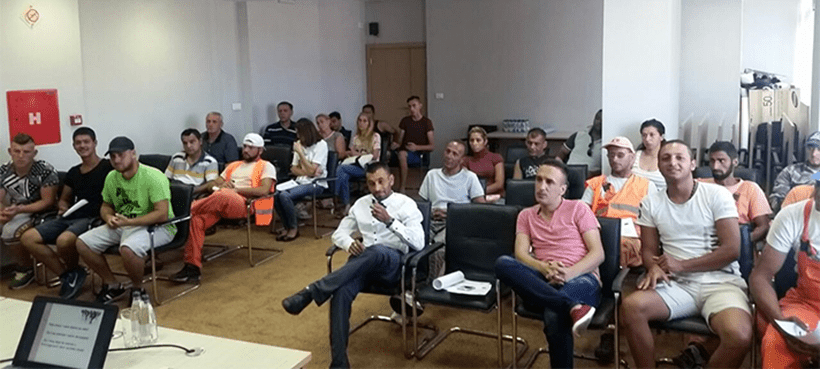
Within the program of training at work, three informative workshops were conducted for RE individuals who attend the training with 13 employers (Čistoća doo, Deponija doo, Zelenilo doo, Association of Roma of Montenegro, Roma Council, Doo Velma, Roma Cultural Center, , NGO Fiat, NGO Mladi Romi, Doo Laković, Sibila, doo and Football Club “Ribnica”).
A total of 66 interns took part in workshops, where they had the opportunity to get acquainted with labor legislation, standards of protection against discrimination at work and work ethics. At the workshops, the interns also exchanged experience in training, with a special emphasis on acquired skills and knowledge, as well as on relationships with colleagues and superiors at work.
In cooperation with the Employment Agency of Montenegro, in the coming period, at the planned information workshops, interns will be informed about the possibilities of employing RE people based on their qualifications and level of education, but also to indicate to them the steps they can take to increase the chances of finding a job.
Anti-discrimination training for employers within the project ‘Social inclusion of Roma and Egyptians through employment’
During the implementation of the program of the on-the-job training, the project team of Help organized anti-discrimination training for employers and employees of the companies or organizations. The aim of the training is to raise participants’ awareness of stereotypes and prejudices towards minority groups, as well as to develop knowledge and skills to recognize and understand direct and indirect discrimination in the work environment. The training was attended by 15 representatives of enterprises / organizations in which RE persons perform work-related training.
The participants rated the training sessions as extremely useful and necessary in order to overcome negative attitudes about RE workers among employers, but also because of the fact that the extremely low employment rate of RE workers in the private sector.
Social Inclusion Project: 42 unemployed persons hire
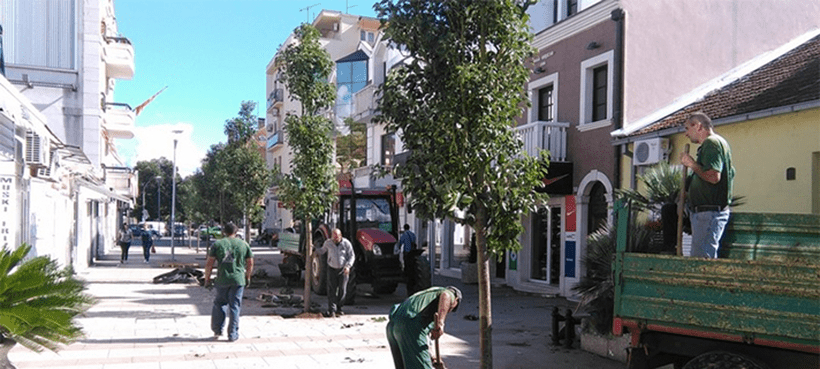
The project “Social Inclusion of Roma and Egyptian communities” through employment implemented by Help – Hilfe zur Selbsthilfe in partnership with the capital city, under the operational program “Human Resources Development 2012-2013 IPA Component III” through its component on-job training , hired 42 Roma and Egyptian unemployed persons , from the capital city. In cooperation of the capital city and Roma Council, 42 persons unemployed RE persons have signed 6 months employment contract with employers on May 15, 2017 , within which it was planned to gain knowledge and skills in working units in which they are engaged.

A total of 11 employers participating in the training program on-job through the project Social Inclusion of Roma and Egyptian communities through employment: Čistoća doo , Deponija doo , Zelenilo doo, doo Lakovic, DOO Velma, Služba zaštite glavnog grada, Association of Roma MN (Roma radio), Roma culture center, Roma council, NGO FIAT and NGO Young Roma.
• Communal company hired 19 unemployed people;
• Landfill doo: hired 6 persons;
• Zelenilo doo, hired five persons;
• Roma Association, MN (Roma Radio) hired 3 Persons;
• Roma Council hired 2 persons
• Doo Velma, hired 2 Person;
• Roma Cultural Center, Job Protection Main city, NGOs Fiat, Roma NGOs boy I doo Lakovic hired 1 person each.
Glavni Grad Podgorica – Link